
NEW DELHI: Petrol blended with 20% ethanol (E20) can reduce vehicle fuel efficiency by 2% to 6%, depending on the vehicle category and its age, road transport and highways minister Nitin Gadkari informed Parliament on Thursday, while asserting that extensive testing has found no evidence of engine failures linked to the fuel.In a written reply in the Lok Sabha, Gadkari said studies conducted jointly by the Automotive Research Association of India (ARAI), the Society of Indian Automobile Manufacturers (SIAM) and Indian Oil Corporation Ltd (IOCL) found that although E20 may marginally reduce mileage, it offers improved acceleration, better ride quality and around 30% lower carbon emissions than E10 fuel.”The fuel efficiency of vehicles may be reduced by 2 to 6 per cent depending on the vehicle category and vintage. The tests for engine durability on a dynamometer and vehicle tests on road have not shown any failures due to E20,” Gadkari said.The minister said the study evaluated the impact of E20 on BS-III, BS-IV and BS-VI petrol-powered two-wheelers and four-wheelers using standard certification procedures as well as customised testing protocols developed in consultation with original equipment manufacturers (OEMs).The rollout of E20 petrol, a blend of 80% petrol and 20% ethanol, has faced criticism from opposition parties and consumer groups, which have questioned its compatibility with older vehicles, possible reduction in fuel economy, higher maintenance costs and liability in case of engine or fuel system damage.The government, however, has maintained that the transition has been gradual and backed by scientific validation. Automobile manufacturers have also said they continue to honour warranty claims for vehicles running on E20 fuel.Gadkari said the Ethanol Blended Petrol (EBP) Programme has been implemented through a phased and consultative process involving NITI Aayog, oil marketing companies, automobile manufacturers, ARAI, SIAM, the Indian Institute of Petroleum (IIP) and other technical institutions.He noted that India’s ethanol blending programme began as a pilot project in 2001, with E5 fuel introduced in 2006. Ethanol blending, which stood at around 1.53% in 2013-14, has since increased steadily after the required production capacity, infrastructure and regulatory framework were put in place.According to Gadkari, E15+ petrol has been in widespread use for more than three-and-a-half years, while E19-E20 fuel has been used for over two-and-a-half years.Join conversationView All Comments →Share your thoughts in the commentsInsightfulAgreeDisagreeSkepticalConcerningPromisingWorth ReadingBig DevelopmentPost CommentBe respectful · TOI community guidelinesHe said more than 20 crore two-wheelers and over 3 crore petrol cars have been operating on ethanol-blended fuel without any verified evidence of widespread engine failures or breakdowns caused by ethanol blending.”Manufacturer service data confirm that there is no abnormal corrosion, wear or reduction in vehicle life due to E20 fuel,” he said, adding that vehicle manufacturers continue to honour warranty obligations for vehicles using E20, reinforcing confidence in its safety and reliability.The minister’s remarks come a day after he informed the Rajya Sabha that studies found no significant performance or durability issues in vehicles using E20 petrol and that most older vehicles do not require engine modifications to use the fuel. He, however, noted that some BS-III vehicles manufactured before 2016 may require replacement of certain rubber parts and gaskets during routine servicing.BS, or Bharat Stage, refers to India’s vehicle emission standards that prescribe limits for pollutants such as carbon monoxide (CO), nitrogen oxides (NOx), hydrocarbons (HC) and particulate matter (PM).Get the latest India News and Live updates. Download the TOI app.About the AuthorAyush PandeyAyush Pandey is a journalist at The Times of India, covering breaking news, politics, defence, and major legal and policy developments across India and the world. His reporting focuses on elections, national security, and institutional affairs, tracking the decisions and conflicts that shape public life. He specialises in sharp explainers and in-depth feature stories that go beyond headlines to decode political shifts, defence strategy, geopolitical flashpoints, and changing public sentiment. His work combines speed, clarity, and depth for a fast-moving digital audience.Read MoreEnd of ArticleFollow Us On Social MediaVideos₹28.5 Cr Cash Seized In Birbhum: Former Govt Bus Driver Arrested | Tulu Mondal Link Under ProbeMamata Banerjee Urges EC To End TMC Symbol Dispute As Rival Faction Misses Repeated DeadlinesSC Questions Blanket Ban On Pellet Guns, Orders Preservation Of RAF Ammunition LogOver 1 Lakh Schools Across India Have Only One Teacher; Andhra Pradesh Records Highest NumberStudent Allegedly Hacks IIT Kanpur- IIT Madras Websites After Admission RejectionAbhijeet Dipke Says PM Modi Should “Become An Influencer”, Warns Of Fresh Student Protest‘Vasteguna Huiya, Kuchu-Puchu, FOMO’: Viral Gen Z Vocabulary Echoes In ParliamentBihar Man Claims He Was Booked In NEET Leak Protest Viral Video Sparks Questions Over Protest FIRs’Dear Saurav…’ BJP MP Kangana Ranaut Tells CJP’s Saurav Das To ‘Learn Some Skill’ | Watch’Detaining Activists Is Normal’: JP Nadda Defends Police Crackdown On CJP Protesters123PhotostoriesFrom ‘Insidious: Out Of The Further’ to ‘Mutiny’: Hollywood releases of August 20265 plants people grow for luck, that have better practical benefits that many probably haven’t heard aboutMyths vs facts: Is shaving facial hair bad for women?5 times Kangana Ranaut made traditional sarees look unapologetically powerful8 Healthy high-protein breakfasts that take 15 minutes or less’Love Island UK’ couples who are still together in love: From Olivia Buckland-Alex Bowen to Jessie Wynter-Will Young6 Indian dishes that are over 1,000 years old and still loved todayEvery Sawan, millions of devotees visit these 6 Jyotirlingas; here’s what makes them most-visited and why every traveller should experience them at least once in a lifetimeFrom Popatlal’s emotional moment to Asit Modi’s revelation about Champak Chacha aka Amit Bhatt’s bald look: Highlights from the Taarak Mehta 18-Year celebrationMillions still get this wrong about HIV: Doctor explains exactly how the virus spreads, and how it doesn’t123Hot PicksAugust School HolidaysNEET UG CounsellingKerala Engineering rank listSamsung Q2 resultsByelection todayBengaluru restaurantsFed meetingKanwar Yatra securityNew anti-paper leak billTop TrendingTamil Nadu Schools New MealMitch JonesNanakdin Bhurji DeathSonam RaghuvanshiNagpur MurderGujarat MurderHardoi Double SuicideMohammad Ali Jauhar University demolitionWeather TomorrowStock Market Up

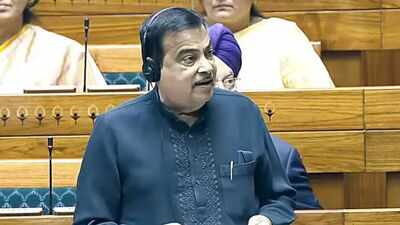
NEW DELHI: Petrol blended with 20% ethanol (E20) can reduce vehicle fuel efficiency by 2% to 6%, depending on the vehicle category and its age, road transport and highways minister Nitin Gadkari informed Parliament on Thursday, while asserting that extensive testing has found no evidence of engine failures linked to the fuel.In a written reply in the Lok Sabha, Gadkari said studies conducted jointly by the Automotive Research Association of India (ARAI), the Society of Indian Automobile Manufacturers (SIAM) and Indian Oil Corporation Ltd (IOCL) found that although E20 may marginally reduce mileage, it offers improved acceleration, better ride quality and around 30% lower carbon emissions than E10 fuel.“The fuel efficiency of vehicles may be reduced by 2 to 6 per cent depending on the vehicle category and vintage. The tests for engine durability on a dynamometer and vehicle tests on road have not shown any failures due to E20,” Gadkari said.The minister said the study evaluated the impact of E20 on BS-III, BS-IV and BS-VI petrol-powered two-wheelers and four-wheelers using standard certification procedures as well as customised testing protocols developed in consultation with original equipment manufacturers (OEMs).The rollout of E20 petrol, a blend of 80% petrol and 20% ethanol, has faced criticism from opposition parties and consumer groups, which have questioned its compatibility with older vehicles, possible reduction in fuel economy, higher maintenance costs and liability in case of engine or fuel system damage.The government, however, has maintained that the transition has been gradual and backed by scientific validation. Automobile manufacturers have also said they continue to honour warranty claims for vehicles running on E20 fuel.Gadkari said the Ethanol Blended Petrol (EBP) Programme has been implemented through a phased and consultative process involving NITI Aayog, oil marketing companies, automobile manufacturers, ARAI, SIAM, the Indian Institute of Petroleum (IIP) and other technical institutions.He noted that India’s ethanol blending programme began as a pilot project in 2001, with E5 fuel introduced in 2006. Ethanol blending, which stood at around 1.53% in 2013-14, has since increased steadily after the required production capacity, infrastructure and regulatory framework were put in place.According to Gadkari, E15+ petrol has been in widespread use for more than three-and-a-half years, while E19-E20 fuel has been used for over two-and-a-half years.
Share your thoughts in the comments
Be respectful · TOI community guidelines
He said more than 20 crore two-wheelers and over 3 crore petrol cars have been operating on ethanol-blended fuel without any verified evidence of widespread engine failures or breakdowns caused by ethanol blending.“Manufacturer service data confirm that there is no abnormal corrosion, wear or reduction in vehicle life due to E20 fuel,” he said, adding that vehicle manufacturers continue to honour warranty obligations for vehicles using E20, reinforcing confidence in its safety and reliability.The minister’s remarks come a day after he informed the Rajya Sabha that studies found no significant performance or durability issues in vehicles using E20 petrol and that most older vehicles do not require engine modifications to use the fuel. He, however, noted that some BS-III vehicles manufactured before 2016 may require replacement of certain rubber parts and gaskets during routine servicing.BS, or Bharat Stage, refers to India’s vehicle emission standards that prescribe limits for pollutants such as carbon monoxide (CO), nitrogen oxides (NOx), hydrocarbons (HC) and particulate matter (PM).


