
NEW DELHI: Exiled Bangladeshi writer Taslima Nasreen on Thursday said the space for secular thought, religious criticism and intellectual debate in Bangladesh had “shrunk dangerously” as she prepared for her first public appearance in Kolkata in nearly 19 years, describing her return to the city as “coming back to my own country.”Nasreen, who will attend a programme in Kolkata on August 1, said the visit symbolised not only a personal homecoming but also the resilience of free expression in the face of attempts to silence dissent. The event is expected to be attended by West Bengal Chief Minister Suvendu Adhikari and noted author Shirshendu Mukhopadhyay.This will be Nasreen’s first public appearance in Kolkata since 2007, when protests over her memoir Dwikhandito forced her to leave the city. The book had been banned by the West Bengal government in 2003 for allegedly hurting the sentiments of the Muslim community.Reflecting on her return, Nasreen said Kolkata had always remained home despite her years in exile.”I feel as though I am returning to my own country. Bengal has never been divided in my heart by a border or a barbed-wire fence. The door to the eastern part of Bengal remains closed to me, so for now, this part of Bengal is my home,” she said.”I am returning with joy, but also with pain. Kolkata was not merely a city where I lived; it was where I had a home, friends, readers and a sense of belonging. Nearly nineteen years were taken from me, and no homecoming can return those lost years. I am not returning as a stranger or a guest. I am returning as someone who has always considered herself part of Bengal,” she added.The writer said she had never left Kolkata voluntarily and continued to hope for her return over the years.”I never left Kolkata willingly; the then West Bengal government forced me to leave the state. Yet I never stopped hoping that one day I would return. Year after year passed, governments changed, and still the door remained closed.”Calling her return a victory for freedom of expression, Nasreen said, “So, to return nearly 19 years later and speak publicly in the heart of Kolkata feels almost unreal. To me, it represents the return of a voice that fundamentalists once tried to silence. My presence on that stage will affirm that threats and fatwas may exile a writer for a time, but they cannot erase her ideas.”She thanked the organisers and the West Bengal government for facilitating the visit and providing security.”I certainly see my return as an encouraging sign. I am grateful to the organisers who made it possible and to the government for providing security. I deeply appreciate CM Adhikari’s willingness to respect and protect the freedom of a dissenting writer, even when he may not agree with everything she says.”Nasreen stressed that freedom of expression should be protected as a fundamental right.”A writer’s freedom and safety should not depend on the generosity of a government, the ideology of a political party or the permission of a religious group. They must be protected as fundamental rights,” she said.Expressing gratitude to India for offering her refuge, she said, “Although I am not a citizen of India, I am deeply moved by the generosity of a country that has given refuge to a persecuted writer like me. I am sincerely grateful to the present West Bengal government for the support and protection it has extended to me.”Speaking about the situation in Bangladesh, Nasreen said technological advances had given writers new platforms but had also enabled organised harassment.”Technology has given writers more ways to speak, but it has also given organised groups more ways to threaten, harass and silence them. In Bangladesh, the space for secular thought, religious criticism and honest intellectual debate has shrunk dangerously. Freethinkers have been killed, imprisoned, driven into hiding or forced into exile. Fear has become a form of censorship,” the writer pointed out.She said religious fundamentalism had gained greater political influence across South Asia while women continued to face restrictions in the name of religion, culture and tradition.”The challenges have undoubtedly become more complex. Religious fundamentalism has acquired new political power and sophisticated methods of propaganda. Women are still controlled in the name of religion, culture, family honour and tradition. At the same time, those who oppose fundamentalism are often falsely accused of opposing an entire community,” she said.Despite the challenges, Nasreen said she remained optimistic because younger generations continued to question inherited beliefs and resist inequality.”I have not lost hope. More young people, especially women, are questioning inherited beliefs and refusing to accept inequality as destiny. Social progress has never followed a straight line; every advance produces resistance. I am not optimistic because I believe progress is inevitable. I am optimistic because people continue to fight for it. Silence guarantees defeat; resistance keeps change possible,” she said.Join conversationView All Comments →Share your thoughts in the commentsInsightfulAgreeDisagreeSkepticalConcerningPromisingWorth ReadingBig DevelopmentPost CommentBe respectful · TOI community guidelinesReflecting on her years in exile, Nasreen said, “Exile has made me stronger, but it has also wounded me in ways that strength cannot erase. It taught me that a home is not merely a building or an address.”She also urged young readers and writers to defend intellectual freedom.”My message would be: question everything. Question religion, tradition, authority, politics and even the ideas you love most. Do not inherit someone else’s prejudices and call them your convictions,” she said.Nasreen expressed hope that her upcoming Kolkata visit would not be a one-time event and that she would be able to return to the city whenever she wished.Get the latest India News and Live updates. Download the TOI app.About the AuthorTOI News DeskThe TOI News Desk comprises a dedicated and tireless team of journalists who operate around the clock to deliver the most current and comprehensive news and updates to the readers of The Times of India worldwide. With an unwavering commitment to excellence in journalism, our team is at the forefront of gathering, verifying, and presenting breaking news, in-depth analysis, and insightful reports on a wide range of topics. The TOI News Desk is your trusted source for staying informed and connected to the ever-evolving global landscape, ensuring that our readers are equipped with the latest developments that matter most.”Read MoreEnd of ArticleFollow Us On Social MediaVideosSC Questions Blanket Ban On Pellet Guns, Orders Preservation Of RAF Ammunition LogOver 1 Lakh Schools Across India Have Only One Teacher; Andhra Pradesh Records Highest NumberStudent Allegedly Hacks IIT Kanpur- IIT Madras Websites After Admission RejectionAbhijeet Dipke Says PM Modi Should “Become An Influencer”, Warns Of Fresh Student Protest‘Vasteguna Huiya, Kuchu-Puchu, FOMO’: Viral Gen Z Vocabulary Echoes In ParliamentBihar Man Claims He Was Booked In NEET Leak Protest Viral Video Sparks Questions Over Protest FIRs’Dear Saurav…’ BJP MP Kangana Ranaut Tells CJP’s Saurav Das To ‘Learn Some Skill’ | Watch’Detaining Activists Is Normal’: JP Nadda Defends Police Crackdown On CJP ProtestersWho Is V Kamakoti? IIT Madras Director And Exam Reforms Task Force Member Draws Political FireKhawaja Asif Calls POK Protesters “Enemies Like India” Amid Deadly Crackdown; Statement Sparks Stir123Photostories5 times Kangana Ranaut made traditional sarees look unapologetically powerful8 Healthy high-protein breakfasts that take 15 minutes or less’Love Island UK’ couples who are still together in love: From Olivia Buckland-Alex Bowen to Jessie Wynter-Will Young6 Indian dishes that are over 1,000 years old and still loved todayEvery Sawan, millions of devotees visit these 6 Jyotirlingas; here’s what makes them most-visited and why every traveller should experience them at least once in a lifetimeFrom Popatlal’s emotional moment to Asit Modi’s revelation about Champak Chacha aka Amit Bhatt’s bald look: Highlights from the Taarak Mehta 18-Year celebrationMillions still get this wrong about HIV: Doctor explains exactly how the virus spreads, and how it doesn’tBreakfasts from 12 countries that look nothing alikeYour balcony railing is wasted space: 5 DIY ways to turn it into a vertical garden7 fashion mistakes that are secretly making you look older than you are123Hot PicksAugust School HolidaysNEET UG CounsellingKerala Engineering rank listSamsung Q2 resultsByelection todayBengaluru restaurantsFed meetingKanwar Yatra securityNew anti-paper leak billTop TrendingIPS Trainee Rape CasePM ModiNanakdin Bhurji DeathSonam RaghuvanshiNagpur MurderGujarat MurderHardoi Double SuicideMohammad Ali Jauhar University demolitionWeather TomorrowStock Market Up

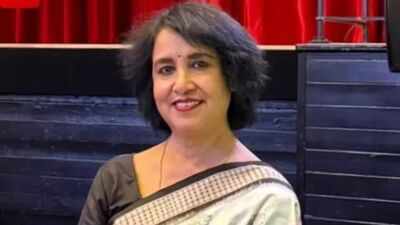
NEW DELHI: Exiled Bangladeshi writer Taslima Nasreen on Thursday said the space for secular thought, religious criticism and intellectual debate in Bangladesh had “shrunk dangerously” as she prepared for her first public appearance in Kolkata in nearly 19 years, describing her return to the city as “coming back to my own country.“Nasreen, who will attend a programme in Kolkata on August 1, said the visit symbolised not only a personal homecoming but also the resilience of free expression in the face of attempts to silence dissent. The event is expected to be attended by West Bengal Chief Minister Suvendu Adhikari and noted author Shirshendu Mukhopadhyay.This will be Nasreen’s first public appearance in Kolkata since 2007, when protests over her memoir Dwikhandito forced her to leave the city. The book had been banned by the West Bengal government in 2003 for allegedly hurting the sentiments of the Muslim community.Reflecting on her return, Nasreen said Kolkata had always remained home despite her years in exile.“I feel as though I am returning to my own country. Bengal has never been divided in my heart by a border or a barbed-wire fence. The door to the eastern part of Bengal remains closed to me, so for now, this part of Bengal is my home,” she said.“I am returning with joy, but also with pain. Kolkata was not merely a city where I lived; it was where I had a home, friends, readers and a sense of belonging. Nearly nineteen years were taken from me, and no homecoming can return those lost years. I am not returning as a stranger or a guest. I am returning as someone who has always considered herself part of Bengal,” she added.The writer said she had never left Kolkata voluntarily and continued to hope for her return over the years.“I never left Kolkata willingly; the then West Bengal government forced me to leave the state. Yet I never stopped hoping that one day I would return. Year after year passed, governments changed, and still the door remained closed.”Calling her return a victory for freedom of expression, Nasreen said, “So, to return nearly 19 years later and speak publicly in the heart of Kolkata feels almost unreal. To me, it represents the return of a voice that fundamentalists once tried to silence. My presence on that stage will affirm that threats and fatwas may exile a writer for a time, but they cannot erase her ideas.”She thanked the organisers and the West Bengal government for facilitating the visit and providing security.“I certainly see my return as an encouraging sign. I am grateful to the organisers who made it possible and to the government for providing security. I deeply appreciate CM Adhikari’s willingness to respect and protect the freedom of a dissenting writer, even when he may not agree with everything she says.”Nasreen stressed that freedom of expression should be protected as a fundamental right.“A writer’s freedom and safety should not depend on the generosity of a government, the ideology of a political party or the permission of a religious group. They must be protected as fundamental rights,” she said.Expressing gratitude to India for offering her refuge, she said, “Although I am not a citizen of India, I am deeply moved by the generosity of a country that has given refuge to a persecuted writer like me. I am sincerely grateful to the present West Bengal government for the support and protection it has extended to me.”Speaking about the situation in Bangladesh, Nasreen said technological advances had given writers new platforms but had also enabled organised harassment.“Technology has given writers more ways to speak, but it has also given organised groups more ways to threaten, harass and silence them. In Bangladesh, the space for secular thought, religious criticism and honest intellectual debate has shrunk dangerously. Freethinkers have been killed, imprisoned, driven into hiding or forced into exile. Fear has become a form of censorship,” the writer pointed out.She said religious fundamentalism had gained greater political influence across South Asia while women continued to face restrictions in the name of religion, culture and tradition.“The challenges have undoubtedly become more complex. Religious fundamentalism has acquired new political power and sophisticated methods of propaganda. Women are still controlled in the name of religion, culture, family honour and tradition. At the same time, those who oppose fundamentalism are often falsely accused of opposing an entire community,” she said.Despite the challenges, Nasreen said she remained optimistic because younger generations continued to question inherited beliefs and resist inequality.“I have not lost hope. More young people, especially women, are questioning inherited beliefs and refusing to accept inequality as destiny. Social progress has never followed a straight line; every advance produces resistance. I am not optimistic because I believe progress is inevitable. I am optimistic because people continue to fight for it. Silence guarantees defeat; resistance keeps change possible,” she said.
Share your thoughts in the comments
Be respectful · TOI community guidelines
Reflecting on her years in exile, Nasreen said, “Exile has made me stronger, but it has also wounded me in ways that strength cannot erase. It taught me that a home is not merely a building or an address.”She also urged young readers and writers to defend intellectual freedom.“My message would be: question everything. Question religion, tradition, authority, politics and even the ideas you love most. Do not inherit someone else’s prejudices and call them your convictions,” she said.Nasreen expressed hope that her upcoming Kolkata visit would not be a one-time event and that she would be able to return to the city whenever she wished.


