
Beneath the ocean lie 8,500 forgotten WWII shipwrecks. Many are still filled with oil | World News

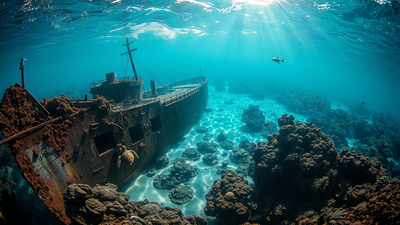
Scattered across the ocean floor worldwide are more than 8,500 shipwrecks classified as potentially polluting, most dating back to World War I and World War II, still carrying an estimated 6 billion gallons of heavy fuel oil within their corroding hulls. As these vessels approach or pass the century mark since sinking, their steel structures continue to weaken, and a growing body of research warns that pollution from these wrecks could reach its highest levels within this decade. Nowhere has this risk been made clearer than in Micronesia, where a series of real-world leaks from sunken World War II ships have already forced evacuations, fishing bans and emergency cleanup operations, offering a preview of what could happen on a much larger scale if a major storm or earthquake were to rupture multiple wrecks at once.
How many potentially polluting wrecks exist worldwide
According to the International Union for Conservation of Nature, there are an estimated 3 million sunken and abandoned vessels lying on the seabed globally, of which more than 8,500 are classified as potentially polluting wrecks. IUCN notes that most of these wrecks date back to the two world wars and still contain harmful chemical pollutants, unexploded munitions and roughly 6 billion gallons of heavy fuel oil combined, a volume the organisation says would represent an oil spill 545 times larger than the 1989 Exxon Valdez disaster if it were all released at once.A peer-reviewed study published in the journal Marine Pollution Bulletin notes that a significant proportion of these wrecks, close to half, are concentrated in the Pacific Ocean, with particularly high numbers found around the Solomon Islands, the Federated States of Micronesia and the Republic of the Marshall Islands. The same research points out that this risk was first formally recognised by regional bodies during the 1990s, though comprehensive action to address it has remained limited by funding and coordination challenges ever since.
Why Micronesia has already experienced real oil leaks from WWII wrecks
Micronesia offers some of the clearest evidence that this is not a theoretical risk. According to the Marine Pollution Bulletin study, the USS Mississinewa, an American naval oiler sunk in 1944, leaked approximately 24,000 gallons of oil into Ulithi Lagoon in the Federated States of Micronesia in 2001, prompting a formal state of emergency and a total ban on fishing in the affected area. The United States Navy subsequently removed roughly 1.8 million gallons of remaining oil from the wreck, at a cost of around 6 million dollars, a figure IUCN notes was still far cheaper than the cost of managing an uncontrolled spill would have been.More recent events have reinforced this pattern. In 2025, a state of emergency was declared in Chuuk, part of the Federated States of Micronesia, after oil began leaking from another World War II wreck within the environmentally sensitive Chuuk Lagoon, an area whose coral reefs and fish populations are directly relied upon by local communities for food and livelihoods.
Why old shipwrecks are becoming more dangerous over time
The core problem, according to researchers, is one of accelerating deterioration. As detailed in a chapter published in the Springer volume on maritime heritage and pollution risk, many of these wrecks have now been submerged for nearly 80 years or more, and their hulls continue to corrode and weaken with each passing year. Combined with an increase in the frequency and intensity of severe weather events, this deterioration raises the likelihood that a storm, seismic event or simple structural failure could breach multiple wrecks at once, particularly those resting in shallower coastal waters close to vulnerable communities.IUCN has specifically warned that pollution from these wrecks is expected to peak within the current decade, driven by this combination of prolonged corrosion and worsening climate-related storm activity. Researchers studying the issue have also pointed out that the international regulatory framework governing responsibility for these wrecks remains unclear, since many sank as military vessels under wartime conditions, complicating questions of legal accountability and funding for cleanup decades later.
What is being done to address the risk
Regional and international bodies have begun taking steps to map and prioritise the most dangerous wrecks. According to industry accounts of the issue, the Secretariat of the Pacific Regional Environment Programme formally recognised the threat posed by corroding World War II wrecks in 2019 and has since worked with partner organisations to build a prioritised database of high risk sites across the Pacific, identifying dozens of wrecks in locations such as Iron Bottom Sound in the Solomon Islands, Bikini Atoll in the Marshall Islands and Chuuk Lagoon as needing urgent investigation.Despite this progress, researchers and conservation bodies agree that the scale of the challenge still outpaces current efforts, given the sheer number of wrecks involved and the high cost of properly surveying, monitoring and remediating each one. As Micronesia’s repeated leaks demonstrate, the risk posed by these wrecks is not confined to history, but continues to grow as decades of saltwater exposure push increasingly fragile hulls closer to failure.


