
NEW DELHI: The government on Wednesday said extensive studies have found no significant performance or durability issues in vehicles running on E20 petrol, asserting that even older vehicles generally do not require engine modifications to use the fuel.In a written reply in the Rajya Sabha, road transport and highways minister Nitin Gadkari said tests found no issues in parameters such as drivability, startability, metal compatibility and plastic compatibility.Responding to concerns over fuel efficiency, Gadkari said automobile manufacturers and vehicle-testing agencies have clarified that mileage depends on several factors and cannot be attributed solely to the type of fuel used.He said a joint study by Indian Oil Corporation Ltd (IOCL), Indian Institute of Petroleum (IIP), Dehradun, Society of Indian Automobile Manufacturers (SIAM), and Automotive Research Association of India (ARAI) evaluated the impact of E20 fuel on two-wheelers and four-wheelers.”The studies confirmed that even legacy vehicles did not exhibit any significant variations in performance, nor did they show abnormal wear and tear when operated with E20 fuel,” Gadkari said.He added that the studies did not indicate any need to modify car or two-wheeler engines for using E20 fuel.Gadkari, however, said that in BS-III vehicles introduced from April 1, 2005, and manufactured before 2016, some rubber parts and gaskets may require replacement. “This can be easily managed during the routine servicing regime of the vehicle,” he said.The rollout of E20 petrol, a blend of 80% petrol and 20% ethanol, has faced criticism from opposition parties and some consumer groups over its impact on older vehicles not specifically designed for higher ethanol blends.Critics have questioned vehicle compatibility, raised concerns about reduced fuel efficiency and higher maintenance costs, and sought clarity on liability in case of engine or fuel-system damage.The government has maintained that the transition has been phased and backed by extensive testing, while automobile manufacturers have said they continue to honour warranty claims for vehicles using E20 fuel. Opposition parties have repeatedly sought greater transparency on vehicle compatibility and consumer safeguards.Gadkari said an inter-ministerial committee (IMC), constituted under NITI Aayog on December 26, 2020, comprehensively examined vehicle compatibility and fuel-efficiency aspects of ethanol blending. The assessment was supported by research conducted by IOCL, ARAI and SIAM.The committee’s “Roadmap for Ethanol Blending in India 2020-25″, released in June 2021, was prepared after extensive consultations with automobile manufacturers, oil marketing companies and agricultural experts. It examined material compatibility, engine calibration, fuel systems, drivability, durability, emissions and fuel efficiency before the introduction of E20 fuel.Ethanol Blended Petrol (EBP) Programme has been implemented through a phased, calibrated, scientifically validated and consultative approach, Gadkari said.He also noted that ethanol-blended fuel has been used globally for more than a century, with countries such as Brazil using even higher ethanol blends for decades.In India, the EBP Programme began as a pilot project in 2001, and E5 fuel was introduced in 2006. While ethanol blending remained around 1.53% until 2013-14, it has since increased progressively after the required production capacity, infrastructure and regulatory framework were put in place.Before the rollout of E20 in April 2026, extensive laboratory studies, durability trials and field validation were carried out to assess engine durability, material compatibility, fuel systems, corrosion resistance, drivability, emissions, fuel economy and overall vehicle performance.BS, or Bharat Stage, refers to India’s vehicle emission standards, which prescribe limits for pollutants such as carbon monoxide (CO), nitrogen oxides (NOx), hydrocarbons (HC) and particulate matter (PM).Get the latest India News and Live updates. Download the TOI app.About the AuthorTOI News DeskThe TOI News Desk comprises a dedicated and tireless team of journalists who operate around the clock to deliver the most current and comprehensive news and updates to the readers of The Times of India worldwide. With an unwavering commitment to excellence in journalism, our team is at the forefront of gathering, verifying, and presenting breaking news, in-depth analysis, and insightful reports on a wide range of topics. The TOI News Desk is your trusted source for staying informed and connected to the ever-evolving global landscape, ensuring that our readers are equipped with the latest developments that matter most.”Read MoreEnd of ArticleFollow Us On Social MediaVideosFirst Direct Freight Train to Nepal! How One Railway Journey Could Transform India-Nepal TradeDelhi Police Denies ‘Mystery Truck’ Conspiracy Linked To Chalo Sansad ProtestTwo Army Personnel Injured In Suspected Landmine Explosion Near LoC In Uri’Most Filthy Type Of Man’: Rahul, Priyanka Gandhi Attack Pralhad Joshi; Massive Ruckus In ParlWhy Delhi-NCR Flooded Again As Four Weather Systems Combined With Years Of Planning Failures’Students Want Justice, Not Charity’: Priyanka Gandhi’s Explosive Speech On Paper Leaks Rocks LSMizoram Minister Opens Up On Drug Menace, Myanmar Border, Disaster Readiness & Ties With Centre”You Removed One Pradhan To Save The PM”: Paper Leak Bill Triggers Massive Showdown In ParliamentPolice Diary Reportedly Reveals RAF Fired Anti-Riot Guns During Jantar Mantar Protest | WatchOnce A Fierce BJP Critic, Ex-TMC MP Saayoni Ghosh To Defend Centre’s Anti-paper Leak Bill | Watch123Photostories”Your child is always watching you”: 7 everyday parenting habits that unknowingly shape every Indian child’s futureWant more blooms? Prune these 5 garden plants in AugustWhy Indians have added ghee to hot rice for generations, according to scienceThe truth about Kumkumadi tailam: Know why it doesn’t deliver the same results for everyoneFrom alleging ex-wife Shweta Tiwari’s affair with her Kasautii co-star Cezanne Khan to claiming he Wasn’t allowed to meet their daughter; Raja Chaudhary makes serious allegationsLeftover rotis? Try these 9 desi lunch dishes that pack 14–22g proteinHow to grow and care for lucky bamboo: An easy step-by-step guide for beginnersIrina Shayk dating history: Inside the Russian supermodel’s high-profile romances; from Bradley Cooper to Cristiano RonaldoFrom Mirabai Chanu to Harjinder Kaur: 10 women who are making India proud at the Commonwealth Games 2026Did you know this was the world’s first favourite flavour? Here’s how it became so popular123Hot PicksMCC new rulesRey mysterios daughterDelhi Lakshmi YojanaTN CM Vijay’s new officeRussian sanctions bille20 PetrolRajasthan Safai Karamchari recruitmentTN supplementary resultsTN SSLC, HSE supplementary resultsTop TrendingKangana RanautJantar Mantar ProtestKarnataka SuicideBJP MLA Yashpal Suvarna ArrestGurgaon Road RageAbhijeet Dipke Marriage ProposalsUGC PG ProgrammeWeather TomorrowPalani Mutt Temple Land CaseStock Market Up

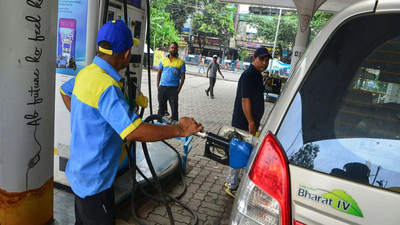
NEW DELHI: The government on Wednesday said extensive studies have found no significant performance or durability issues in vehicles running on E20 petrol, asserting that even older vehicles generally do not require engine modifications to use the fuel.In a written reply in the Rajya Sabha, road transport and highways minister Nitin Gadkari said tests found no issues in parameters such as drivability, startability, metal compatibility and plastic compatibility.Responding to concerns over fuel efficiency, Gadkari said automobile manufacturers and vehicle-testing agencies have clarified that mileage depends on several factors and cannot be attributed solely to the type of fuel used.He said a joint study by Indian Oil Corporation Ltd (IOCL), Indian Institute of Petroleum (IIP), Dehradun, Society of Indian Automobile Manufacturers (SIAM), and Automotive Research Association of India (ARAI) evaluated the impact of E20 fuel on two-wheelers and four-wheelers.“The studies confirmed that even legacy vehicles did not exhibit any significant variations in performance, nor did they show abnormal wear and tear when operated with E20 fuel,” Gadkari said.He added that the studies did not indicate any need to modify car or two-wheeler engines for using E20 fuel.Gadkari, however, said that in BS-III vehicles introduced from April 1, 2005, and manufactured before 2016, some rubber parts and gaskets may require replacement. “This can be easily managed during the routine servicing regime of the vehicle,” he said.The rollout of E20 petrol, a blend of 80% petrol and 20% ethanol, has faced criticism from opposition parties and some consumer groups over its impact on older vehicles not specifically designed for higher ethanol blends.Critics have questioned vehicle compatibility, raised concerns about reduced fuel efficiency and higher maintenance costs, and sought clarity on liability in case of engine or fuel-system damage.The government has maintained that the transition has been phased and backed by extensive testing, while automobile manufacturers have said they continue to honour warranty claims for vehicles using E20 fuel. Opposition parties have repeatedly sought greater transparency on vehicle compatibility and consumer safeguards.Gadkari said an inter-ministerial committee (IMC), constituted under NITI Aayog on December 26, 2020, comprehensively examined vehicle compatibility and fuel-efficiency aspects of ethanol blending. The assessment was supported by research conducted by IOCL, ARAI and SIAM.The committee’s “Roadmap for Ethanol Blending in India 2020-25”, released in June 2021, was prepared after extensive consultations with automobile manufacturers, oil marketing companies and agricultural experts. It examined material compatibility, engine calibration, fuel systems, drivability, durability, emissions and fuel efficiency before the introduction of E20 fuel.Ethanol Blended Petrol (EBP) Programme has been implemented through a phased, calibrated, scientifically validated and consultative approach, Gadkari said.He also noted that ethanol-blended fuel has been used globally for more than a century, with countries such as Brazil using even higher ethanol blends for decades.In India, the EBP Programme began as a pilot project in 2001, and E5 fuel was introduced in 2006. While ethanol blending remained around 1.53% until 2013-14, it has since increased progressively after the required production capacity, infrastructure and regulatory framework were put in place.Before the rollout of E20 in April 2026, extensive laboratory studies, durability trials and field validation were carried out to assess engine durability, material compatibility, fuel systems, corrosion resistance, drivability, emissions, fuel economy and overall vehicle performance.BS, or Bharat Stage, refers to India’s vehicle emission standards, which prescribe limits for pollutants such as carbon monoxide (CO), nitrogen oxides (NOx), hydrocarbons (HC) and particulate matter (PM).


