
Meta had pledged to be Net Zero by 2030, but the company has now seemingly changed its mind; exits climate group; here’s what pressured Facebook-parent

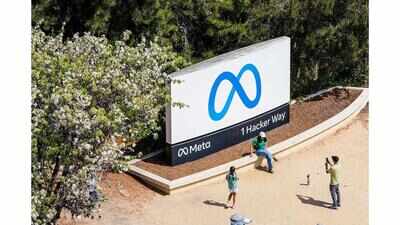
Meta — the company behind Facebook, Instagram and WhatsApp — has reportedly withdrawn from the RE100 initiative after investments in new gas-fired power plants left the technology giant unable to meet the group’s renewable energy criteria. The decision reverses a commitment Meta made in 2020 to support a transition towards electricity generated entirely from renewable sources. Recharge first reported that Meta and RE100 had parted ways because the tech giant no longer met the initiative’s technical criteria. Meta joined RE100 as Facebook in 2016 and pledged to cover its entire operation with renewable electricity by 2020. The tech giant stated in 2021 that it had reached that target. Meta has always done so with renewable energy certificates (RECs) and PPAs, not by powering directly with renewables.RE100 is a global corporate initiative whose members commit to sourcing their electricity from renewable sources. Its members include Apple, Google and Microsoft. “After several in-depth conversations between Meta and Climate Group, Meta has withdrawn from the RE100 initiative, as it is no longer able to meet the technical criteria due to investments made in new gas power,” a Climate Group spokesperson said. It comes as the company expands its artificial intelligence infrastructure, including energy-intensive data centres.
What likely made Meta to take a U-turn on its Climate commitment
Meta has backed several gas-fired power projects to support its expanding data-centre operations. The company is working with Entergy Corp on plans for plants in Louisiana that would supply more than 5 gigawatts of electricity to its Richland Parish data centre.Analysts say that the move underscores the challenge technology companies face in securing reliable power for AI operations. The decision exposes a technology industry conflict. AI needs constant power, while renewable sources often require batteries or backup systems. AI Data centres require large and consistent supplies of electricity for computing, cooling and backup systems, while renewable projects can face intermittency, storage and grid-capacity constraints.
How Apple, Google and Microsoft continue to stand by their ‘climate promise’
Meta is not the only technology company looking beyond renewable energy to meet rising demand. Google and Microsoft have also invested in projects involving fossil fuels, although both continue to pursue clean-energy technologies. Microsoft has adopted an hourly energy-matching strategy intended to align electricity consumption with cleaner power generation. Google, meanwhile, is working with Form Energy on long-duration battery storage capable of supplying electricity for up to 100 hours.Gas-fired plants can generally be developed faster than nuclear facilities and provide more consistent electricity than intermittent renewable sources. However, Meta’s withdrawal is likely to raise further questions about whether the rapid expansion of AI infrastructure is undermining the technology industry’s earlier climate commitments.


