
Govt says birth certificate gives one legal identity NEW DELHI: A bill seeking to make the provision for delayed registration of births and deaths more stringent, is set to be introduced in the Lok Sabha, and shall require every birth or death reported to the registrar after two years of its occurrence, to be registered on only an order made by a judicial magistrate of the first class.As per the statement of objects and reasons of The Registration of Births and Deaths (Amendment) Bill, 2026, the proposal to make the law more stringent is based on consultations held with the state/UT govts and other stakeholders and “will encourage timely reporting of events of birth and death”.It added that “the registration of births and deaths is mandatory under the Act and the birth/death certificate issued after such registration, provides legal identity to an individual” and “is admissible as evidence for the purpose of proving the birth and death of a person”.Birth certificate is also the key document for determining a person’s citizenship status. It is one of the documents accepted during the special intensive revision (SIR) electoral roll, as a proof of citizenship. The bill seeks to add sub-section 3A to Section 13, requiring any birth or death intimated to the registrar after two years of occurence, to be registered only on the order of a first-class judicial magistrate, “after verifying the correctness of the birth or death and on payment of such fee as may be prescribed”.The existing Section 13(3) mandates that a birth or death, of which delayed information is shared with the registrar after one year but within two years of its occurrence, will be registered only on order of a district magistrate, sub-divisional magistrate or an executive magistrate authorised by the district magistrate and appointed under Section 14(1) of the Bharatiya Nagarik Suraksha Sanhita (BNSS).The rules to implement Section 13(3A) — including determination of the prescribed fee for delayed registration — may be framed by the state govt, empowered under Section 30 to do so.Get the latest India News and Live updates. Download the TOI app.About the AuthorBharti JainBharti Jain is senior editor with The Times of India, New Delhi. She has been writing on security matters since 1996. Having covered the Union home ministry, security agencies, Election Commission and the ‘prime’ political beat, the Congress, for The Economic Times all these years, she moved to TOI in August 2012. Her repertoire of news stories delves into the whole gamut of issues related to terrorism and internal strife, besides probing strategic affairs in India’s neighbourhood.Read MoreEnd of ArticleFollow Us On Social MediaVideos’Most Filthy Type Of Man’: Rahul, Priyanka Gandhi Attack Pralhad Joshi; Massive Ruckus In ParlWhy Delhi-NCR Flooded Again As Four Weather Systems Combined With Years Of Planning Failures’Students Want Justice, Not Charity’: Priyanka Gandhi’s Explosive Speech On Paper Leaks Rocks LSMizoram Minister Opens Up On Drug Menace, Myanmar Border, Disaster Readiness & Ties With Centre”You Removed One Pradhan To Save The PM”: Paper Leak Bill Triggers Massive Showdown In ParliamentPolice Diary Reportedly Reveals RAF Fired Anti-Riot Guns During Jantar Mantar Protest | WatchOnce A Fierce BJP Critic, Ex-TMC MP Saayoni Ghosh To Defend Centre’s Anti-paper Leak Bill | WatchModi Govt Tables Anti-Paper Leak Bill In Lok Sabha: Up To 10 Years Jail, ₹10 Cr Fine & MoreSupreme Court Backs Independent Probe Into Alleged Police Excesses During NEET Protests NationwidePM Modi’s Facebook Post Blocked: Is India’s Digital Sovereignty At Stake?123PhotostoriesWhy you can’t stop checking your phone: Expert warns this anxiety habit may be fueling a harmful reassurance-seeking cycleAlways feeling mentally exhausted? These 8 simple daily habits can help clear your mindWorking out but still can’t lose belly fat? Doctor reveals why hormones, genetics and muscle loss make midlife weight loss so much harderYour refrigerator could be making vegetables unsafe: The storage mistakes experts say you should stop making todayOptical illusion personality test: The first thing that you spot helps you discover your hidden leadership talent7 yoga poses to manage neck pain10 baby names inspired by Norse mythologyFrom Windmill Cottage to his large car collection: 5 of the most expensive things that ‘Avengers: Doomsday’ star Robert Downey Jr ownsHow to identify fake Chikankari: 4 signs every shopper should knowInside Shreya Kalra’s lavish Mumbai home: A luxe Bar, dreamy walk-in closet and more123Hot PicksH.C. VermaUddhav ThackerayMHT CET final merit listDelhi weatherWeather tomorrowe20 PetrolRajasthan Safai Karamchari recruitmentTN supplementary resultsSouth Korea KOSPI crashTop TrendingDelhi Red AlertNitin GadkariChhattisgarh MurderEknath Shinde New ProjectWeather TomorrowKhajuraho AirportDombivli Doctors Assault CaseChitrakoot Gang Rape CaseSuvendu AdhikariDelhi Police Dharna

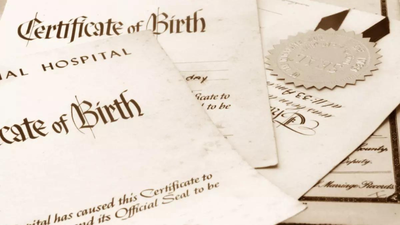
NEW DELHI: A bill seeking to make the provision for delayed registration of births and deaths more stringent, is set to be introduced in the Lok Sabha, and shall require every birth or death reported to the registrar after two years of its occurrence, to be registered on only an order made by a judicial magistrate of the first class.As per the statement of objects and reasons of The Registration of Births and Deaths (Amendment) Bill, 2026, the proposal to make the law more stringent is based on consultations held with the state/UT govts and other stakeholders and “will encourage timely reporting of events of birth and death”.It added that “the registration of births and deaths is mandatory under the Act and the birth/death certificate issued after such registration, provides legal identity to an individual” and “is admissible as evidence for the purpose of proving the birth and death of a person”.Birth certificate is also the key document for determining a person’s citizenship status. It is one of the documents accepted during the special intensive revision (SIR) electoral roll, as a proof of citizenship. The bill seeks to add sub-section 3A to Section 13, requiring any birth or death intimated to the registrar after two years of occurence, to be registered only on the order of a first-class judicial magistrate, “after verifying the correctness of the birth or death and on payment of such fee as may be prescribed”.The existing Section 13(3) mandates that a birth or death, of which delayed information is shared with the registrar after one year but within two years of its occurrence, will be registered only on order of a district magistrate, sub-divisional magistrate or an executive magistrate authorised by the district magistrate and appointed under Section 14(1) of the Bharatiya Nagarik Suraksha Sanhita (BNSS).The rules to implement Section 13(3A) — including determination of the prescribed fee for delayed registration — may be framed by the state govt, empowered under Section 30 to do so.


