
Quote of the day by Socrates: ‘Beware the barrenness of a busy life,’ and why constant activity can leave little room for a meaningful life

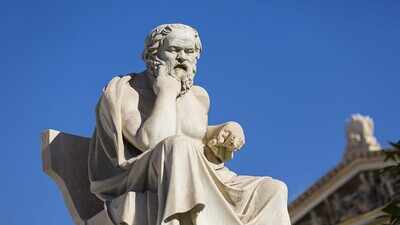
‘Beware the barrenness of a busy life’ – SocratesThe most common complaint in today’s world is not having enough time. Calendars fill up weeks in advance, phones demand constant attention and even moments meant for rest are interrupted by notifications, emails and unfinished tasks. Against that backdrop, the saying attributed to Socrates carries an uncomfortable question. What if the problem is not simply that life has become busy, but that busyness itself has started to feel like an achievement? A full schedule can create the impression of a full life, though the two are not always the same.The quotation has endured because it captures an idea that runs through Greek philosophy. Socrates spent much of his life asking Athenians to examine their assumptions about success, virtue and happiness rather than accepting them simply because everyone else did. His belief that “the unexamined life is not worth living” has become one of philosophy’s most enduring ideas. The warning about a “busy life” belongs naturally alongside it. Activity has value, but only when people remain aware of what that activity is ultimately for.
When busyness becomes a measure of success
Modern societies admire productivity. Being in demand is usually treated as a compliment, while free time is sometimes mistaken for laziness or a lack of ambition. The language people use reflects that mindset. Someone says they have been “crazy busy” as though the phrase itself explains why they have not called an old friend, read a book or simply spent an evening without looking at a screen.This way of thinking is relatively recent. For much of history, philosophers regarded leisure not as the absence of work but as the opportunity to think, learn and participate in civic life. The ancient Greeks even had a word for it: scholē, from which the English word “school” is derived. Time away from labour was considered essential because it allowed people to develop judgement, curiosity and wisdom. A life consumed entirely by work was seen as incomplete, not admirable.That perspective does not dismiss hard work. Socrates himself served as a soldier, participated in public life and spent his days engaging people in long conversations across Athens. His concern was never with effort. It was with effort that left no room for reflection.
Filling time is not the same as using it well
The difference between a busy life and a meaningful one becomes clearer when people look back rather than forward. Years are rarely remembered because every hour was occupied. They are remembered because of conversations, discoveries, friendships, journeys or moments that changed the way someone understood the world. Those experiences demand something that relentless busyness rarely provides: time.Researchers studying attention have reached similar conclusions. Constant switching between tasks reduces concentration, while uninterrupted periods of reflection improve learning, creativity and decision-making. Many writers, scientists and artists have protected stretches of quiet time for precisely that reason. Charles Darwin built long daily walks into his routine. Toni Morrison wrote early in the morning before the demands of the day took over. Bill Gates became known for taking “Think Week” away from daily management to read and reflect. None of these habits looked particularly productive at the moment. Their value became clear only through the quality of the work they produced.The same principle applies outside extraordinary careers. Parents who put away their phones during dinner, friends who spend an evening talking without distraction or students who set aside time simply to think are making choices that rarely appear on a productivity chart but shape the quality of their lives all the same.
Why the quote still resonates
The warning attributed to Socrates feels remarkably contemporary because it challenges an assumption that has become deeply embedded in modern culture. People are encouraged to optimise every hour, chase every opportunity and remain constantly available. Slowing down can even produce guilt, as though a quiet afternoon has somehow been wasted.The saying offers a different measure. A life should not be judged solely by how much it contains, but by whether there is space within it to notice, question and appreciate what truly matters. Work, ambition and responsibility all have their place, but they cannot become ends in themselves. A calendar filled from morning to night may leave very little room for curiosity, relationships or reflection. Socrates’ warning reminds us that the richest life is not necessarily the busiest one. It is the one in which activity still leaves space for thought.


