
File photo: Justice Ujjwal Bhuyan NEW DELHI: Supreme Court judge Justice Ujjal Bhuyan on Saturday questioned the criminalisation of ordinary activities while highlighting delays in granting relief to citizens facing criminal action for protest or dissent, saying there is “no law prohibiting consumption of chicken over the Ganga river.”Speaking at the Justice GP Singh 4th Memorial Lecture at the National Law Institute University (NLIU) in Bhopal, Justice Bhuyan cited the arrest of 14 Muslim men who were accused of consuming chicken biryani while breaking their Ramzan fast on a boat in the Ganga as an example of what he described as the criminalisation of normal activities.”Take for example the case of a group of youngsters breaking their fast over the river Ganga by consuming chicken biryani. I am sure consuming chicken biryani is not an offence. It can’t be an offence. There is no law prohibiting consumption of chicken over the Ganga river. They were arrested for that very reason and they had to remain in jail for 3 months,” he said, as quoted by Bar and Bench.CJP Jantar Mantar Protest UpdatesDharmendra Pradhan resigns as Union education minister amid massive student protests’We won’t go’: CJP’s Dipke says protests to continue till all demands metFresh clashes at Jantar Mantar after Pradhan’s exit; tear gas fired, stones peltedJustice Bhuyan said such cases also highlighted broader concerns over how courts deal with petitions filed by citizens accused in protest-related cases.He observed that while courts often grant bail or other relief, it frequently comes after considerable delay and is accompanied by restrictive conditions.Raises concerns over delayed bail, restrictive conditionsThe judge said the space for expressing divergent opinions in India was shrinking and cautioned against the criminalisation of peaceful democratic activities.”It will not be an exaggeration to say that public space for expressing divergent opinion is shrinking in India. The right to express one’s views and to demonstrate peacefully are fundamental freedoms of the citizens. Debate and dissent are the essence of democracy. Unfortunately, even normal activities are being criminalised,” he said.Justice Bhuyan also questioned the nature of conditions imposed while granting bail, suggesting that some restrictions could have a chilling effect on citizens exercising their right to dissent.”These issues raise serious questions. Citizens are finding that though the courts are responsive and do grant bail, do grant relief, many a times it is belated. But it is the restrictive conditions which are imposed while granting bail that are causing the greatest concern. By such restrictive orders, are the courts indirectly telling the citizens or discouraging the citizens not to express their dissent?” he said.He also cited cases where courts granted bail but directed accused persons not to attend public meetings, post on social media or leave the country, saying such conditions could undermine fundamental freedoms.Refers to Bombay HC order on Gaza protestJustice Bhuyan also referred to a July 2025 Bombay high court order dismissing a petition filed by the Communist Party of India (Marxist), which had sought permission to hold a protest at Mumbai’s Azad Maidan against the alleged genocide in Gaza.The high court had observed, “Our country has enough issues. We don’t want anything like this. I am sorry to say, you are all short-sighted. You are looking at issues in Gaza and Palestine. Look at your own country. Be patriots. This is not patriotism. People say they are patriots.”Commenting on the order, Justice Bhuyan said he found it “very amusing” that a judge questioned why citizens wished to protest over developments outside India.Calls for scrutiny of judicial decisionsJustice Bhuyan said the judiciary is not above criticism and stressed that judgments should be critically examined by lawyers, students and the wider legal community.”Judgments, after being delivered, are required to be critically examined and criticised if necessary. Criticism of a judgment does not amount to criticism of a judge.”Referring to recent Supreme Court decisions, including the verdict on reservation for Economically Weaker Sections (EWS), he encouraged students to analyse judgments critically rather than accepting them unquestioningly.”If everybody goes and tells the judges, ‘Sir, wonderful thing. Sir, what you say is excellent. Sir, you are a jurist,’ then how will the system improve?” he said.Justice Bhuyan also said judges should regularly introspect if they wish to retain public confidence in the institution.”For the judges and the judiciary to remain legitimate and to remain relevant, public perception is most crucial… It is not for us to make that comment. It is for the citizens to assess. Perception of the citizens as to where the judiciary stands today, more particularly the Supreme Court, 75 years after we have become a Republic, is what matters,” he said.He added that institutional improvement depends on introspection and that robust public debate, including criticism of judicial decisions, strengthens democratic institutions.Similar concerns raised earlierJustice Bhuyan has previously voiced similar concerns about shrinking space for debate and dissent.Speaking at a Supreme Court Bar Association conference in Bengaluru earlier this year, he said a developed India would require greater tolerance for diverse views and cautioned against criminalising dissent.During that address, he also questioned the extensive use of the Unlawful Activities (Prevention) Act (UAPA), pointing to low conviction rates and arguing that prolonged incarceration without timely trials could not be a model for a developed nation.Get the latest India News and Live updates. Download the TOI app.About the AuthorTOI News DeskThe TOI News Desk comprises a dedicated and tireless team of journalists who operate around the clock to deliver the most current and comprehensive news and updates to the readers of The Times of India worldwide. With an unwavering commitment to excellence in journalism, our team is at the forefront of gathering, verifying, and presenting breaking news, in-depth analysis, and insightful reports on a wide range of topics. The TOI News Desk is your trusted source for staying informed and connected to the ever-evolving global landscape, ensuring that our readers are equipped with the latest developments that matter most.”Read MoreEnd of ArticleFollow Us On Social MediaVideos’Don’t Cry Later’: Asaduddin Owaisi Makes Alliance Offer To Akhilesh Yadav To Oust BJP In UP PollsDelhi Drain Tragedy: 20-Year-Old US Student Dies After Car Plunges Into DrainKargil Vijay Diwas 2026: How Operation Vijay Transformed India’s Military And Defence Strategy3 Arrested In Assam As STF Cracks Down On Alleged Pakistan-Linked Sleeper Cell NetworkDelhi Approves Rs 6,970-Crore Tunnel Corridor To Cut Airport, Mahipalpur Traffic‘Time To Go Home’: CJP Removes Stage, Urges Protesters To Leave Jantar Mantar’Don’t Waste This Energy On One Resignation’: Yogendra Yadav On CJP Future, ‘Police Brutality’RSS Loyalist Pralhad Joshi Appointed As India’s New Education Minister Hours After Pradhan’s ExitPost Protest, Volunteers Launch Cleanliness Drive At Jantar Mantar’Wangchuk, Dipke Joined AISA’s Protest’: Harsh Dubey On NEET, Reservation, Jantar Mantar Protest123PhotostoriesWhy Red Wine should always be allowed to breathe before drinking—this is what happens inside the bottle and the glassThinking of dating a coworker? These 8 rules can save your relationship and your career“Talk to your baby as if they understand you”: Pediatrician shares 5 simple habits that may support your baby’s brain development5 natural foods that can kill cockroaches instantlyAriana Grande, Celine Dion, Katy Perry and more: Musicians who slammed the White House over unauthorised use of their songsInside Krushna Abhishek’s lavish Mumbai home: A massive living room, elegant interiors and moreIran ended visa-free entry for Indians, and it wasn’t the only country to tighten travel rules in 2026; three more countries quietly followed8 Plants that quietly attract sunbirds to Indian balconies5 relationship lessons people often learn only after heartbreakWhat happens when you knead roti dough with hot water and salt? 3 secrets to keep rotis soft for hours123Hot PicksSchool holiday todayDelhi metroCJP ProtestMumbai rainGujarat RainAIIMS notificationNEET paper controversyAAI recruitment 2026Caitline ClarkTop TrendingMP NEET Arpirant RapeNEET Paper LeakCJP Protester AssaultedKerala IPS Ajith Kumar SuspensionAssam Flood DeathsDelhi Metro Stations ClosedMumbai ProtestUP Amroha WeddingHarbhajan singhIND U19 vs Sri Lanka U19

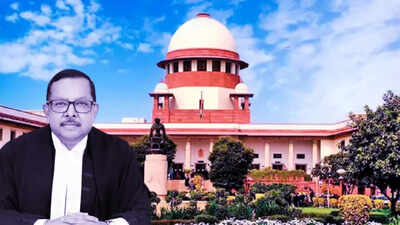
NEW DELHI: Supreme Court judge Justice Ujjal Bhuyan on Saturday questioned the criminalisation of ordinary activities while highlighting delays in granting relief to citizens facing criminal action for protest or dissent, saying there is “no law prohibiting consumption of chicken over the Ganga river.“Speaking at the Justice GP Singh 4th Memorial Lecture at the National Law Institute University (NLIU) in Bhopal, Justice Bhuyan cited the arrest of 14 Muslim men who were accused of consuming chicken biryani while breaking their Ramzan fast on a boat in the Ganga as an example of what he described as the criminalisation of normal activities.“Take for example the case of a group of youngsters breaking their fast over the river Ganga by consuming chicken biryani. I am sure consuming chicken biryani is not an offence. It can’t be an offence. There is no law prohibiting consumption of chicken over the Ganga river. They were arrested for that very reason and they had to remain in jail for 3 months,” he said, as quoted by Bar and Bench.
CJP Jantar Mantar Protest Updates
Justice Bhuyan said such cases also highlighted broader concerns over how courts deal with petitions filed by citizens accused in protest-related cases.He observed that while courts often grant bail or other relief, it frequently comes after considerable delay and is accompanied by restrictive conditions.
Raises concerns over delayed bail, restrictive conditions
The judge said the space for expressing divergent opinions in India was shrinking and cautioned against the criminalisation of peaceful democratic activities.“It will not be an exaggeration to say that public space for expressing divergent opinion is shrinking in India. The right to express one’s views and to demonstrate peacefully are fundamental freedoms of the citizens. Debate and dissent are the essence of democracy. Unfortunately, even normal activities are being criminalised,” he said.Justice Bhuyan also questioned the nature of conditions imposed while granting bail, suggesting that some restrictions could have a chilling effect on citizens exercising their right to dissent.“These issues raise serious questions. Citizens are finding that though the courts are responsive and do grant bail, do grant relief, many a times it is belated. But it is the restrictive conditions which are imposed while granting bail that are causing the greatest concern. By such restrictive orders, are the courts indirectly telling the citizens or discouraging the citizens not to express their dissent?” he said.He also cited cases where courts granted bail but directed accused persons not to attend public meetings, post on social media or leave the country, saying such conditions could undermine fundamental freedoms.
Refers to Bombay HC order on Gaza protest
Justice Bhuyan also referred to a July 2025 Bombay high court order dismissing a petition filed by the Communist Party of India (Marxist), which had sought permission to hold a protest at Mumbai’s Azad Maidan against the alleged genocide in Gaza.The high court had observed, “Our country has enough issues. We don’t want anything like this. I am sorry to say, you are all short-sighted. You are looking at issues in Gaza and Palestine. Look at your own country. Be patriots. This is not patriotism. People say they are patriots.”Commenting on the order, Justice Bhuyan said he found it “very amusing” that a judge questioned why citizens wished to protest over developments outside India.
Calls for scrutiny of judicial decisions
Justice Bhuyan said the judiciary is not above criticism and stressed that judgments should be critically examined by lawyers, students and the wider legal community.“Judgments, after being delivered, are required to be critically examined and criticised if necessary. Criticism of a judgment does not amount to criticism of a judge.”Referring to recent Supreme Court decisions, including the verdict on reservation for Economically Weaker Sections (EWS), he encouraged students to analyse judgments critically rather than accepting them unquestioningly.“If everybody goes and tells the judges, ‘Sir, wonderful thing. Sir, what you say is excellent. Sir, you are a jurist,’ then how will the system improve?” he said.Justice Bhuyan also said judges should regularly introspect if they wish to retain public confidence in the institution.“For the judges and the judiciary to remain legitimate and to remain relevant, public perception is most crucial… It is not for us to make that comment. It is for the citizens to assess. Perception of the citizens as to where the judiciary stands today, more particularly the Supreme Court, 75 years after we have become a Republic, is what matters,” he said.He added that institutional improvement depends on introspection and that robust public debate, including criticism of judicial decisions, strengthens democratic institutions.
Similar concerns raised earlier
Justice Bhuyan has previously voiced similar concerns about shrinking space for debate and dissent.Speaking at a Supreme Court Bar Association conference in Bengaluru earlier this year, he said a developed India would require greater tolerance for diverse views and cautioned against criminalising dissent.During that address, he also questioned the extensive use of the Unlawful Activities (Prevention) Act (UAPA), pointing to low conviction rates and arguing that prolonged incarceration without timely trials could not be a model for a developed nation.


