
Aging may not be the real reason humans die: This hidden DNA damage could decide how long you live; study suggests

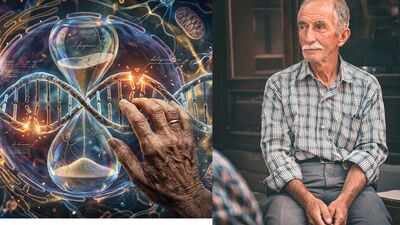
For centuries, humans have searched for ways to extend life, first through medicine that prevented early deaths and later through research aimed at slowing the biological processes associated with aging. But even if scientists eventually found a way to stop many age-related problems, the body might still face limits built into its own cells. A new mathematical model explores what human lifespan could look like if aging itself were removed while one unavoidable process continued: the gradual accumulation of DNA errors inside ordinary cells.The result suggests that humans might live far longer than today’s record holders, but not indefinitely.
CJP Jantar Mantar Protest Updates
Genetic damage may eventually become a barrier.
How DNA mutations could become the next lifespan barrier
Every day, cells divide, repair themselves and carry out countless biological tasks. During those processes, small mistakes can appear in DNA. According to the study, these changes, known as somatic mutations, happen after birth and are not passed down to future generations.Many mutations have little or no effect. Others can interfere with how a cell functions, especially if they affect genes needed for survival. Over many decades, the gradual loss of healthy cells could begin to affect tissues that have limited ability to replace themselves.Unlike some aspects of aging that researchers hope could one day be slowed or reversed, these genetic changes represent accumulated information errors inside the body. The new study examined what might happen if other major causes of aging were removed but these mutations continued.
How researchers calculated a potential 156-year lifespan
Scientists from the Skolkovo Institute of Science and Technology created a mathematical model to estimate how long humans could survive under these unusual conditions.The model considered several types of human cells, including neurons, heart muscle cells, liver cells, liver precursor cells and airway cells. It examined how quickly mutations might appear, how likely they were to disrupt essential genes and whether damaged cells could be replaced.According to the study published in npg aging, titled, ‘Somatic mutations impose an entropic upper bound on human lifespan’ states that the estimated median lifespan ranged from about 146 to 194 years. The researchers calculated a central estimate of roughly 156 years.That figure is far beyond the current human lifespan record. The longest confirmed human lifespan belongs to Jeanne Calment of France, who died in 1997 at the age of 122 years and 164 days.The researchers also explored extreme possibilities. In rare statistical scenarios, a small number of individuals could potentially survive for several centuries, although such estimates do not represent a guaranteed biological limit.
How DNA mutations changed the lifespan calculation
To understand the effect of mutations alone, the team first created a hypothetical scenario where almost every other source of death linked to aging was eliminated.In this version of the model, humans could theoretically survive for much longer with the mathematical baseline reaching more than 1,700 years. But once mutation-related cell loss was introduced, that number dropped sharply.The difference shows how multiple biological processes interact. Aging is not caused by a single mechanism. Instead, it emerges from a combination of changes involving cells, tissues and organs.The model suggests that DNA damage alone would not explain why humans age today, but it could become increasingly important if other causes of decline were controlled.
The organs that could ultimately limit human lifespan
The biggest challenges came from organs made up largely of cells that do not regularly replace themselves. The brain was one of the clearest examples. Most neurons are formed early in life and remain for decades. If harmful mutations caused those cells to stop functioning, the body would have limited ability to replace them.The heart faced a similar problem. Heart muscle cells have some ability to repair damage, but they do not regenerate at the same rate as many other tissues. In the model, damage affecting neurons reduced expected lifespan to around 194 years, while heart muscle damage produced a similar limit of about 208 years.
Which parts of the body could last the longest
Not every part of the body faces the same problem. The liver performed much better in the simulations because it has a remarkable ability to regenerate. When liver cells were lost, remaining cells could divide and help replace damaged tissue.Liver progenitor cells, which act as a reserve source for new liver cells, also helped maintain function in the model.Cells lining the airways showed similar resilience because they naturally renew themselves. However, even these systems eventually faced limits because cells cannot divide forever.The differences between organs highlight why extending lifespan is such a complicated challenge. Keeping one part of the body healthy does not necessarily solve problems developing elsewhere.
A new way to measure the causes of aging
Scientists have long debated how much somatic mutations contribute to aging. Previous research comparing animals with different lifespans has suggested that mutation rates may be linked to how long species survive.A 2022 study published in Nature, titled, ‘Somatic mutation rates scale with lifespan across mammals’ examines multiple mammal species found that longer-lived animals tended to accumulate certain mutations more slowly each year. However, the relationship did not reveal exactly how much those mutations affected lifespan.The newer model attempts to put numbers on that connection by estimating how mutation-driven damage could influence survival if other aging processes disappeared.The findings also overlap with earlier estimates suggesting humans may have a natural upper lifespan range somewhere beyond current records but still far below centuries of life.
The limits of predicting a future without aging
The researchers stress that the model represents a simplified version of human biology. Real aging involves many overlapping systems, including changes in immune function, protein maintenance, metabolism, cancer risk and communication between organs.The calculations also focused on only a handful of tissues and made assumptions about how mutations affect cells. In reality, a damaged cell may not immediately die. It may continue functioning poorly, become harmful or interact with surrounding cells in unexpected ways.Future versions of such models could include more biological processes and help scientists compare which forms of cellular damage have the greatest impact on lifespan.The study does not suggest that humans have a fixed lifespan of 156 years. Instead, it offers a mathematical estimate of one possible barrier that could remain even if many current problems linked to aging were solved.


