
Dog DNA reveals they travelled with ancient humans across Eurasia for thousands of years

Two new studies published in the journal Science are reshaping what scientists understood about how dogs became so physically varied and how closely their history has tracked our own. Comparing a village dog, a toy poodle, and a mastiff makes clear just how extreme the physical range within a single species can be. Roughly 700 million dogs now live alongside or near humans worldwide, yet the true age of that variety and the depth of the human dog relationship have remained difficult to pin down. By approaching the question from two different directions, skeletal analysis in one study and ancient DNA in the other, researchers have found that both dog diversity and the human canine bond stretch back much further, and developed in a far more complicated way, than previously understood.
When dog skulls first started looking different from wolves
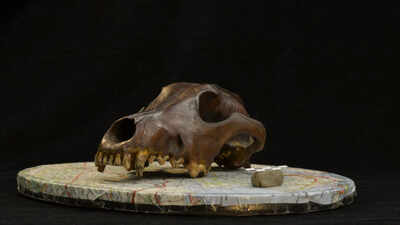
A team led by Allowen Evin of the University of Montpellier examined 643 dog and wolf skulls spanning 50,000 years to trace when the physical diversity seen in today’s dogs first began to appear. According to the study titled The emergence and diversification of dog morphology, published in Science, the distinctly dog-like skull shape first emerged around 11,000 years ago, during the Holocene epoch that followed the last ice age. Notably, skulls from this same early period already showed considerable variation in shape, indicating that the wide range of sizes and forms seen in dogs today is not solely the result of intensive selective breeding that became popular only in the last few centuries.
Why the earliest dogs still looked like wolves
To dig deeper into this timeline, the same research team reanalysed the skull shapes of all 17 known dog or wolf skulls from the Late Pleistocene, a period spanning roughly 129,000 to 11,700 years ago, including specimens as old as 50,000 years. Every one of these Pleistocene skulls, including some previously classified as early dogs, was found to be essentially wolf-like in shape. This suggests that while the genetic split between wolves and dogs likely happened during the Pleistocene, visible changes to skull shape did not begin until much closer to the Holocene, roughly 11,000 years ago, though some Holocene dog skulls still retained distinctly wolf-like features even after that shift began.
How dog DNA tracks ancient human migration across Eurasia
The second study, led by Shao Jie Zhang of the Kunming Institute of Zoology, took a genetic approach, analysing 73 ancient dog genomes spanning the last 10,000 years to examine how humans and dogs moved together across Eastern Eurasia over time. According to the paper titled Dog domestication and the dispersal of dogs across eastern Eurasia, published in Science, the researchers identified multiple shifts in dog ancestry across Eastern Eurasia that closely correlate with the movement of specific human groups, including hunter gatherers, farmers and pastoralists, indicating that as these different cultural groups migrated, their dogs frequently moved right alongside them, carrying distinct genetic signatures along the way.
An unexpected mismatch between human and dog ancestry
The genetic data also revealed some notable inconsistencies between human and dog population history in parts of Asia. Eastern hunter-gatherer groups from sites such as Veretye and Botai, who were genetically more closely related to Western Eurasian humans, were nonetheless found to have largely Eastern or Arctic-type dogs, rather than the Western dog lineages typically associated with other Western Eurasian cultures of the same period. This mismatch suggests dogs may have played a role in cultural exchange or trade between distinct human communities, hinting at layers of canine history that are not yet fully understood.
Dogs as biocultural companions on ancient human journeys
Taken together, the genetic evidence presents a compelling case that in Eastern Eurasia, dogs functioned as what researchers describe as biocultural packages, meaning ancient communities largely brought their existing dogs along during migration and possibly traded them, rather than simply acquiring new dogs after settling in a new region. This adds an important layer of nuance to existing genomic research, which had already identified four major dog lineages, broadly grouped as Eastern and Western populations, believed to have originated roughly 20,000 years ago.
Why these findings matter for understanding dog history
Together, both studies indicate that the physical and genetic foundations for the incredible diversity seen in dogs today were laid down thousands of years ago, shaped by a mix of natural selection, early human selection and varied environments long before the more structured breeding programmes of the last few centuries. The findings also reinforce how dog genetics can serve as an indirect record of ancient human migration, trade and cultural contact. Researchers involved in both studies suggest that further work tracing the physical diversity and ancestry of ancient dogs could continue to refine understanding of exactly how, when and where the deep relationship between dogs and humans first took shape.


