
Scientists discover Spain and Portugal have been hiding a second rabbit species for nearly 2 million years, and it is now quietly disappearing

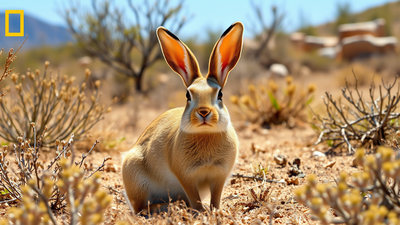
For more than a hundred years, scientists believed only one species of rabbit lived across the Iberian Peninsula, with at most two regional types. A new study has overturned that idea completely. Researchers from Spain, Portugal and the United Kingdom have found that what looked like a single rabbit is actually two separate species that split apart nearly two million years ago. One of these, now called the Iberian rabbit, is quietly disappearing in parts of Portugal and southwestern Spain, while the other, the common European rabbit, continues to thrive and even spread in many regions. The discovery could change how conservationists protect these animals going forward.
How researchers uncovered two separate rabbit species
The findings come from a study titled When taxonomy lags behind evolution, published in the journal Biological Conservation. It was led by Rafael Villafuerte and Miguel Delibes-Mateos from the Institute for Advanced Social Studies in Spain, working alongside researchers from the TRAMAS group and institutions in Portugal and the United Kingdom, including BIOPOLIS and CIBIO at the University of Porto. By combining genetic data with physical measurements, the team found that the two rabbit lineages have been evolving apart for close to two million years and no longer interbreed naturally, meeting the standard scientific definition of separate species rather than just regional variants of the same animal.
The difference between Iberian rabbit and European rabbit
The two species now recognised are the Iberian rabbit, known scientifically as Oryctolagus algirus, and the European rabbit, known as Oryctolagus cuniculus. The Iberian rabbit is found naturally across Portugal and western Spain, and nowhere else in the world except a few Atlantic islands and parts of North Africa, where humans introduced it long ago. The European rabbit, on the other hand, originated in eastern Spain but has since been introduced by humans across large parts of Europe, Oceania and South America, making it one of the most widely distributed mammals on the planet. Physically, the two species are not identical either, with the Iberian rabbit being generally smaller and carrying darker fur than its European relative.
Why is one rabbit species declining while the other spreads
What worries the researchers most is what this hidden diversity has masked for so long. While the European rabbit remains stable or is even increasing across much of its range, to the point of damaging crops in some regions, the Iberian rabbit has been declining sharply in the areas it calls home. Because both were treated as the same species for so long, conservation efforts failed to notice how badly one of them was struggling. Miguel Delibes-Mateos explained that the two rabbits cannot keep being managed as though they were one animal, since they have followed separate evolutionary paths for almost two million years.
How mismanagement is making the decline worse
The problem is not just about labelling. According to the researchers, wildlife restocking programmes meant to boost rabbit numbers for hunting or ecological purposes often release European rabbits into areas where only the Iberian rabbit naturally lives, since the European rabbit is more abundant and breeds faster. This practice risks accelerating the disappearance of the Iberian rabbit through competition for food and habitat, while also complicating conservation of the Iberian rabbit’s distinct genetic lineage, which further blurs the already thin genetic boundary between them. Left unchecked, researchers warn this could quietly erase a species that has existed for nearly two million years before most people even realise it is gone.
What formal recognition could mean for conservation
The researchers behind the study are now calling for the Iberian rabbit to be formally reclassified as its own distinct species rather than a subspecies. According to BIOPOLIS and CIBIO, this change would not involve discovering a brand new or unfamiliar animal, but rather correctly identifying and naming a lineage that has already been recognised in genetic terms, and giving it the legal and scientific status needed to prevent its extinction through replacement. If wildlife agencies formally treat the Iberian rabbit as a separate species, it would need its own population assessments, its own conservation targets and stricter controls on restocking practices that currently blur the line between the two groups.
Why this discovery matters beyond rabbits
Rabbits play an outsized role in Iberian ecosystems, forming a key food source for endangered predators such as the Iberian lynx and the Spanish imperial eagle, both of which depend heavily on healthy rabbit populations to survive. A decline in Iberian rabbit numbers could therefore ripple outward, affecting the very predators that conservationists have spent decades trying to protect. The study is a reminder that biodiversity can hide in plain sight, and that even a common, familiar animal can carry secrets that take genetic science and nearly two million years of separation to finally uncover.


