
Quote of the day by Isaac Newton: “No great discovery was ever made without…” – why every breakthrough begins with the courage to explore the unknown

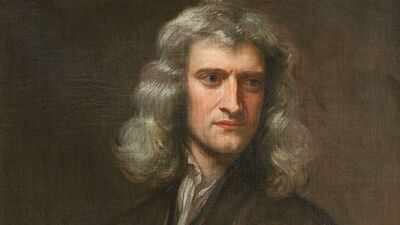
Every major scientific breakthrough starts the same unglamorous way, with a question nobody can yet answer. A line widely attributed to Isaac Newton captures that moment precisely. “No great discovery was ever made without a bold guess,” it goes. Before any evidence arrives to confirm or reject an idea, someone first has to be willing to propose it. Whether or not Newton actually wrote this exact sentence, the idea behind it lines up closely with how genuine discovery has always worked, whatever field it happens to occur in, and that is really what makes the line worth taking seriously regardless of exactly who first said it, or which century it was first written down in.
Quote of the day by Isaac Newton
“No great discovery was ever made without a bold guess”
A line with a slightly uncertain paper trail
Worth noting honestly: this quote traces back through secondary sources to W.I.B. Beveridge’s 1950 book The Art of Scientific Investigation, which credits it to Newton, but it does not appear in any of his own surviving writing, the Principia, the Opticks, or his correspondence. Goodreads lists it explicitly as unverified. That does not mean the sentiment is wrong. It simply means the attribution rests on a later book about scientific method rather than anything Newton wrote himself.
What the idea is actually saying
A guess, in this sense, is not a random claim thrown out without thought. It is a genuine possibility, proposed before there is proof either way. Calling it bold matters, since real discovery usually requires questioning an explanation that everyone else already assumes is complete. The guess only becomes useful once it gets tested, refined through evidence, and either confirmed or abandoned. Its value is not in being correct immediately. It is in giving the investigation somewhere to actually start.
Why curiosity has to come before proof
Without someone willing to ask why something happens, or whether an accepted explanation might be incomplete, no investigation ever begins in the first place. Curiosity does not guarantee the eventual answer will be right. It simply creates the opening that evidence later fills in, one way or the other.
Why Newton’s own work reflects this pattern
Whether or not he coined this particular sentence, it fits his actual working method closely. His work connecting the motion of falling objects to the motion of planets required asking whether two apparently unrelated phenomena might share the same underlying cause, a genuinely bold question at the time, tested afterwards through mathematics and observation rather than accepted on the strength of the guess alone.
Why the fear of being wrong holds people back
Proposing an idea publicly risks being wrong in front of other people, which is often reason enough for many to avoid saying it at all. If every idea needed a guarantee of being correct before anyone would consider it, very little that is genuinely new would ever actually get investigated.
Other memorable quotes by Isaac Newton
- “If I have seen further, it is by standing on the shoulders of giants.”
- “What we know is a drop, what we don’t know is an ocean.”
- “I can calculate the motion of heavenly bodies but not the madness of people.”
- “I do not know what I may appear to the world, but to myself I seem to have been only like a boy playing on the sea-shore, and diverting myself in now and then finding a smoother pebble or a prettier shell than ordinary, whilst the great ocean of truth lay all undiscovered before me.”
Why this still matters today
Progress still depends on someone willing to ask a question that does not yet have an answer, then testing it honestly rather than simply defending it. Most guesses turn out wrong. The ones worth making are the ones actually put to the test, since that is the only way any of them were ever going to lead anywhere new.


