
Nasa reveals why the Black Sea changes from dark blue to Turquoise each year

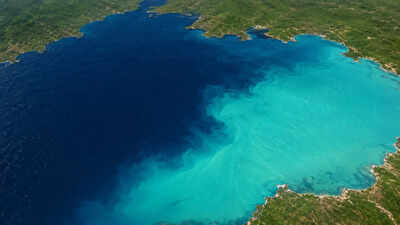
For much of the year, the Black Sea appears exactly as its name suggests, a broad, dark body of water stretching between Europe and Asia. Yet every spring and early summer, parts of the sea take on a very different appearance. Vast swirls of pale blue and turquoise begin to spread across the surface, creating patterns that are visible even from orbit.A recent image collected by Nasa’s PACE satellite on 22 June 2026 offered another striking example of this seasonal transformation. The picture showed large areas of the Black Sea covered in milky blue shades, with the colour extending into nearby waterways. While the scene may look unusual, scientists say the change is tied to tiny marine organisms that flourish in the region at this time of year.
Why the Black Sea turns Turquoise: Nasa explains the stunning colour change
The image was captured by the Ocean Color Instrument aboard Nasa’s PACE mission, which studies oceans, the atmosphere and ecosystems from space. In the satellite view, turquoise waters dominate much of the Black Sea, creating swirling patterns shaped by currents and changing conditions at the surface.According to Nasa, the colour is most likely linked to blooms of coccolithophores. These microscopic phytoplankton are covered with plates made from calcium carbonate. When their numbers increase dramatically, sunlight reflects off those plates and gives the water a pale, almost milky appearance.The effect can become so widespread that entire sections of the sea change colour. What appears as a giant turquoise stain from space is actually the combined presence of countless microscopic organisms suspended near the surface.
Why the Black Sea changes colour throughout the year
Although coccolithophores are invisible to the naked eye individually, their blooms can cover enormous areas. Late spring and early summer are typically the periods when they become particularly abundant in the Black Sea.The sea does not maintain the same appearance throughout the year. At other times, different types of microscopic algae dominate the ecosystem. Nasa notes that diatoms, which possess silica-based shells, often become more common during other seasons. Their presence tends to darken the water rather than brighten it, creating a very different look from the turquoise conditions seen in June.These shifts reflect changing biological activity within the sea rather than any alteration in the water itself.
Nasa astronaut captures Turquoise bloom spreading through the Bosphorus
The phenomenon was not confined to the open Black Sea. Nasa also highlighted conditions in the Bosphorus, the narrow waterway running through Istanbul that links the Black Sea with the Sea of Marmara.An astronaut aboard the International Space Station photographed the region on 27 May 2026, roughly a month before the PACE image was taken. The photograph revealed ribbons of turquoise water tracing currents on both sides of the strait.From hundreds of kilometres above Earth, the patterns appeared almost painted across the water’s surface. The image provided a closer look at how the bloom extended into one of the world’s most important maritime passages.
What Turquoise blooms reveal about the Black Sea’s ecosystem
Beyond their visual appeal, coccolithophore blooms are valuable to researchers studying marine ecosystems. Their brightness makes them relatively easy to detect from satellites, allowing scientists to monitor changes across large areas where direct sampling may be limited.The blooms also play a role in the movement of carbon through the ocean. During their life cycle, coccolithophores absorb carbon. After they die, part of that carbon can sink towards the seabed, where it may remain stored for extended periods. For that reason, images such as those captured by Nasa are more than attractive photographs.


