
Meet the rare orange-lipped monkey that hid from science for years, and a blurred photo helped discover it |

Nature is endowed with innumerable creatures, and some of them remain unknown to mankind. While some discoveries happen in a lab, under a microscope, others happen just when someone unexpectedly spots a marvel hidden in the jungles, oceans, and deserts.One discovery happened with a single blurry photograph, taken almost by accident, of an animal nobody could quite identify. For years, that photo sat as an open question. Then it happened again. And slowly, a small team of researchers found themselves chasing something that even the people living closest to it barely knew existed.
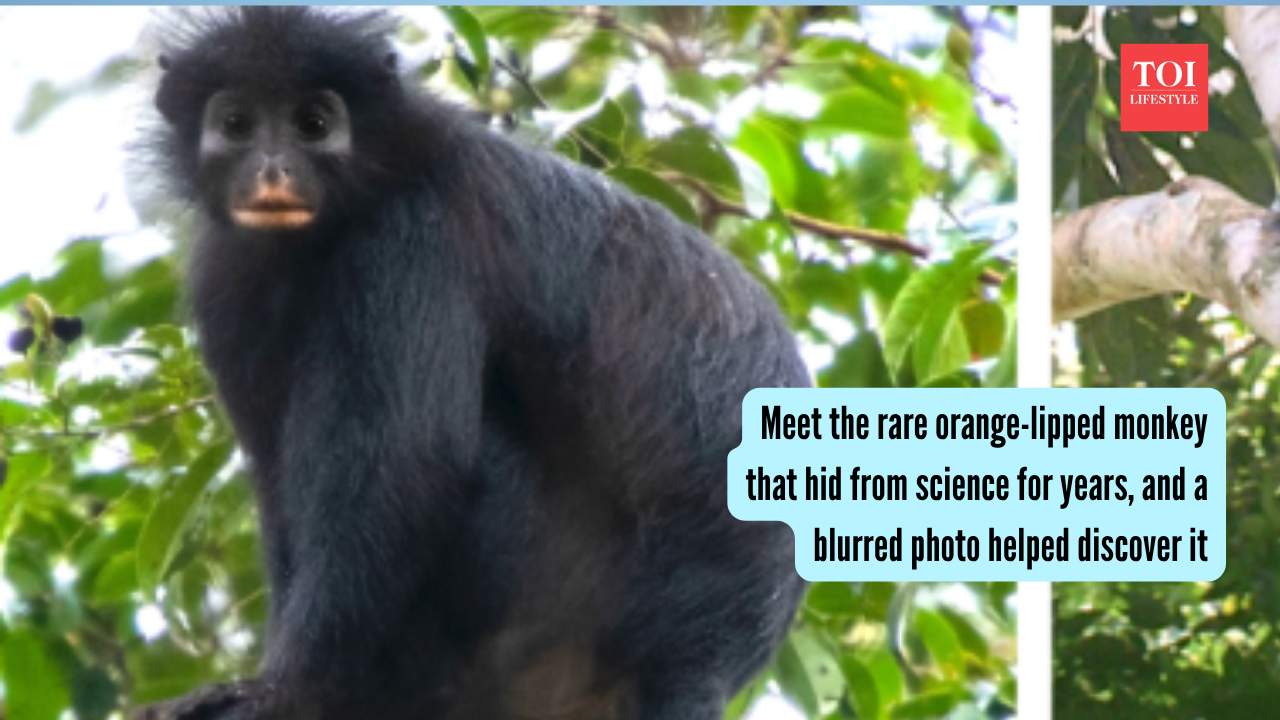
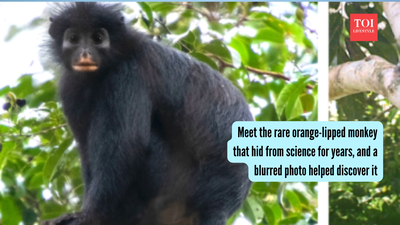
Photo: Daniel Rosengren/ Study: Likweli: A remarkable new species of Colobus monkey from the Lomami National Park, Democratic Republic of Congo
A blurry photo started it all
The first clue came in 2008, when conservationists in the Democratic Republic of Congo’s Lomami National Park captured a blurry image of an unfamiliar primate. Nothing more came of it until November 2018, when a second sighting reignited interest. According to ScienceAlert, field researcher Jean Pierre Kapale photographed a black monkey with pale markings around its mouth and a white patch near its tail, describing it as unlike anything seen in the area before.
That second sighting kicked off a dedicated search
Between 2018 and 2022, researchers logged 114 field observations across roughly 1,700 square kilometres between the Lomami and Lilo rivers. The monkeys were usually seen in small groups of around six, often mixed in with other primate species. According to Kate Detwiler and Junior Amboko of Florida Atlantic University, who led the research, the animal has an unusually calm temperament: “a quiet and watchful nature,” as they described it, noting that the monkeys often climb higher into the canopy to observe researchers rather than flee.
Meet the newly discovered ‘orange-lipped’ monkey
The species, now formally named Colobus congoensis and known locally as likweli, is easy to pick out with black fur, slate-grey cheeks, dark-rimmed eyes, a pale patch near the tail, and interesting orange lips.Just as distinctive are its calls, deep, roaring sounds that carry over long distances. According to the study published in PLOS One, acoustic analysis showed these calls are structurally different from those of related colobus species.Researchers found that Likweli is most closely related to the black colobus monkey, despite the two species being separated by more than 1,200 kilometres of forest and several million years of evolutionary divergence.
A rare species that is already at risk
Likweli is only the fifth new African monkey species described in the last 75 years. But the excitement comes with a warning attached. Given its small population, limited range, and exposure to hunting and habitat loss, researchers are recommending that the species be listed as Endangered on the IUCN Red List.


