
NEW DELHI: The Supreme Court on Thursday expressed apprehension over the Centre’s decision to introduce the third-language curriculum under the National Education Policy from Class 9.While hearing the Tamil Nadu government’s appeal against a Madras High Court order directing the state to facilitate the establishment of Jawahar Navodaya Vidyalayas (JNVs) in every district, a bench of Justices BV Nagarathna and R Mahadevan orally asked the Centre to reconsider the policy across all school boards.However, the bench was not directly dealing with the issue of the new CBSE policy.Another apex court bench, headed by Chief Justice Surya Kant, is already examining challenges to the new CBSE policy and recently refused to stay the notification.What the top court saidThe top court observed that introducing a third language in Class 9 would increase the stress levels of students.The bench suggested that if the new policy is introduced in Class 5 or Class 6, students would be better able to cope with it.”Union of India, please don’t have a third language from Class 9 onwards. It would unnecessarily increase the stress level of students,” the bench said.”If you want to introduce a new language, then please do it at the Class 5 or Class 6 level, but not at Class 9. Class 9 is full of stress; it starts from Class 8 onwards,” it added.”In our day, students were introduced to Class 10 concepts as early as Class 8… What about today’s students? Don’t start a new language in Class 9. Start it in Class 6. I’m recalling my experience from 1976,” Justice Nagarathna said.The bench also said that the National Education Policy does not make Hindi compulsory as the third language.”In middle school, the third language was introduced because that was required for SSLC. It was Kannada for those who had Hindi as their second language, and vice versa. Sanskrit was also there. The earlier, the better,” she said.The top court also advised the Tamil Nadu government not to oppose the Centre’s education policy merely because it originated from the Union government.”You may have your education system, but don’t prevent the Central government schools. Don’t have this attitude that it is the Union government, so why should we accept it,” the bench observed.Get the latest India news and live updates. Download the TOI App.About the AuthorTOI News DeskThe TOI News Desk comprises a dedicated and tireless team of journalists who operate around the clock to deliver the most current and comprehensive news and updates to the readers of The Times of India worldwide. With an unwavering commitment to excellence in journalism, our team is at the forefront of gathering, verifying, and presenting breaking news, in-depth analysis, and insightful reports on a wide range of topics. The TOI News Desk is your trusted source for staying informed and connected to the ever-evolving global landscape, ensuring that our readers are equipped with the latest developments that matter most.”Read MoreEnd of ArticleFollow Us On Social MediaVideosCongress Rejects Punjab Leadership Change As Rahul Gandhi Backs Raja Warring’s ContinuanceDelhi HC Directs Govt Doctors to Monitor Sonam Wangchuk as Hunger Strike Enters Day 19Modi Hails India-UK Trade Deal As Duty-Free Access Opens New Opportunities For ExportersNDA Eyes Fresh Push For Women’s Quota Bill As Supriya Sule Opens Door To SupportBageshwar Baba Dhirendra Shastri’s Brother Arrested For Firing At Farmer In Madhya Pradesh’Abhishek Has Done No Wrong’: Mamata Banerjee Defends Nephew Amid TMC Rebellion“Party Is Sinking”: Mamata’s Loyalist Crosses Over To Ritabrata Camp; TMC Crack Deepens’Serious Risk’ To India’s Largest Nuclear Plant Kudankulam After Files Leaked On Dark Web: ReportRahul Gandhi Steps In As Punjab Congress Infighting Threatens 2027 Election PreparationsExplained: Why PM Modi’s July 17 Punjab Visit Is Politically Crucial Ahead Of Assembly Elections123PhotostoriesTransform your home with these 5 beautiful wind chime ideas that add charm and soothing soundsJagannath Rath Yatra 2026: 5 interesting facts about the largest chariot festival in the worldWhy Italian women never seem tired or stressed after 40? 8 simple daily habits every Indian woman needs to steal right nowMonsoon health alert: Why fungal skin infections spike during the rainy season, and the simple daily habits doctors say can help prevent them10 Cleaning mistakes guests notice the moment they walk into your homeWorld Snakes Day 2026: Celebrating India’s iconic snake species10 types of traditional Pooris and calories per servingWhy children suddenly stop telling their parents everything around age 12Why airplane food tastes bland even when it’s perfectly seasoned123Hot PicksDU Round 1 Seat AllocationDiesel export priceStock market todayBank holiday todayAlex SunnyManipur JusticeRaghuram RajanAP POLYCET Phase 2 counsellingSonam WangchukTop TrendingMessiThomas Tuchels Net WorthFIFA World Cup 2026Mumbai Goa Highway AccidentBengaluru Law Student MurderBihar Railway Employee MurderSiya GoyalTaslima NasrinGujarat RapeIran war

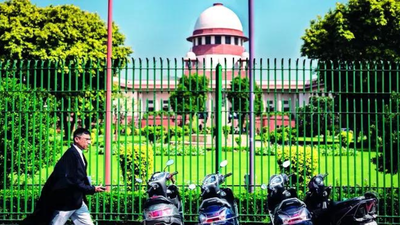
NEW DELHI: The Supreme Court on Thursday expressed apprehension over the Centre’s decision to introduce the third-language curriculum under the National Education Policy from Class 9.While hearing the Tamil Nadu government’s appeal against a Madras High Court order directing the state to facilitate the establishment of Jawahar Navodaya Vidyalayas (JNVs) in every district, a bench of Justices BV Nagarathna and R Mahadevan orally asked the Centre to reconsider the policy across all school boards.However, the bench was not directly dealing with the issue of the new CBSE policy.Another apex court bench, headed by Chief Justice Surya Kant, is already examining challenges to the new CBSE policy and recently refused to stay the notification.What the top court said
- The top court observed that introducing a third language in Class 9 would increase the
stress levels of students . - The bench suggested that if the new policy is introduced in Class 5 or Class 6, students would be better able to cope with it.
- “Union of India, please don’t have a third language from Class 9 onwards. It would unnecessarily increase the stress level of students,” the bench said.
- “If you want to introduce a new language, then please do it at the Class 5 or Class 6 level, but not at Class 9. Class 9 is full of stress; it starts from Class 8 onwards,” it added.
- “In our day, students were introduced to Class 10 concepts as early as Class 8… What about today’s students? Don’t start a new language in Class 9. Start it in Class 6. I’m recalling my experience from 1976,” Justice Nagarathna said.
- The bench also said that the National Education Policy does not make Hindi compulsory as the third language.
- “In middle school, the third language was introduced because that was required for SSLC. It was Kannada for those who had Hindi as their second language, and vice versa. Sanskrit was also there. The earlier, the better,” she said.
- The top court also advised the Tamil Nadu government not to oppose the Centre’s education policy merely because it originated from the Union government.
- “You may have your education system, but don’t prevent the Central government schools. Don’t have this attitude that it is the Union government, so why should we accept it,” the bench observed.


