
Affordable rental housing scheme: Who can apply, housing models and key conditions explained |

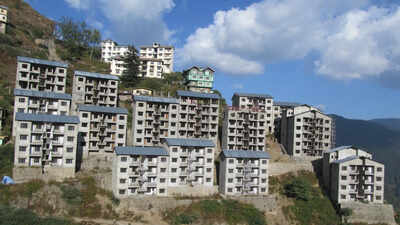
Owning a home may not be feasible for every urban resident. Millions of migrant workers, industrial labourers, and low-income households move frequently in search of employment and require affordable accommodation rather than permanent home ownership.Considering that objective, in 2024, the ministry of housing and urban affairs introduced Affordable Rental Housing (ARH) as one of the four verticals under Pradhan Mantri Awas Yojana-Urban (PMAY-U) 2.0. Unlike the other three verticals, which require house purchase or construction, it focuses on temporary accommodations.However, it’s not a free housing scheme. Residents occupy the accommodation on rent, with the initial rent determined through a local survey to reflect affordable market conditions.
Eligibility
The scheme primarily targets the Economically Weaker Section (EWS) and Low-Income Group (LIG) households living in urban areas, specifically identifying urban migrants, industrial and construction workers, Street vendors, rickshaw pullers, and domestic service providers, among other eligible families.Applicants must satisfy the general eligibility conditions of PMAY-U 2.0, including belonging to the EWS/LIG category and not owning a pucca house anywhere in India.The applicant must also have an Aadhaar card, and their family should not have availed benefits under any Central/State/UT government housing scheme during the last 20 years.
The houses
As per guidelines, three kinds of accommodations exist under the scheme:
- Single-bedroom dwelling units with a minimum carpet area of 30 square metres
- Double-bedroom dwelling units of up to 60 square metres
- Dormitories with up to 10 square metres per bed
To ensure projects primarily serve lower-income households, double-bedroom units cannot exceed one-third (33 per cent) of the total dwelling units in a project.Additionally, the carpet area available per resident must not be less than six square metres.
Models under the scheme
ARH is implemented through two distinct models.Under the first model, States and Urban Local Bodies (ULBs) identify government-funded houses that remain vacant under various Central or State housing schemes. These units are repaired and provided with essential civic infrastructure before being rented out.The projects may be operated directly by government agencies or through concessionaires selected via a transparent bidding process under the Public-Private Partnership (PPP) modeThe second model allows industries, educational institutions, hospitals, private developers and other public or private entities to construct, operate and maintain rental housing projects.These projects may house the entity’s own employees or workers, serve neighbouring industries or institutions, or be rented to other eligible beneficiaries.Entities may even collaborate with other organisations for land acquisition, project financing and operations. The entity bears the entire investment, which is recovered through rental income.


