
India excavated a 28 km artificial lake in the Thar Desert to line it with a plastic sheet: Aims to supply water to 5 million people in Jaisalmer and Barmer

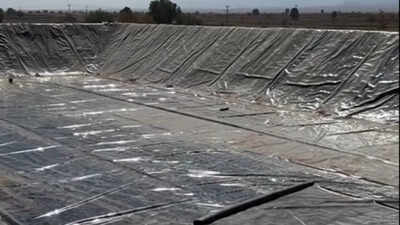
In the Indian state of Rajasthan, authorities have excavated a 28km artificial lake to line it with plastic and separate it from sand. Behind this lies the mission to supply water to 5 million people living in the cities of Jaisalmer and Barmer in the state.
A reservoir in the Thar Desert
The Thar Desert extends from northwest India to parts of Pakistan. On the Indian side, Jaisalmer and Barmer are among the regions most associated with arid landscapes, intense heat and dependence on artificial water transport systems to ensure a consistent supply.This is when authorities created a 28 km long structure with a reported capacity of approximately 1.41 billion litres and a depth of 33 feet. It was built by the Rajasthan state water supply department at an approximate cost of 242 crore rupees. The project was designed to function as a strategic reserve during periods when the Indira Gandhi Canal, one of the main water sources in the region, undergoes scheduled maintenance interruption.The Indira Gandhi Canal is one of the main water transport works in the state. It supplies water to the arid areas of northwestern India and has a direct impact on supply, irrigation and occupation of regions in the Thar. During the annual naharbandi, the region enters into a state of vulnerability. As the structure undergoes maintenance, the flow is interrupted for a period that can last weeks, affecting cities and communities that depend on the system. In the case of Jaisalmer and Barmer, authorities report that the annual shutdown causes water shortages.With the reservoir, water carried by the network can be stored and captured, processed at a filtration station and then distributed to 50 lakh people in the two cities.“Until now, there was no large-scale storage facility available to impound water for use during these maintenance periods. The need for this project arose specifically to address this persistent supply problem and the lack of adequate storage infrastructure,” stated executive engineer Rampal Mundhiyara, according to the Free Press Journal.
300 micron plastic liner
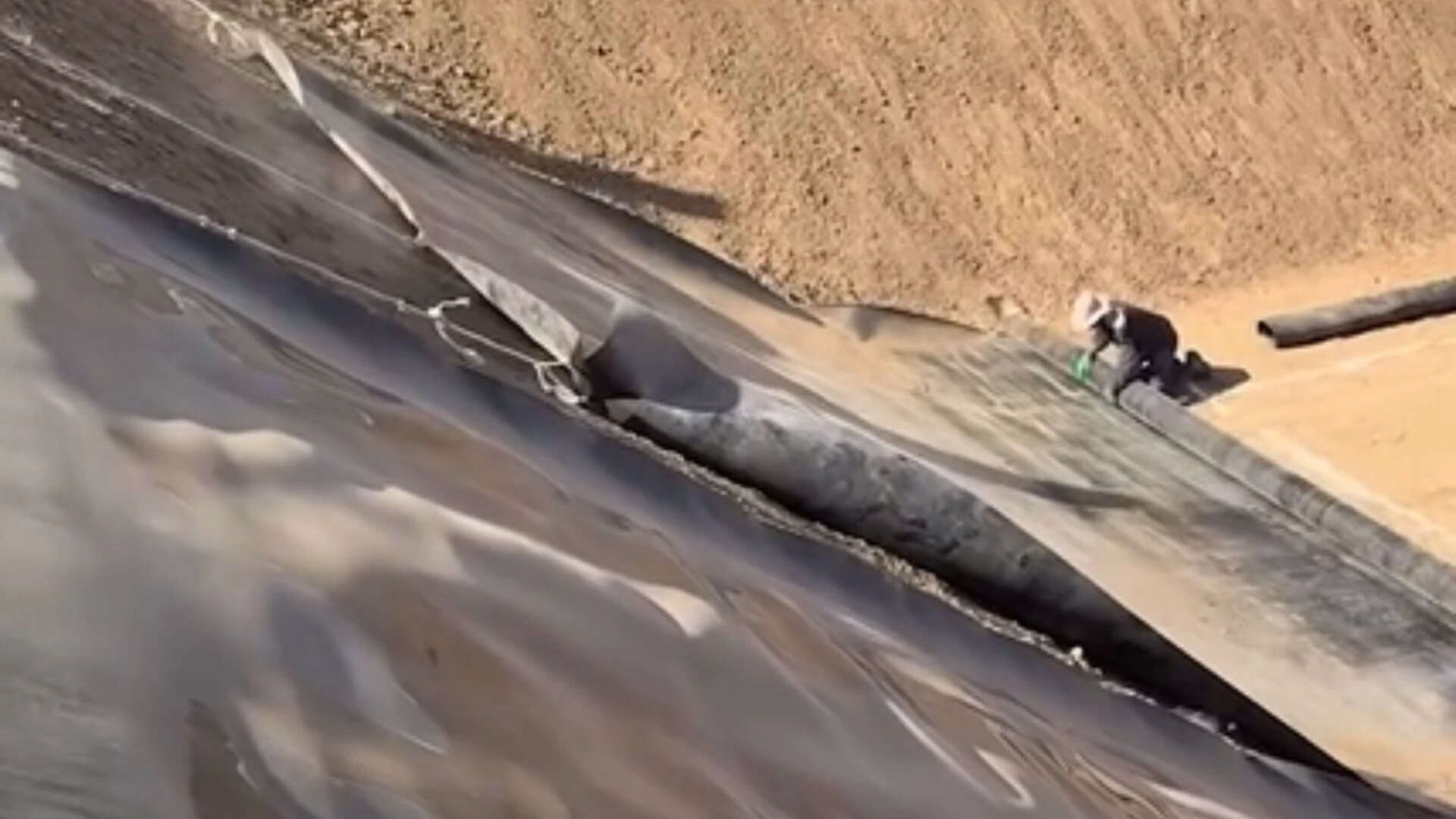
The bottom of the reservoir is lined with a plastic sheet of 300 microns.
However, due to the desert area, the stored water could be quickly absorbed by the sand due to infiltration. To reduce this risk, engineers covered the bottom of the reservoir with a layer of high-density polyethene, a material used as a barrier against infiltration. Now, the bottom of the reservoir is lined with a plastic sheet of 300 microns. A layer of soil has been placed on top of it to protect it. This point is important because the reservoir needs to withstand heat, contact with water, maintenance, and the conditions of an open area in the desert.The function of the liner is to create a barrier between the water and the sandy soil. Without this coating, a significant portion of the stored volume could be lost before reaching the distribution system.Sources also associate the project with Jal Jeevan Mission, an Indian national program aimed at expanding access to potable water through household connections. While the project began in January 2023, it had its timelines adjusted during execution. In May 2026, reports indicated that the project was in its final stage with filling initiated and inauguration scheduled for July 2026.


