
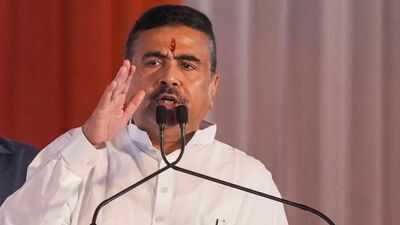
CM Suvendu Adhikari has defended the provision, saying it is intended to target habitual offenders. NEW DELHI: Bengal’s controversial Public Safety and Control of Anti-Social Activities Act, popularly dubbed the ‘Goonda Bill’, came into force after midnight on Monday. The Act empowers the BJP government with sweeping powers including preventive detention, property confiscation and the removal of suspected troublemakers from specific areas. The government says the law is aimed at tackling organised crime and anti-social activities, while the Opposition has criticised it as draconian and vulnerable to misuse.The West Bengal Assembly passed the Bill on June 29 and received the Governor’s assent soon afterwards. With its notification now in force, authorities can begin implementing its provisions across the state.The government says the legislation is designed to strengthen public safety, improve law and order and crack down on organised criminal networks, illegal mining, unauthorised sand extraction, wildlife-related offences and other activities that create fear or disrupt normal life.Why the controversyOne of the law’s most debated provisions allows the government to order preventive detention for up to one year if it believes a person’s activities pose a threat to public safety.The provision has drawn criticism from opposition parties and sections of civil society, which argue that it could be misused to detain political opponents or critics without trial. The BJP, however, has rejected those concerns, maintaining that the law contains safeguards against arbitrary action.Under the Act, every preventive detention order must be reviewed by an advisory board headed by a serving or former Calcutta High Court judge, along with two members qualified to become High Court judges. A detained person will also have the right to present a defence before the board.CM Suvendu defends the ActChief minister Suvendu Adhikari has previously defended the provision, saying it is intended to target habitual offenders rather than ordinary citizens.The legislation also empowers the state to confiscate the property of individuals accused under the Act by invoking relevant provisions of the Bharatiya Nyaya Sanhita (BNS). Another key feature is the power to issue externment orders. District magistrates, police commissioners and senior police officers can direct a person to leave a particular area or even an entire district for up to one year if they believe the individual could disturb public order.The law further authorises police to prohibit certain individuals from entering specific areas and provides legal protection to government officials involved in implementing its provisions.Defending the legislation after it came into force, West Bengal minister Dilip Ghosh said the government had introduced the law to deal with politically backed criminal elements that, according to him, had operated in the state for years.”The people of West Bengal are agitated and tired of the hooliganism they have had to witness for so many years now, especially since most of these thugs were politically connected. To curb this menace, we had to bring in a new law, and it will be strictly implemented… Common people who are still scared to speak out must come forward and file FIRs. The law will take its course,” he told news agency ANI.While introducing the Bill in the assembly last month, Adhikari had argued that similar laws already exist in several states and accused previous governments of failing to tackle political violence effectively.”Before this is implemented, let me point out that the previous government took no action. The people of Bengal have rejected you through EVM. You have managed to form an opposition, but it is not a strong one. This bill has already been introduced in several states under different names; Maharashtra, Delhi, Uttar Pradesh, Karnataka, Madhya Pradesh, and Jharkhand have implemented it,” he had said.The government has maintained that the Act is aimed solely at protecting public safety, maintaining law and order and preventing organised criminal activity, while opposition parties continue to argue that its wide-ranging powers require close scrutiny to prevent potential misuse.Get the latest India news and live updates. Download the TOI App.About the AuthorTOI News DeskThe TOI News Desk comprises a dedicated and tireless team of journalists who operate around the clock to deliver the most current and comprehensive news and updates to the readers of The Times of India worldwide. With an unwavering commitment to excellence in journalism, our team is at the forefront of gathering, verifying, and presenting breaking news, in-depth analysis, and insightful reports on a wide range of topics. The TOI News Desk is your trusted source for staying informed and connected to the ever-evolving global landscape, ensuring that our readers are equipped with the latest developments that matter most.”Read MoreEnd of ArticleFollow Us On Social MediaVideosHealth Camp Horror? FIR Against TMC MP Abhishek Banerjee After Woman’s Leg AmputatedSupreme Court Pushes Dialogue Route In Gyanvapi Case, Refers Dispute To Special Lok AdalatRailways Clarifies Viral Puja Video, Says Ritual Was Held in ₹3 Lakh Privately Booked Saloon Coach’Black Magic, Cow Urine’: Shiv Sena (UBT) Leader’s Daughter-In-Law Makes Shocking Allegations’I Lock Up Religion When…’: Annamalai Confirms ‘We The Leaders’ Will Become Political PartyWatch: Assam CM Himanta Sarma Drives Road Roller, Destroys Seized Drugs’1 Indian Missing’: MEA Condemns Attack On Vessel Carrying Indian Crew Off Oman Coast’Do I Have To Ask Trump?’: Omar Abdullah Launches Attack At Modi Govt Over Jammu-Kashmir StatehoodBJP Rejects Omar Abdullah’s ‘Operation Lotus’ Allegation, Demands Proof Or Public ApologyHapur Woman Critical After Allegedly Drinking Acid From Sealed Water Bottle; Police Launch Probe123Photostories”My kids don’t have phones. It’s okay being bored…”: Why Novak Djokovic’s approach is an important lesson for modern parentsDimple Kapadia’s all-black look at The Odyssey premiere deserves a standing ovationWant better health and peace of mind? Follow these 6 Vastu tipsKate Middleton saved her best Wimbledon look for last in a stunning sage green dress7 Everyday habits that can quietly damage even the happiest relationshipsWho came before Laila Hasanovic? Inside Wimbledon 2026 winner Jannik Sinner’s full dating history (including a tennis star)These 4 signs are said to have the highest IQWomen over 30, especially mothers, face these 5 common health problems: Doctor says early prevention can make all the differenceTrying for a baby? This one dental habit could make a difference”Scrambled egg mein crush…aur phir”: Raj Thackeray shares his unique Egg recipe loved by his father and Bal Thackeray123Hot PicksGold Rate TodayRajasthan PG admissionsSouth China SeaMTET hall ticketNepal protestLucknow-Kanpur ExpresswayEPFO amnesty schemeOil price todayE20 petrol newsTop TrendingSamantha BuschMadurai AccidentDelhi Police Constable Wife MurderFIFA World Cup 2026Karnataka Pakistani ArrestedGhaziabad Mall Rape MurderDelhi MurderDelhi NCR rainGurgaon EncounterIran war

NEW DELHI: Bengal’s controversial Public Safety and Control of Anti-Social Activities Act, popularly dubbed the ‘Goonda Bill’, came into force after midnight on Monday. The Act empowers the BJP government with sweeping powers including preventive detention, property confiscation and the removal of suspected troublemakers from specific areas. The government says the law is aimed at tackling organised crime and anti-social activities, while the Opposition has criticised it as draconian and vulnerable to misuse.The West Bengal Assembly passed the Bill on June 29 and received the Governor’s assent soon afterwards. With its notification now in force, authorities can begin implementing its provisions across the state.The government says the legislation is designed to strengthen public safety, improve law and order and crack down on organised criminal networks, illegal mining, unauthorised sand extraction, wildlife-related offences and other activities that create fear or disrupt normal life.
Why the controversy
One of the law’s most debated provisions allows the government to order preventive detention for up to one year if it believes a person’s activities pose a threat to public safety.The provision has drawn criticism from opposition parties and sections of civil society, which argue that it could be misused to detain political opponents or critics without trial. The BJP, however, has rejected those concerns, maintaining that the law contains safeguards against arbitrary action.Under the Act, every preventive detention order must be reviewed by an advisory board headed by a serving or former Calcutta High Court judge, along with two members qualified to become High Court judges. A detained person will also have the right to present a defence before the board.
CM Suvendu defends the Act
Chief minister Suvendu Adhikari has previously defended the provision, saying it is intended to target habitual offenders rather than ordinary citizens.The legislation also empowers the state to confiscate the property of individuals accused under the Act by invoking relevant provisions of the Bharatiya Nyaya Sanhita (BNS). Another key feature is the power to issue externment orders. District magistrates, police commissioners and senior police officers can direct a person to leave a particular area or even an entire district for up to one year if they believe the individual could disturb public order.The law further authorises police to prohibit certain individuals from entering specific areas and provides legal protection to government officials involved in implementing its provisions.Defending the legislation after it came into force, West Bengal minister Dilip Ghosh said the government had introduced the law to deal with politically backed criminal elements that, according to him, had operated in the state for years.“The people of West Bengal are agitated and tired of the hooliganism they have had to witness for so many years now, especially since most of these thugs were politically connected. To curb this menace, we had to bring in a new law, and it will be strictly implemented… Common people who are still scared to speak out must come forward and file FIRs. The law will take its course,” he told news agency ANI.While introducing the Bill in the assembly last month, Adhikari had argued that similar laws already exist in several states and accused previous governments of failing to tackle political violence effectively.“Before this is implemented, let me point out that the previous government took no action. The people of Bengal have rejected you through EVM. You have managed to form an opposition, but it is not a strong one. This bill has already been introduced in several states under different names; Maharashtra, Delhi, Uttar Pradesh, Karnataka, Madhya Pradesh, and Jharkhand have implemented it,” he had said.The government has maintained that the Act is aimed solely at protecting public safety, maintaining law and order and preventing organised criminal activity, while opposition parties continue to argue that its wide-ranging powers require close scrutiny to prevent potential misuse.


