
Narendra Modi and Anthony Albanese Amid the fresh flare-up in West Asia, PM Narendra Modi and his counterpart Anthony Albanese expressed concern over renewed escalation of tensions and called upon all parties to exercise restraint, de-escalate, and ensure protection of civilians along with uninterrupted flow of energy. Both leaders also reinforced their commitment to peace and stability in the Indo-Pacific as Albanese raised with Modi concerns related to China’s submarine-launched ballistic missile test (SLBM) this week. The 3rd India-Australia summit saw a declaration of intent by the 2 sides to work together for energy security, open markets and rules-based trade in the face of geopolitical tensions. According to the summit joint statement, the leaders reiterated the importance of dialogue and diplomacy, and adherence to international law to achieve a peaceful and lasting solution to the conflict. In a separate joint statement on energy security, they shared deep concern over prolonged impact of disruptions on energy, resources and other important commodities’ supply chains and prices. In the Indo-Pacific, the leaders reiterated their commitment to an open and rules-based order. The joint did not mention the East or South China Sea but underlined the importance of adhering to international law, particularly the United Nations Convention on the Law of the Sea (UNCLOS), freedom of navigation and overflight. The leaders strongly opposed any “destabilising or unilateral action to change the status quo and undermine regional peace and stability”. India and Australia also underlined the importance of the Quad as a partnership for practical and concrete outcomes in the Indo-Pacific. However, unlike in the joint statement issued by India and Japan earlier this month after a summit meeting, there was no explicit call for an early convening of the Quad leaders’ summit. The summit, which India planned to host last year, still remains in limbo because of uncertainty surrounding President Donald Trump’s travel plans. While the leaders steered clear of any rhetoric targeting China in their public remarks, Albanese discussed with Modi the SLBM test by Beijing earlier this week. The Australian PM had earlier described the test as a provocative act that could destabilise the Pacific Islands region. Admitting that Australia expressed concern over the issue in the meeting, foreign secretary Vikram Misri said that Modi in his response underlined the significance of peace and stability in the Indo-Pacific. “Australia and India have shared interests and shared objectives in this regard and that we would continue to not only exchange our perspectives on this but also intensify our cooperation in various areas to ensure that the peace and security and stability in the Indo-Pacific area is continued to be maintained,” said the foreign secretary, outlining Modi’s response. In his media statement after the meeting, Modi said that the Indo-Pacific is not merely a confluence of two oceans but also symbolizes the shared aspirations of like-minded democracies such as India and Australia. He said that the new Maritime Security Collaboration Roadmap will lend new momentum to joint efforts in the Indo-Pacific. “We will also move forward together in shipbuilding, ship repair, and maintenance,” he said.The leaders also discussed the war in Ukraine, expressing concern over “tragic humanitarian consequences” and calling for a peaceful resolution of the conflict.Get the latest India news and live updates. Download the TOI App.End of ArticleFollow Us On Social MediaVideosPM Modi Praises Australia’s Under-16 Social Media Ban, Says ‘India Learning From It’Flood Fury Disrupts Cities Nationwide, IMD Issues Red Alerts Amid Relentless RainfallAustralia To Return Three Historic Indian Artefacts During PM Modi’s VisitTensions In MVA As Sanjay Raut Slams Sharad Pawar For Holding Meeting At Eknath Shinde’s OfficeIndia, Myanmar Review Border Security, Intelligence Sharing’Hit With Iron Rod’: Bengaluru PT Teacher Booked After Allegedly Beating 12-Year-Old To DeathIndian Railways Clarifies Digital Ticket Rules: Only Original Rail One App Ticket Will Be AcceptedIndia and Australia Finalise Uranium Export Arrangement Under Civil Nuclear AgreementUGC-NET Under Scanner After Alleged Paper Leak; Education Ministry Seeks NTA InvestigationDRDO Successfully Tests Pinaka Long-Range Guided Rocket; Hits Target With Pinpoint Accuracy123PhotostoriesWho was ‘Miss Dior’? The fascinating woman behind Christian Dior’s most iconic perfume8 nicknames for white dogs that perfectly match their personality and charm7 Plants with leaves and flowers that naturally stain and dyeFrom a Rs 2.5 crore watch to Shikhar Pahariya’s name in her mehendi: Inside Janhvi Kapoor’s most talked-about moments at Anshula Kapoor’s weddingFeeling better isn’t a reason to stop antibiotics: Doctor warns the habit is fueling the rise of deadly superbugsShould you apply coconut oil before or after washing your hair? Experts finally settle the debate10 international baby names that work across different culturesAamir Khan’s rare ruby wedding ring for Gauri Spratt took 256 hours and 131 artisans to createPowerful life lessons Japanese parents teach their children that the rest of the world can learn fromClear your bowels naturally every morning with these 10 foods123Hot PicksIndia-AustraliaTiesOmar AbdullahMorocco VS FranceMahadev AppNET paper leakMonsoon trackerStock market todayStrait of HormuzAP DEECET rank cardTop TrendingCrude oilRamesh MhatreUS Section 301FIFA World Cup 2026India u19 vs Sri Lanka U19Andhra Hospital MurderWeather todayDelhi NCR rainBihar BDO Wife MurderIran war

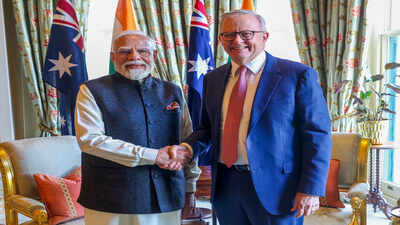
Amid the fresh flare-up in West Asia, PM Narendra Modi and his counterpart Anthony Albanese expressed concern over renewed escalation of tensions and called upon all parties to exercise restraint, de-escalate, and ensure protection of civilians along with uninterrupted flow of energy. Both leaders also reinforced their commitment to peace and stability in the Indo-Pacific as Albanese raised with Modi concerns related to China’s submarine-launched ballistic missile test (SLBM) this week. The 3rd India-Australia summit saw a declaration of intent by the 2 sides to work together for energy security, open markets and rules-based trade in the face of geopolitical tensions. According to the summit joint statement, the leaders reiterated the importance of dialogue and diplomacy, and adherence to international law to achieve a peaceful and lasting solution to the conflict. In a separate joint statement on energy security, they shared deep concern over prolonged impact of disruptions on energy, resources and other important commodities’ supply chains and prices. In the Indo-Pacific, the leaders reiterated their commitment to an open and rules-based order. The joint did not mention the East or South China Sea but underlined the importance of adhering to international law, particularly the United Nations Convention on the Law of the Sea (UNCLOS), freedom of navigation and overflight. The leaders strongly opposed any “destabilising or unilateral action to change the status quo and undermine regional peace and stability”. India and Australia also underlined the importance of the Quad as a partnership for practical and concrete outcomes in the Indo-Pacific. However, unlike in the joint statement issued by India and Japan earlier this month after a summit meeting, there was no explicit call for an early convening of the Quad leaders’ summit. The summit, which India planned to host last year, still remains in limbo because of uncertainty surrounding President Donald Trump’s travel plans. While the leaders steered clear of any rhetoric targeting China in their public remarks, Albanese discussed with Modi the SLBM test by Beijing earlier this week. The Australian PM had earlier described the test as a provocative act that could destabilise the Pacific Islands region. Admitting that Australia expressed concern over the issue in the meeting, foreign secretary Vikram Misri said that Modi in his response underlined the significance of peace and stability in the Indo-Pacific. “Australia and India have shared interests and shared objectives in this regard and that we would continue to not only exchange our perspectives on this but also intensify our cooperation in various areas to ensure that the peace and security and stability in the Indo-Pacific area is continued to be maintained,” said the foreign secretary, outlining Modi’s response. In his media statement after the meeting, Modi said that the Indo-Pacific is not merely a confluence of two oceans but also symbolizes the shared aspirations of like-minded democracies such as India and Australia. He said that the new Maritime Security Collaboration Roadmap will lend new momentum to joint efforts in the Indo-Pacific. “We will also move forward together in shipbuilding, ship repair, and maintenance,” he said.The leaders also discussed the war in Ukraine, expressing concern over “tragic humanitarian consequences” and calling for a peaceful resolution of the conflict.


