
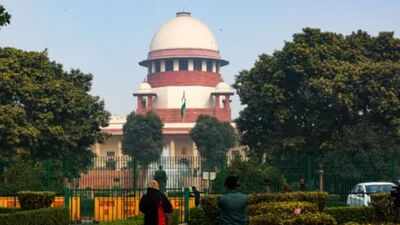
Photo credit: IANS NEW DELHI: Put on the back foot by a Supreme Court intervention, NCERT on Tuesday has released the revised Part 2 of its Class 8 Social Science textbook with the controversial chapter on judiciary stripped of its earlier critical framing and recast as a more conventional civics lesson on justice, constitutional remedies, courts, tribunals and dispute resolution.The biggest shift is in Chapter 4, The Role of the Judiciary in Our Society. The revised version drops the earlier section on “corruption in judiciary” and the discussion on judicial backlog as a key challenge. Instead, it now opens with broader questions: “What is the concept of justice?” , “Why is it important for a just and harmonious society?” , “What is the structure and role of the judiciary in India?” and “What are the alternative modes of dispute resolution?”The earlier version had said the judicial system faced “corruption” and “massive backlog”, and referred to complaints received through CPGRAMS. It stated that the judiciary had an “established procedure for receiving complaints” and that over 1,600 such complaints were received between 2017 and 2021. The passage that drew the sharpest objection said “people do experience corruption at various levels of the judiciary,” adding that efforts were being made to increase transparency and act against corruption.The controversy erupted soon after the book was released in February. The Supreme Court took suo motu cognisance, ordered withdrawal of physical and digital copies, and later said the chapter gave an impression that the judiciary had acknowledged institutional corruption while leaving out its role in protecting constitutional rights and access to justice. NCERT apologised, called the inclusion an “error of judgement” and said the chapter would be rewritten.The revised chapter now leans heavily on constitutional structure. It says the judiciary is “one of the three pillars of the government” and is “independent from the legislature and the executive”. It adds that the judiciary ensures that laws passed by legislatures remain within the “framework of the Constitution” and that the executive does not “overstep its role”. The tone has clearly shifted from scrutiny of institutional shortcomings to institutional explanation.There are substantial additions. A new section on writ jurisdiction explains Articles 32 and 226 and calls the right to constitutional remedies a “right under the Constitution to file a writ petition” before the Supreme Court or high courts. The chapter adds a detailed segment on PILs, describing PIL as “an innovation introduced by the Supreme Court” to address issues of public concern, with examples including the Hussainara Khatoon undertrial prisoners case, M C Mehta’s environmental litigation and the Vishaka guidelines on workplace sexual harassment.The chapter also expands the Supreme Court’s original, appellate, advisory and special leave jurisdictions, and includes references to Articles 141 and 142. It lists 25 high courts, explains subordinate courts, and introduces tribunals such as NCLT, consumer fora, NGT, CAT, APTEL and the Armed Forces Tribunal. A new section on digital technology mentions e-filing, hybrid hearings, live streaming, translation of judgments and the National Judicial Data Grid.Another major addition is alternative dispute resolution. Arbitration, mediation, Lok Adalats and Gram Nyayalayas are explained as ways to reduce the burden on courts. The chapter also notes the replacement of IPC, CrPC and Evidence Act by Bharatiya Nyaya Sanhita, Bharatiya Nagarik Suraksha Sanhita and Bharatiya Sakshya Adhiniyam.The fallout went beyond textual changes. The Supreme Court had directed that the three academics associated with the chapter — Michel Danino, Suparna Diwakar and Alok Prasanna Kumar — be disassociated from public-funded curriculum work, though it later lifted the life ban after accepting their explanation. The Centre has said they will not be associated with NCERT work in future.The revised chapter closes by reinforcing the institutional role of courts rather than dwelling on their failings. Its recap says “the judiciary is one of the three pillars of the government” and that its key role is to ensure that justice is served and laws remain within the constitutional framework. It also underlines that the Constitution prescribes separation of powers among the legislature, executive and judiciary, and that the judiciary remains independent of the other organs of government. The end-of-chapter activities, too, now steer students towards civic engagement with courts — writing model letters to the High Court or Supreme Court on social issues, staging a moot court, studying local judicial personalities and interacting with someone associated with the justice system. In effect, the rewritten chapter shifts the classroom focus from corruption and delay in courts to constitutional remedies, access to justice, PILs, digital initiatives, tribunals and alternative dispute resolution.Get the latest India news and live updates. Download the TOI App.About the AuthorManash Pratim GohainManash Pratim Gohain is a seasoned journalist with over two decades at The Times of India, where he has built a rich body of work spanning education policy, politics, and governance. Renowned for his incisive coverage of the National Education Policy (NEP) 2020, accreditation reforms, and skilling initiatives, he has also reported on student politics, urban policy, and social movements. His political reportage—both reflective and news-driven—adds depth to his writing, bridging policy with public impact. Through his 2,500 articles and related outlets, he has emerged as a trusted voice in national discourse, particularly in linking education reform to broader societal change.Read MoreEnd of ArticleFollow Us On Social MediaVideosPM Modi’s Indonesia Visit : BrahMos, Astra Missiles, Critical Minerals And Big OutcomesUnpublished ARAI Study Flags E20 Compatibility Issues In Older VehiclesMumbai-Pune Expressway: 4 Reasons The New Corridor Failed Its First Monsoon TestRam Temple Row Escalates As Akhilesh Yadav Warns Nishikant Dubey Of FIR Over Social Media PostIndian Diplomat Protests Incorrect Map Depicting J&K As Part Of Pakistan At Dhaka SeminarOwaisi Says Amit Shah ‘Doesn’t Do Things Casually’, Claims Meeting Points to NRC RolloutRam Mandir Trust Meeting: Champat Rai’s Resignation Accepted, Donated Items Put On DisplayPM Modi Praises BJP Chief Nitin Nabin After Kejriwal’s ‘Who Are You’ Remark | WatchBaruipur Rape Horror: Mamata Leads Protest, CM Suvendu Vows to Ensure Death PenaltyRam Mandir Trust Chief Demands Strict Action As Donation Probe Intensifies Further123PhotostoriesRush over discounted Pointed Gourd (Parwal) in New Jersey: 8 traditional desi ways to enjoy it during summer season5 simple ways to make meditation a daily habitNational parks you can visit using Vande Bharat trains without taking a flight: India’s best wildlife getaways by railFrom a lush garden to vibrant interiors: Inside Anupamaa fame Rupali Ganguly’s nature-inspired Mumbai homeShould fruits be eaten before or after meals? Here’s what research actually saysHow to Identify Animal Paw Prints While TrekkingSonam to Janhvi: The Kapoor sisters turned Anshula Kapoor’s wedding into a fashion runwayHow to maintain Angelfish in an aquarium: A step-by-step beginner’s guideDrinking tea hotter than 65°C may increase the risk of esophageal cancerPM Modi to visit Prambanan Temple Complex in Indonesia: 5 fascinating facts about the historic UNESCO site123Hot PicksArgentina vs EgyptPM Modi Indonesia VisitWayanad LandslideMumbai rain deathMumbai school holidayKimi AntonelliErling HaalandMumbai schools holidayMumbai-Pune expresswayTop TrendingIran-US WarMumbai FloodsBengal Rape CaseFIFA World Cup 2026CBSE Class 10 ResultRam temple donationMumbai rainStock Market TodayMumbai Rain DeathKCET mock seat allotment

NEW DELHI: Put on the back foot by a Supreme Court intervention, NCERT on Tuesday has released the revised Part 2 of its Class 8 Social Science textbook with the controversial chapter on judiciary stripped of its earlier critical framing and recast as a more conventional civics lesson on justice, constitutional remedies, courts, tribunals and dispute resolution.The biggest shift is in Chapter 4, The Role of the Judiciary in Our Society. The revised version drops the earlier section on “corruption in judiciary” and the discussion on judicial backlog as a key challenge. Instead, it now opens with broader questions: “What is the concept of justice?” , “Why is it important for a just and harmonious society?” , “What is the structure and role of the judiciary in India?” and “What are the alternative modes of dispute resolution?”The earlier version had said the judicial system faced “corruption” and “massive backlog”, and referred to complaints received through CPGRAMS. It stated that the judiciary had an “established procedure for receiving complaints” and that over 1,600 such complaints were received between 2017 and 2021. The passage that drew the sharpest objection said “people do experience corruption at various levels of the judiciary,” adding that efforts were being made to increase transparency and act against corruption.The controversy erupted soon after the book was released in February. The Supreme Court took suo motu cognisance, ordered withdrawal of physical and digital copies, and later said the chapter gave an impression that the judiciary had acknowledged institutional corruption while leaving out its role in protecting constitutional rights and access to justice. NCERT apologised, called the inclusion an “error of judgement” and said the chapter would be rewritten.The revised chapter now leans heavily on constitutional structure. It says the judiciary is “one of the three pillars of the government” and is “independent from the legislature and the executive”. It adds that the judiciary ensures that laws passed by legislatures remain within the “framework of the Constitution” and that the executive does not “overstep its role”. The tone has clearly shifted from scrutiny of institutional shortcomings to institutional explanation.There are substantial additions. A new section on writ jurisdiction explains Articles 32 and 226 and calls the right to constitutional remedies a “right under the Constitution to file a writ petition” before the Supreme Court or high courts. The chapter adds a detailed segment on PILs, describing PIL as “an innovation introduced by the Supreme Court” to address issues of public concern, with examples including the Hussainara Khatoon undertrial prisoners case, M C Mehta’s environmental litigation and the Vishaka guidelines on workplace sexual harassment.The chapter also expands the Supreme Court’s original, appellate, advisory and special leave jurisdictions, and includes references to Articles 141 and 142. It lists 25 high courts, explains subordinate courts, and introduces tribunals such as NCLT, consumer fora, NGT, CAT, APTEL and the Armed Forces Tribunal. A new section on digital technology mentions e-filing, hybrid hearings, live streaming, translation of judgments and the National Judicial Data Grid.Another major addition is alternative dispute resolution. Arbitration, mediation, Lok Adalats and Gram Nyayalayas are explained as ways to reduce the burden on courts. The chapter also notes the replacement of IPC, CrPC and Evidence Act by Bharatiya Nyaya Sanhita, Bharatiya Nagarik Suraksha Sanhita and Bharatiya Sakshya Adhiniyam.The fallout went beyond textual changes. The Supreme Court had directed that the three academics associated with the chapter — Michel Danino, Suparna Diwakar and Alok Prasanna Kumar — be disassociated from public-funded curriculum work, though it later lifted the life ban after accepting their explanation. The Centre has said they will not be associated with NCERT work in future.The revised chapter closes by reinforcing the institutional role of courts rather than dwelling on their failings. Its recap says “the judiciary is one of the three pillars of the government” and that its key role is to ensure that justice is served and laws remain within the constitutional framework. It also underlines that the Constitution prescribes separation of powers among the legislature, executive and judiciary, and that the judiciary remains independent of the other organs of government. The end-of-chapter activities, too, now steer students towards civic engagement with courts — writing model letters to the High Court or Supreme Court on social issues, staging a moot court, studying local judicial personalities and interacting with someone associated with the justice system. In effect, the rewritten chapter shifts the classroom focus from corruption and delay in courts to constitutional remedies, access to justice, PILs, digital initiatives, tribunals and alternative dispute resolution.


