
Why Louis Vuitton took a tea brand to court and walked away with a ₹12 crore victory


A cup of tea and a luxury handbag don’t have much in common. But this week, they found themselves at the centre of one of China’s biggest trademark battles.Popular tea chain Molly Tea has been ordered to pay Louis Vuitton 10.3 million yuan (around US$1.5 million or nearly ₹12 crore) after a Chinese court ruled that its logo looked too much like the luxury brand’s famous floral monogram.The decision has sparked a massive conversation online. Some people believe the court made the right call. Others feel the case isn’t as black and white as it seems.The ruling came from the Suzhou Intermediate People’s Court in eastern China.According to the court, Molly Tea’s logo infringed Louis Vuitton’s trademark rights. The company has now been asked to pay 10 million yuan for economic losses and another 300,000 yuan towards legal expenses.But the financial penalty isn’t the only thing the tea brand has to deal with.The court also directed Molly Tea to stop using the disputed logo and publish a public statement across its official website and social media accounts, including Weibo, WeChat, RedNote, Douyin and its mini-program, acknowledging the ruling.Molly Tea isn’t accepting the decision quietly.
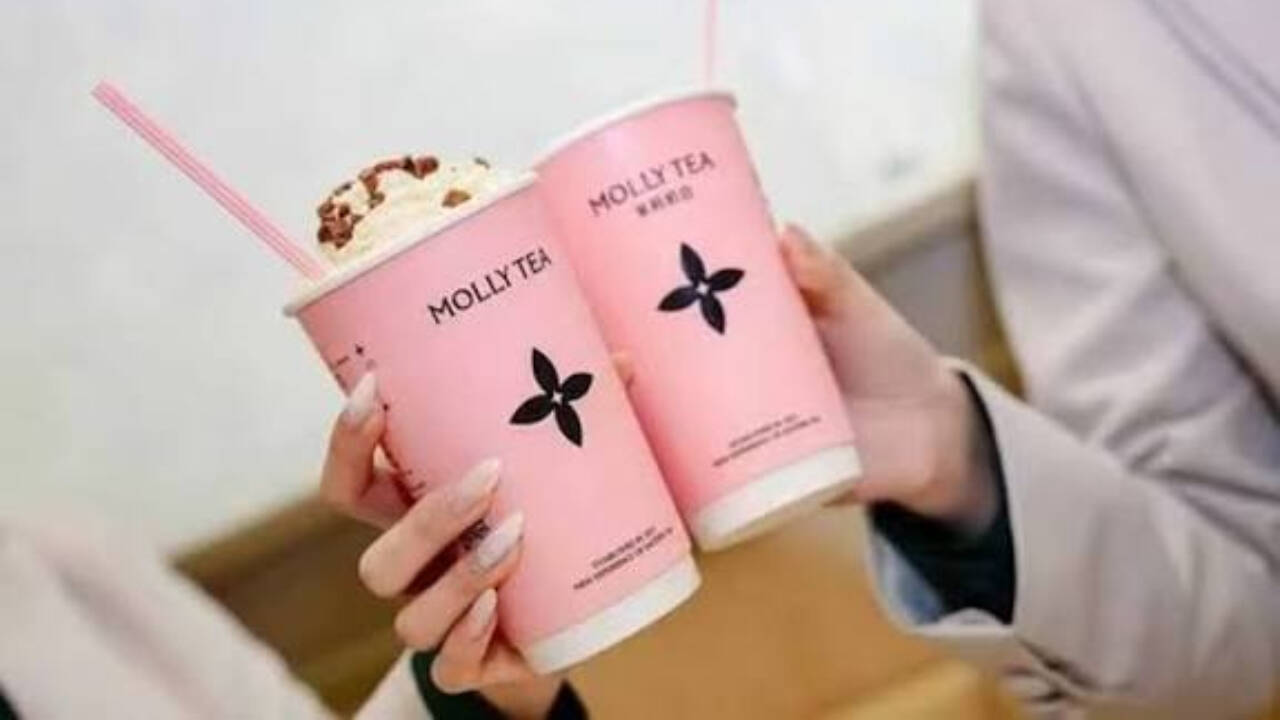
The Shenzhen-based company has already said it plans to appeal. It has also updated its branding, replacing the black-and-white version of the logo on its app with a coloured design while the legal process continues.The dispute itself isn’t new.Louis Vuitton filed the trademark lawsuit last year after raising concerns over Molly Tea’s branding. Chinese intellectual property records also show that several trademark applications filed by Molly Tea in 2024 were rejected. Authorities noted that Louis Vuitton had already registered its signature floral monogram in China.That’s where the legal argument stands.The public conversation, however, has gone in a very different direction.As news of the ruling spread, Chinese social media exploded with opinions. The topic attracted hundreds of millions of views, with users debating whether this was really about copying a luxury brand or something much bigger.Many people supported Louis Vuitton.They argued that trademarks exist for a reason. Once a design is legally registered, other companies can’t use something that could confuse customers, even if they’re selling completely different products.For them, it didn’t matter that one company sells handbags and the other sells tea. The issue was protecting a brand’s identity.But plenty of others weren’t convinced.Some users pointed out that floral patterns similar to Louis Vuitton’s monogram have appeared in Chinese art, architecture and textiles for centuries. They argued that geometric floral motifs are part of a much older design tradition and shouldn’t automatically belong to one luxury label.One person even joked that ancient artisans probably never imagined they would need to trademark their work.Others defended Molly Tea by saying they would continue buying from the brand regardless of the verdict.At the same time, legal experts and many users reminded people that trademark law doesn’t judge where an idea first appeared in history. It focuses on whether a specific logo has already been registered and whether another business is using something that looks similar enough to create confusion.And that’s exactly what the court believed happened in this case.For Louis Vuitton, protecting its famous monogram is nothing new.The luxury house has spent decades defending one of the world’s most recognisable logos. Whether it’s fashion, accessories or products outside the luxury industry, the brand has regularly taken legal action when it believes its trademarks have been copied.Molly Tea, meanwhile, is still a relatively young company.Founded in 2021, it has expanded at remarkable speed. Today, it operates more than 2,000 stores across China and overseas, including in the United States, Canada, Australia, the United Kingdom, Singapore, Thailand and Indonesia.That’s one reason this case has attracted so much attention. It isn’t just a local café fighting a luxury giant. It’s one fast-growing brand taking on one of fashion’s biggest names.The legal battle isn’t over yet, with Molly Tea preparing to appeal.But for now, the ruling has reignited a familiar debate in the fashion world. When does inspiration cross the line into imitation? And who really gets to own a design that may have roots stretching back hundreds of years?It’s a question that goes far beyond one logo – and it’s one the internet clearly hasn’t finished arguing about.


