
Why dozens of mystery piggy banks suddenly appeared on Texas shoreline: How much cash did they contain?

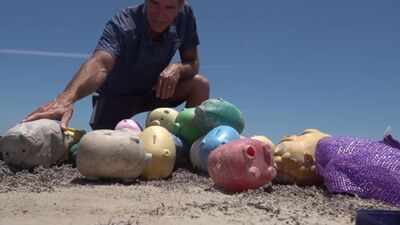
During childhood many kids wish that their piggy banks would multiply into a thousand more and make them rich. No one ever even thought of spotting numerous piggy banks on the Texas beach. But nature has a way of surprising everyone, at all times. Not one, two or a dozen, but nearly 60 colourful piggy banks began to appear on the shore of Texas. In May 2026, plastic piggy banks started to appear along the local beaches in surprising numbers. Within a day, there were as many as 14 that washed ashore. A person surveying the 13 miles of Texas coastline said he personally recovered more than 60 over the last year. And these were all from different countries. One of the most common versions was manufactured in the Dominican Republic while others include Spanish writing and at least one had markings from Guatemala.The instance began with one beach and spread to beaches up and down the Texas coast, stretching as far north as the Bolivar Peninsula and as far south as South Padre Island.
The case of the piggy banks
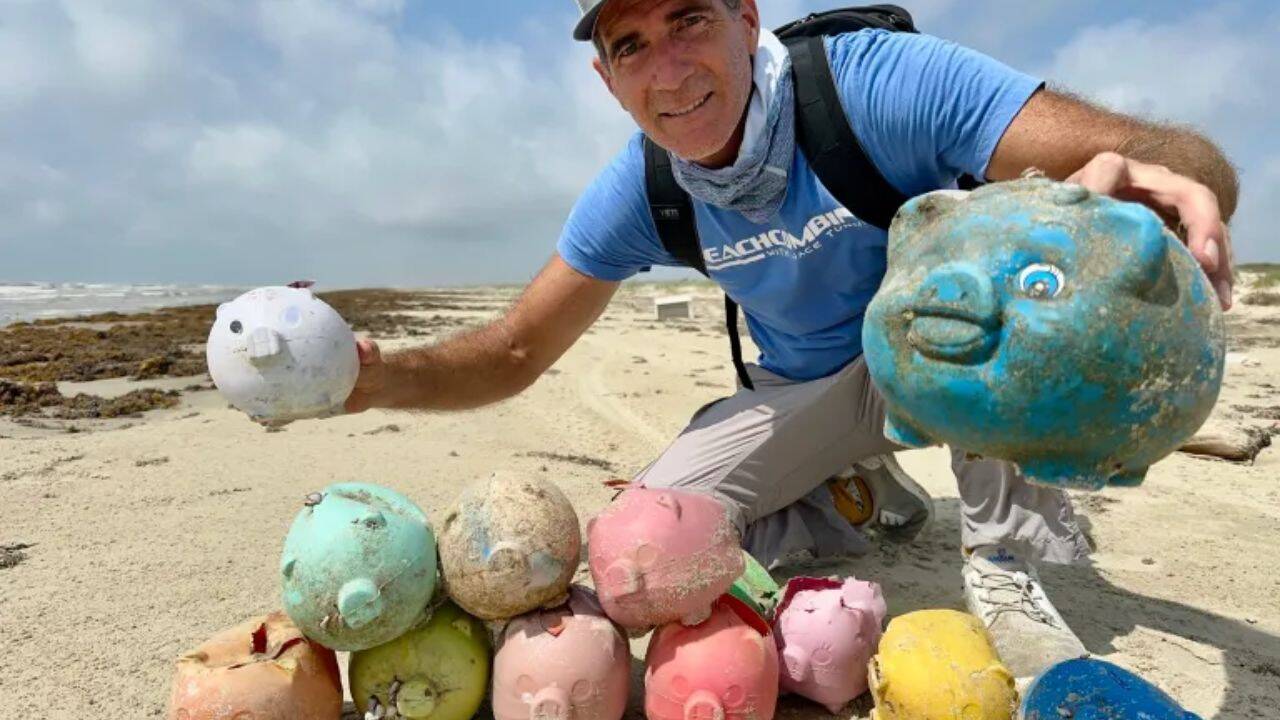
When locals got the news, they began calling them “sea pigs.”
For years, Jace Tunnell has walked beaches across the Coastal Bend searching for marine debris and documenting what washes ashore. In that time, he said that he had found just about everything imaginable. “If you can think of it, we’ve found it out here,” he said.Among the strangest discoveries include more than 60 messages in bottles, a safe, a prosthetic leg, bowling balls and even boats he said, that drifted from Cuba. “I found over 60 messages in a bottle … a safe. I found a prosthetic leg. I found three bowling balls … boats washed up from Cuba,” Tunnell said. “I found a 35-foot sailboat with the mast still up, the sails up.”Talking about the piggy banks, he quipped: “We have a couple of different species, you know, as we say in science.” When locals got the news, they began calling them “sea pigs.”Bright pink, blue and yellow piggy banks, some still sealed with the little plastic tab over the coin slot, all showed up tangled in thick mats of sargassum seaweed.At first glance, these looked like the result of a cargo spill or container ship accident. However, some seem to have other origins. “Once these piggy banks have been used, you’ll notice there’s a bunch of cuts in them,” he said. “There’s no other way to get the money out, so people dispose of them, whether it’s directly in the ocean or on land.”Since they are lightweight and buoyant, they can easily enter waterways and eventually drift long distances through ocean currents. “Once it rains, these things are real lightweight. They float,” he said. “They get into the waterways like rivers, float to the ocean, get into that loop current, and get into those eddies and push up to the Texas Coast.”
Did the Texas piggy banks carry cash?
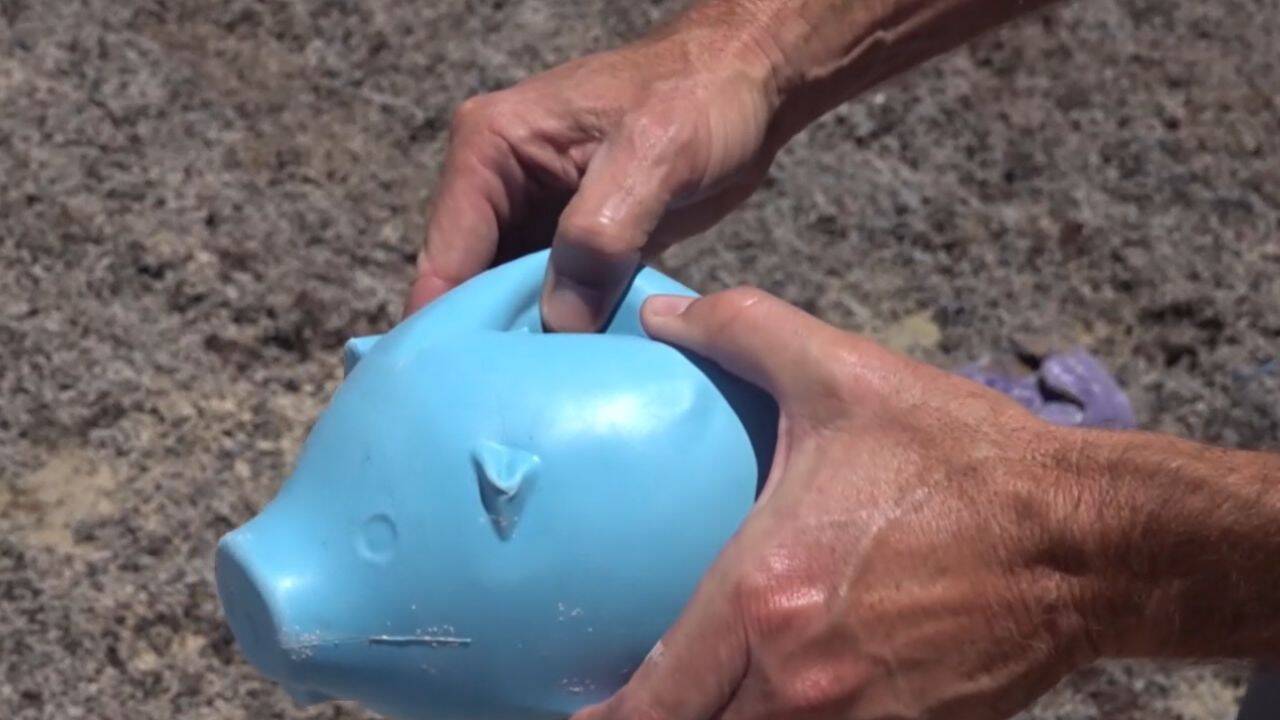
Well, if there’s a box, there has to be a gift. Tunnell shared how every time he posted about a piggy bank, people asked him “What was in there? Did you find any money?”“I just tell them sand dollars. That’s the only thing I ever found in there,” he said. To anyone else who finds these piggy banks washed ashore, he suggested disposing of them properly or taking one home as a souvenir.


