
Scientists transform waste plastic bottles into battery-grade graphite for electric vehicles

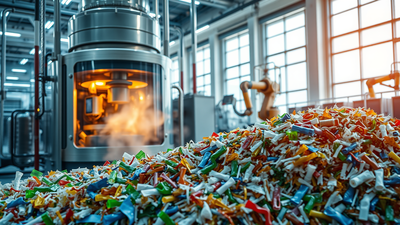
That empty plastic water bottle sitting in your recycling bin might have a second life ahead of it, one that involves powering an electric vehicle, a smartphone or even a renewable energy storage system. Researchers at Penn State University have developed a new method to convert waste PET plastic, the same material used in most disposable drink bottles, into highly ordered synthetic graphite, a critical material used inside the anode of every lithium-ion battery. The breakthrough tackles two problems that seem completely unrelated at first glance, the world’s mounting plastic waste crisis and the rapidly growing global demand for the graphite needed to build batteries for electric vehicles, laptops and grid scale energy storage.
Why graphite matters so much for batteries
Graphite forms the anode inside a lithium-ion battery, the component responsible for storing and releasing electrical charge every time the battery is used or recharged. It is officially classified as a critical mineral by the United States Department of Energy, and demand for it is expected to keep climbing sharply as electric vehicles, consumer electronics and large scale battery storage systems become more common worldwide. Most graphite used today is either mined directly from the ground or manufactured synthetically using processes that rely on metal catalysts such as iron, nickel or cobalt, methods that can leave behind impurities requiring additional purification steps and add extra cost and complexity to production.
How the researchers turned plastic into graphite
According to Penn State’s own account of the research, the team combined shredded PET plastic with small amounts of graphene oxide before heating the mixture through a carefully controlled thermal process, allowing the carbon atoms trapped inside the plastic to rearrange themselves into highly ordered graphitic structures. Unlike conventional synthetic graphite production, this approach skipped metal catalysts entirely, relying instead on the graphene oxide sheets to act almost like a template, guiding loose carbon atoms into neat, well aligned stacked layers as the plastic broke down under heat. Lead author Shakshi Sekar, a doctoral student in Penn State’s Department of Energy and Mineral Engineering, said the work shows that a material most people think of as pure waste can actually become a genuinely valuable resource for producing graphite.
Finding the right recipe for high quality graphite
According to the study published in the journal Diamond and Related Materials, the researchers tested several different concentrations of graphene oxide before finding that adding just two and a half percent by weight, with a low oxygen content, produced the best results of the entire experiment. At this precise setting, the resulting graphite developed unusually large, well ordered crystallites, microscopic regions where carbon layers line up in an especially organised way, a property considered a key indicator of how suitable a material is for use in high quality battery anodes. The crystal width reached about 114 nanometres and the stacking height about 27 nanometres, both figures that actually surpassed the numbers typically measured in commercial natural graphite, which sits closer to 100 and 24.6 nanometres respectively.
Why this outperforms even natural graphite
What makes the finding particularly striking is that the plastic derived graphite did not just match commercial natural graphite, in several respects it actually exceeded it. Compared to plain PET char produced without any graphene oxide added, the crystal width increased by roughly 228 percent and the stacking height by about 200 percent once the right amount of graphene oxide was introduced. Researchers explained that oxygen containing functional groups sitting along the edges of the graphene oxide sheets appear to actively help kick-start and guide this lateral crystal growth, essentially coaxing the carbon atoms from the melted plastic into a far more organised arrangement than they would naturally form on their own.
What this could mean for plastic waste and clean energy
The world produces roughly three hundred million tonnes of plastic every year, and about half of that is used just once before being thrown away, a huge volume of material that largely ends up in landfills or the environment despite ongoing recycling efforts. If this graphite conversion process can eventually be scaled up beyond the laboratory, it offers a genuinely useful way to divert some of that waste plastic into a productive, high value application rather than letting it sit unused for decades. Sekar noted that if waste plastic can become a genuine feedstock for advanced energy materials, it fundamentally changes how people think about recycling altogether, shifting plastic from being viewed purely as a disposal problem toward being seen as a legitimate resource that can help support the clean energy technologies the world increasingly depends on.


