
How Chornobyl’s mysterious fungus could change medicine and future space missions

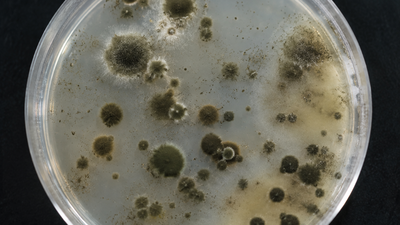
Nearly four decades after the Chornobyl nuclear disaster, the abandoned reactor remains one of the most hostile places on Earth. Radiation levels that would prove lethal to most forms of life still linger in parts of the exclusion zone, making it an unlikely setting for biological discovery. Yet among cracked concrete, rusting steel and contaminated debris, scientists found something entirely unexpected: fungi not only surviving but appearing to flourish.Some species were even growing towards intense sources of ionising radiation, a behaviour that challenged long-held assumptions about how living organisms respond to extreme environments. Predictably, headlines soon suggested these fungi were “feeding on radiation”. The reality is more nuanced and, in many ways, even more remarkable. Rather than consuming radiation like food, certain fungi appear able to use it in ways that enhance their metabolism, offering scientists an intriguing glimpse into the extraordinary adaptability of life. Their unusual biology has since attracted the attention of microbiologists, medical researchers and even space scientists, all keen to understand whether these organisms could one day inspire technologies for use far beyond the Chornobyl Exclusion Zone.
How scientists discovered radiation-loving fungi inside Chornobyl
The explosion at Reactor No. 4 in April 1986 released vast quantities of radioactive material into the atmosphere, contaminating large parts of present-day Ukraine, Belarus and beyond. While the disaster devastated ecosystems and forced the evacuation of entire communities, it also created an unprecedented environment for scientific research.During surveys of the damaged reactor and surrounding structures in the years that followed, microbiologists identified colonies of darkly pigmented fungi growing on walls, concrete and other highly radioactive surfaces. These were not isolated organisms clinging to survival. Many appeared well established in locations where radiation levels were expected to inhibit most forms of life.One characteristic immediately caught researchers’ attention. These fungi contained unusually high concentrations of melanin, the pigment most people associate with human skin, hair and eye colour. In fungi, however, melanin serves a much broader purpose. It helps protect cells from environmental stresses, including ultraviolet light, temperature extremes, dehydration and ionising radiation.Among the best-studied species are Cladosporium sphaerospermum, Cryptococcus neoformans and Wangiella dermatitidis. These belong to a group now commonly known as radiotrophic fungi because of their apparent ability to benefit from radioactive environments.Scientists at the Albert Einstein College of Medicine wanted to understand whether melanin simply shielded these fungi from radiation or played a more active biological role. In laboratory experiments, they exposed melanised fungi to ionising radiation and observed measurable changes in the pigment’s electronic properties, accompanied by enhanced fungal growth.According to the study titled “Ionising Radiation: How Fungi Cope, Adapt and Exploit with the Help of Melanin,” the exposure of fungi to ionising radiation changed the electrical properties of the melanin present within them, thus making the process of electron transfer in the metabolic process more efficient. Thus, melanised fungi grew faster and had better metabolic activities when exposed to radiation as compared to those that lacked melanin, despite depending on the regular sources of nutrition and not on ionising radiation.The new discovery was significant since it represented a shift in scientists’ perspective. While it was already known that melanin protected fungi from radiation, scientists realised that melanin can interact with the radiation to impact cell metabolism. However, researchers were cautious enough to avoid overstating their findings, as there was no proof that fungi were actually eating radiation.
Can fungi really use radiation as an energy source?
The suggestion that an organism could derive some benefit from radiation sounds almost like science fiction. Yet the laboratory evidence points towards a genuine biological phenomenon.Melanin is an exceptionally complex molecule with unique electronic properties. The electron-transferring capabilities of the ionising radiation were observed to be heightened after exposure. Transferring electrons is a common characteristic of metabolic pathways, and this implies that the changes experienced by melanin could make some biological processes more efficient.In this respect, some researchers have likened this concept to photosynthesis, which happens in the plant kingdom. The analogy works fine to an extent, but there are limitations to it. In photosynthesis, plants harness sunlight using chlorophyll and transform it into chemical energy. Radiotrophic fungi do not perform photosynthesis, nor are they dependent on radiation as their food source.Instead, radiation appears to modify melanin in ways that support existing metabolic pathways. In other words, these fungi still require conventional nutrients to survive, but radiation exposure may improve how efficiently they use those nutrients.The researchers proposed that:“Melanin may capture ionising radiation and convert it into metabolic energy.”Crucially, they described this as a proposed mechanism rather than definitive proof. Considerable research is still needed to understand exactly how melanin influences fungal metabolism and whether the same process occurs in all radiotrophic species.Further studies have nevertheless reinforced the original observations. Melanised fungi consistently perform better under radiation exposure than closely related fungi lacking melanin, suggesting the pigment provides benefits beyond simply reducing radiation damage.Perhaps even more intriguing is where these fungi have been found. Although Chornobyl made them famous, similar melanised species have also been discovered in naturally radioactive caves, deep underground rock formations and environments with elevated background radiation. This suggests their remarkable adaptation did not evolve because of the 1986 disaster. Instead, it may represent an ancient survival strategy that happened to become especially visible inside one of the world’s most radioactive human-made environments.Researchers continue to study these organisms because they offer a rare opportunity to understand how life adapts to conditions once thought fundamentally incompatible with biological activity.
Why Chornobyl’s fungi could influence medicine, nuclear safety and future space missions
The scientific interest surrounding radiotrophic fungi extends far beyond understanding an ecological curiosity. Their unusual biology could eventually contribute to advances across several fields.One area attracting particular attention is radiation protection. Exposure to ionising radiation remains one of the greatest challenges for astronauts travelling beyond Earth’s magnetic field. Missions to the Moon, Mars or deeper into the Solar System expose crews to cosmic radiation capable of damaging DNA and increasing long-term health risks.Traditional shielding materials are effective but extremely heavy, adding significant weight and cost to spacecraft. Living biological materials that can grow, repair themselves and provide some degree of radiation protection offer an intriguing alternative.According to a study, ‘Cultivation of the Dematiaceous Fungus Cladosporium sphaerospermum Aboard the International Space Station and Effects of Ionising Radiation’, to explore this possibility, researchers sent Cladosporium sphaerospermum to the International Space Station. During the experiment, a thin layer of the fungus measurably reduced the amount of ionising radiation passing through it, suggesting that fungal biomass could contribute to lightweight biological shielding.The researchers concluded:“A microbial radiation shield could become a self-regenerating component of future deep-space habitats.”The concept remains experimental, and no one is suggesting astronauts will soon be lining spacecraft with fungal colonies. Nevertheless, the findings demonstrate that biology may eventually complement traditional engineering approaches to radiation protection.Back on Earth, fungal melanin is also being investigated for potential medical applications. According to ‘Fungal melanins and their potential applications: A Review ,’ researchers are exploring whether melanin-based compounds could help shield healthy tissues during radiotherapy, reducing unintended damage while cancer patients undergo treatment. Other studies are examining whether these fungi or their pigments might assist in managing radioactive waste or inspire new materials capable of functioning in contaminated environments.These ideas remain at various stages of research, and practical applications may still be years away. Even so, they highlight how discoveries made in unexpected places can ripple across entirely different scientific disciplines.
A reminder that life adapts in extraordinary ways
Chornobyl is often remembered solely as a symbol of catastrophe, and understandably so. The explosion transformed lives, displaced communities and left lasting environmental consequences that continue to be monitored today. Yet nature has never stopped responding to the disaster in surprising ways.The fungi growing within the reactor are not evidence that radiation is harmless. Quite the opposite. They demonstrate that evolution can exploit opportunities in environments where survival appears almost impossible. Rather than breaking the rules of biology, these organisms reveal just how flexible those rules can be under the right conditions.Scientists are still uncovering the full story behind radiotrophic fungi. Questions remain about precisely how melanin interacts with ionising radiation, why certain species benefit more than others and whether similar mechanisms exist elsewhere in nature. Each new study adds another piece to a puzzle that is far from complete.Perhaps that is what makes these fungi so compelling. Hidden within one of history’s worst nuclear disasters is a reminder that the natural world continues to evolve, adapt and surprise us. From a distance, the story sounds almost unbelievable: a fungus that appears to thrive where most life cannot. Up close, it becomes something even more fascinating: a lesson in resilience, scientific curiosity and the extraordinary ways life can respond to the harshest environments on Earth.


