
Updated: Jul 03, 2026, 10:54 IST

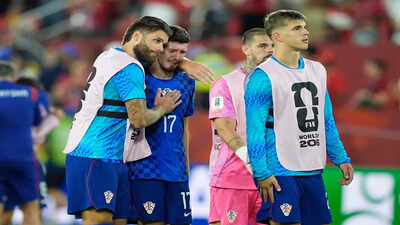
Croatia’s heartbreaking exit from the FIFA World Cup 2026 against Portugal came down to one of the tournament’s most dramatic VAR decisions, with FIFA later explaining that advanced ball technology played a key role in ruling out a stoppage-time equaliser.Croatia appeared to have made it 2-2 in the 103rd minute of their Round of 32 clash in Toronto when Josko Gvardiol tapped in from close range after a cross into the box. The goal sparked wild celebrations before VAR intervened and disallowed it for offside. The controversy centred around whether Croatian forward Igor Matanovic had made contact with the ball before it reached Mario Pasalic, who was standing in an offside position. Initially, it appeared that Pasalic had received the ball after a deflection from Portugal defender Renato Veiga, which would have kept the goal alive. However, VAR determined that Matanovic had made a slight touch moments earlier.
How ball technology decided Croatia’s fate
According to the decision, Pasalic was in an offside position when Matanovic made contact with the ball, meaning his assist for Gvardiol could not stand.FIFA later confirmed that the crucial touch was detected using the Connected Ball Technology installed inside the official Adidas Trionda match ball.“According to the data provided by Connected Ball Technology housed within the @adidasfootball Trionda, the official match ball of the @FIFAWorldCup, it was proven that contact was made by Croatia’s #20 Igor Matanović in the build up to the goal against Portugal, allowing the referee to correctly determine offside and disallow the goal.“IMU sensors housed within the Trionda ball are capable of determining any slight contact, displayed to viewers in the broadcast as a ‘heartbeat graphic’, and allowing officials an unprecedented level of data to make fast, accurate decisions,” FIFA Media shared on X.Croatia had taken the lead through Ivan Perisic early in the second half before Cristiano Ronaldo equalised with his third goal of the tournament. Goncalo Ramos then scored the winner in stoppage time, heading home a Rafael Leao cross to send Portugal through to the last 16.


