
JD Vance calls Iran’s denial of peace talks a ‘Persian tactic’, claims US holds ‘all the cards’

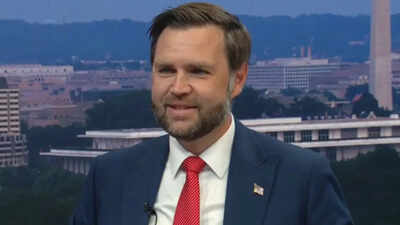
US Vice President JD Vance has described Iran’s public denials of ongoing negotiations with Washington as a “Persian negotiating tactic”, while insisting the United States remains in a position of strength regardless of whether talks produce a final agreement.Speaking in a series of interviews on Tuesday, Vance said technical discussions between the two sides were continuing despite Tehran’s repeated denials. He maintained that the US retained significant leverage after what he claimed was the destruction of Iran’s nuclear programme.Speaking on The Michael Knowles Show, Vance confirmed that technical negotiations between Washington and Tehran were moving ahead.“There were scheduled talks, really technical talks, building on the negotiation that we’ve already had. Those are definitely happening tomorrow,” he said.He criticised Tehran’s public messaging, saying Iranian officials were simultaneously denying peace talks while acknowledging technical discussions.“They’ll say, ‘No, no, there aren’t peace talks ongoing, but there are technical talks between the United States and Iran about the peace deal.’ It’s a Persian negotiating tactic and a Persian rhetorical device that I don’t understand,” he said.In a separate interview with Fox News, Vance said Washington was judging Iran by its actions rather than its public statements.“We care a lot less about what the Iranians say. We care a lot more about what they do,” he said.He said the US had observed both encouraging and concerning signals from Tehran but stressed that any agreement would require “real concessions” from the Iranian side.“What the president has told us is work the problem, see where the negotiation is going to lead, and if it doesn’t lead to a successful resolution on the diplomatic side, we still have a lot of optionality,” he added.White House envoys Steve Witkoff and Jared Kushner travelled to Doha after President Donald Trump announced that Iran had requested a meeting in the Qatari capital. However, Tehran denied that direct negotiations with Washington had been scheduled, saying discussions in Doha would instead focus on implementing provisions of the memorandum of understanding through Qatari mediation, including the release of frozen Iranian assets.The latest remarks followed Vance’s appearance on HBO’s Real Time with Bill Maher, where he argued that the United States would emerge victorious whether or not negotiations ultimately resulted in a permanent agreement.“If we make the final deal, then great,” Vance said. “If we don’t make the final deal, their nuclear program is still destroyed. They’re still much weaker as a country, so my attitude is America wins either way.”Vance maintained that Iran’s nuclear programme had been “functionally destroyed”, arguing that its ability to enrich uranium had been eliminated.Pressed on whether the programme had truly been dismantled, he responded: “What part of it is not destroyed? The thing that you have to destroy is their ability to enrich uranium, which has been destroyed.”He also cited oil prices, which he said had fallen to about $73 a barrel, as evidence that negotiations had produced tangible results, and argued that increased oil shipments through the Strait of Hormuz signalled that diplomatic efforts were making progress.At the same time, Vance acknowledged that implementing the ceasefire memorandum between US President Donald Trump and Iranian President Masoud Pezeshkian would not be straightforward.“It is always going to be a little messy when you’re dealing with the Iranians,” he said.Offering the prospect of improved ties, Vance said Washington was prepared to fundamentally reshape its relationship with Tehran if Iran permanently abandoned its nuclear weapons ambitions.“If they are willing to give up nuclear weapons ambitions for the long term, then the United States is willing to fundamentally transform our relationship with that country,” he said.“If they’re willing to change, we’re willing to change too; if they’re not willing to change, we still fundamentally have all the cards, and I think that’s a good place to be.”The comments came as questions persist over Iran’s stockpile of 60 per cent enriched uranium, which critics say remains a key obstacle to a comprehensive agreement. International Atomic Energy Agency Director General Rafael Grossi has said reducing the stockpile or transferring it abroad remains a viable option as negotiations continue.


