
NEW DELHI: Existing seasonal rainfall deficit of 40% will be reduced in July, backed by good rains in the first 7-10 days due to further advance of monsoon in many parts, including Delhi, Haryana, Punjab and some parts of Rajasthan during the next 2-3 days, but overall the rainfall is likely to be ‘below normal’ in most parts of the country during the month, IMD said in its latest forecast on Tuesday.The month is also likely to be warmer than usual as the Met department predicted “above normal” temperatures in many parts of the country.Besides the progress of the monsoon in the remaining parts of the country, the good rains during the first 10 days of the month from Odisha and West Bengal to Gujarat and Maharashtra, covering most parts of central India, can be attributed to the formation of the low-pressure system (LPS) over the Bay of Bengal.“Conditions are favourable for further advance of southwest monsoon into remaining parts of Uttarakhand, Himachal Pradesh and Ladakh, some more parts of Gujarat, Madhya Pradesh, Uttar Pradesh, entire Daman & Diu, Jammu & Kashmir, most parts of Haryana-Chandigarh-Delhi and Punjab, and some parts of Rajasthan during the next 2-3 days,” said Mrutyunjay Mohapatra, director general, IMD.He underlined that the good rains in the next 7-10 days in July, which normally happen to be the rainiest month of the monsoon season (June-Sept), may help sowing operations, specifically in the ‘monsoon core zone’ – the rain-fed area of the country where farming largely depends on the seasonal rainfall.Noting that the “rainfall over all India (99.5 mm) was fifth lowest June rainfall since 1901”, Mohapatra said, “There was negative impact on rainfall activity over Indian region due to development of El Nino, while the Indian Ocean Dipole (IOD), which is in neutral phase, could not help to compensate the negative impact of El Nino.” He also flagged that there were no low-pressure systems formed during June.El Nino Southern oscillation (ENSO) and Indian Ocean Dipole (IOD) are two key factors that govern variation in monsoon rainfall. El Niño – a natural climate pattern in which the surface waters of the central and eastern tropical Pacific Ocean become warmer than usual – is associated with weak monsoon and harsher summer in India. The IOD – difference in sea surface temperatures between the western and eastern parts of the tropical Indian Ocean – helps formation of stronger monsoon winds. The positive IOD invariably soften the impact of strong El Nino.The year 2009 received the lowest June rainfall (87.6 mm) since 1901, followed by 1905 (91.9 mm), 2014 (92.8 mm), 1926 (96.7 mm) and 2026 (99.5 mm). This year, India received the lowest June rainfall after 2014, which was the drought year.Though IOD, which softens the impact of El Nino if turned positive, continues to be in neutral condition as per the IMD’s model, some global models hint at the possibility of it turning positive by the end of Aug and Sept. If that happens, the second half of the monsoon season may get slightly better rainfall. But it may not offset the deficit of June-July.“Currently, neutral IOD conditions are being observed over the Indian Ocean. The model forecast indicates that neutral IOD conditions are likely to persist during the southwest (summer) monsoon season,” said Mohapatra.Get the latest India news and live updates. Download the TOI App.About the AuthorVishwa MohanVishwa Mohan is Senior Editor at The Times of India. He writes on environment, climate change, agriculture, water resources and clean energy, tracking policy issues and climate diplomacy. He has been covering Parliament since 2003 to see how politics shaped up domestic policy and India’s position at global platform. Before switching over to explore sustainable development issues, Vishwa had covered internal security and investigative agencies for more than a decade.Read MoreEnd of ArticleFollow Us On Social MediaVideosAfter Converting To Islam For Love, UP’s Ayush Malik Returns To Hinduism | Watch’This Is Bigger Than Dharmendra Pradhan’: Students Demand Reforms Not ‘Political Damage Control’Another Blow To Uddhav Thackeray: Prominent Mumbai Leader Sachin Ahir Switches Sides | WatchRs 65 Lakh House, SUV, Farmhouse: Ram Temple Donation Theft Accused’s Assets Under ScannerUPI Rolls Out in Greece; ‘Enables Instant Low-Cost Cross-Border Payments,’ Says Piyush Goyal’We’ll Cut Off Those Hands That…’: Pakistan’s Provocation Over Indus Water Amid Domestic Failure’Lose Vote, Lose Benefits’: Karnataka CM DK Shivakumar’s SIR Warning Sparks RowAbhijit Dipke Opens Up About CJP’s Next Move, Funding Model & Post-Protest Strategy | WatchCabinet Reshuffle Soon? Big Changes Likely Before Monsoon Session; Who May Enter, Who Could Exit?India’s Oil Import Price Fell Below $70— Why Petrol & Diesel Prices Won’t Drop Yet |West Asia Crisis123Photostories10 quotes by Sadhguru that give a new perspective on parenting5 signs you’re destined for great things in lifePersonality test: What the woman you find attractive really tells about youIndia’s silent liver epidemic: The alarming shift from infectious diseases to lifestyle-driven liver damage that doctors can no longer ignoreIs your skin barrier crying for help? 5 warning signs you should never ignore10 beautiful baby girl names that mean peace and calmness in different languagesFrom love at first sight to divorce: Gaurav Khanna and Akanksha Chamola’s relationship timeline explainedLove quote of the day by Plato: ‘The madness of love is the greatest of heaven’s blessings’Kareena Kapoor Khan vrooms in a MINI dressed to kill in pinstriped suit with corsetAre you always complaining? Neurosurgeon explains how it affects the brain, and why its not worth it123Hot PicksKarnataka SIRJohn CenaSergio GorWWE Summerslam PredictionsiPhone 18 Pro data leakNoida schools timingSachin AhirDK ShivakumarAP EAPCET Result 2026Top TrendingDelhi EV Vehicle Policy 2026Bengal Refinery FireSonam RaghuvanshiFIFA World Cup 2026Monaco BlastBengaluru TechieAnukalp MishraSergei IvanovMK StalinJosh Hokit

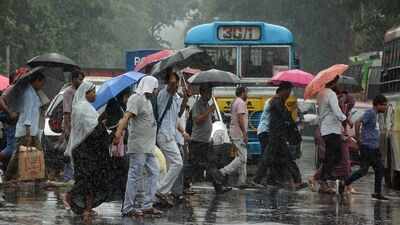
NEW DELHI: Existing seasonal rainfall deficit of 40% will be reduced in July, backed by good rains in the first 7-10 days due to further advance of monsoon in many parts, including Delhi, Haryana, Punjab and some parts of Rajasthan during the next 2-3 days, but overall the rainfall is likely to be ‘below normal’ in most parts of the country during the month, IMD said in its latest forecast on Tuesday.The month is also likely to be warmer than usual as the Met department predicted “above normal” temperatures in many parts of the country.Besides the progress of the monsoon in the remaining parts of the country, the good rains during the first 10 days of the month from Odisha and West Bengal to Gujarat and Maharashtra, covering most parts of central India, can be attributed to the formation of the low-pressure system (LPS) over the Bay of Bengal.“Conditions are favourable for further advance of southwest monsoon into remaining parts of Uttarakhand, Himachal Pradesh and Ladakh, some more parts of Gujarat, Madhya Pradesh, Uttar Pradesh, entire Daman & Diu, Jammu & Kashmir, most parts of Haryana-Chandigarh-Delhi and Punjab, and some parts of Rajasthan during the next 2-3 days,” said Mrutyunjay Mohapatra, director general, IMD.He underlined that the good rains in the next 7-10 days in July, which normally happen to be the rainiest month of the monsoon season (June-Sept), may help sowing operations, specifically in the ‘monsoon core zone’ – the rain-fed area of the country where farming largely depends on the seasonal rainfall.
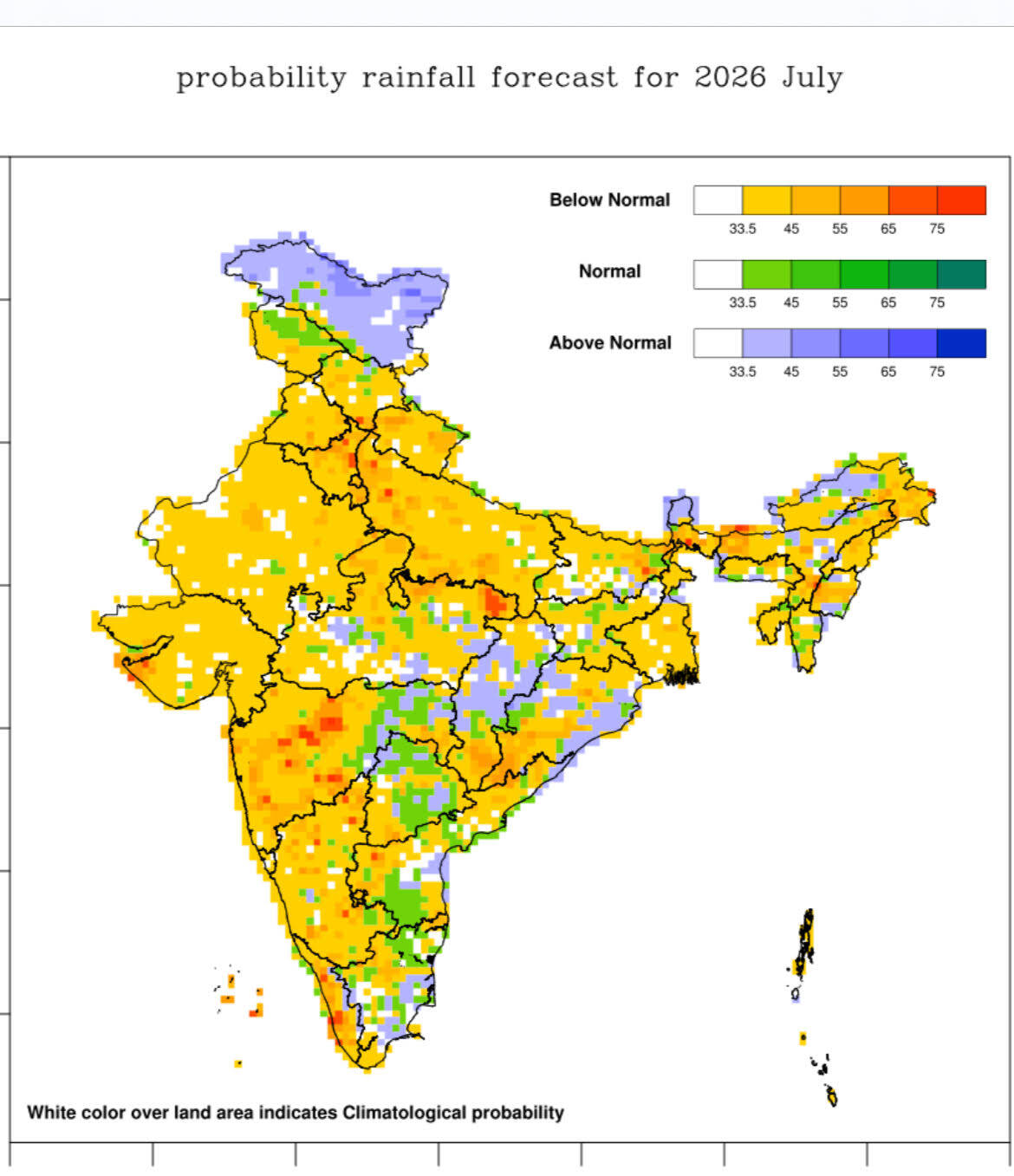
Noting that the “rainfall over all India (99.5 mm) was fifth lowest June rainfall since 1901”, Mohapatra said, “There was negative impact on rainfall activity over Indian region due to development of El Nino, while the Indian Ocean Dipole (IOD), which is in neutral phase, could not help to compensate the negative impact of El Nino.” He also flagged that there were no low-pressure systems formed during June.El Nino Southern oscillation (ENSO) and Indian Ocean Dipole (IOD) are two key factors that govern variation in monsoon rainfall. El Niño – a natural climate pattern in which the surface waters of the central and eastern tropical Pacific Ocean become warmer than usual – is associated with weak monsoon and harsher summer in India. The IOD – difference in sea surface temperatures between the western and eastern parts of the tropical Indian Ocean – helps formation of stronger monsoon winds. The positive IOD invariably soften the impact of strong El Nino.The year 2009 received the lowest June rainfall (87.6 mm) since 1901, followed by 1905 (91.9 mm), 2014 (92.8 mm), 1926 (96.7 mm) and 2026 (99.5 mm). This year, India received the lowest June rainfall after 2014, which was the drought year.Though IOD, which softens the impact of El Nino if turned positive, continues to be in neutral condition as per the IMD’s model, some global models hint at the possibility of it turning positive by the end of Aug and Sept. If that happens, the second half of the monsoon season may get slightly better rainfall. But it may not offset the deficit of June-July.“Currently, neutral IOD conditions are being observed over the Indian Ocean. The model forecast indicates that neutral IOD conditions are likely to persist during the southwest (summer) monsoon season,” said Mohapatra.


