
End of destroyers era? UK scraps next-generation destroyers plan for a Common combat vessels

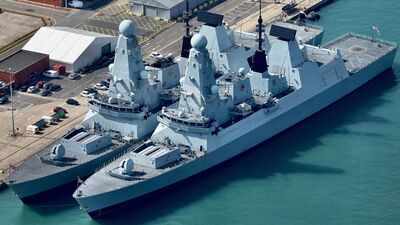
United Kingdom has scrapped its plan to build next-generation destroyers, opting to procure at least six ‘Common Combat Vessels (CCVs), designed to operate with drones and autonomous systems. The decision was announced under the government’s ‘Defence Investment Plan’.UK currently operate six type 45 destroyers, also know as ‘Daring Class’ are due to retire by the end of end of 2038. Original plan was to replace them with next-generation type 83 destroyers .“These Common Combat Vessels will provide our dedicated sailors with hybrid ships that are designed and built for the increasing threats we face,” UK defence secretary Dan Jarvis said in a statement.He further stated that the new ships will be British-built, supporting jobs across the nation and giving the Royal navy a capability built for modern warfare.The delivery of the vessels are expected from the early 2030s and when in service the vessels would work alongside crewed frigates as well as other planned autonomous vessels. The CCVs would coordinate uncrewed systems in the air, on the surface and under the sea.The Royal navy’s transition to a drone-enabled fleet comes at a time when it is facing mounting operational and financial pressures.While Britain remains a leading maritime power with two aircraft carriers and a global presence, years of budget constraints, ageing platforms and manpower shortages have stretched the service’s ability to sustain high operational readiness.UK’s government ‘Defence Investment Plan’ was delayed for months amid disagreements over how much Britain should spend on defence. Earlier this month UK defence secretary John Healy resigned from the post over a months-long dispute over military spending, accusing Prime Minister Keir Starmer of failing to commit the resources that are needed to keep the country safe from mounting threats.The Royal Navy is also under increasing operational strain. Besides maintaining the UK’s continuous at-sea nuclear deterrent and protecting its two aircraft carriers, it is expected to counter Russian submarine activity in the North Atlantic, secure critical undersea communication cables, contribute to Nato operations, and respond to crises from the Red Sea to the Indo-Pacific.This shifted doctrine of UK navy to instead to rely on a small number of heavily armed, high-value warships to operating distributed, networked fleets of crewed and autonomous platform.Drones launched or controlled by CCVs can conduct intelligence, surveillance and reconnaissance (ISR), electronic warfare, mine countermeasures and even strike missions hundreds of kilometres from the mothership. This enables commanders to gather real-time battlefield information and engage threats while keeping high-value crewed vessels farther from contested areas.The move marks one of the Royal navy’s most significant doctrinal shifts in decades, signalling a transition from traditional destroyer-centric fleets to a force built around crewed warships working in tandem with autonomous systems.As drone technology continues to reshape the character of naval warfare, Britain’s experiment with Common Combat Vessels could influence how future fleets are designed and deployed around the world.


