
What psychology says about women who love wearing diamonds


There’s just something about diamonds that feels a little different from other jewellery.Gold feels traditional. Silver feels easy. Fashion jewellery comes and goes with trends. But diamonds… they sit in their own space. A bit emotional, a bit personal, and yes, a bit powerful too.And before it turns into one of those lazy stereotypes, psychology doesn’t reduce women who love diamonds to being “status-obsessed” or “materialistic.” It’s way more layered than that. Research on luxury behaviour, identity, and emotion shows that the reasons are often deeper than just money or sparkle.Let’s talk about it in a real, simple way.
1. Diamonds are often about self-worth, not just wealth
A big idea in psychology is that what we wear often reflects how we see ourselves.Studies in consumer psychology, including work published in the Journal of Consumer Psychology (Shukla, 2012), show that luxury items are often tied to identity and self-image, not just social status.So when a woman wears diamonds, it’s not always about “look at me.” Sometimes it’s more like “this feels like me today.”In India, this gets even more emotional. Diamonds aren’t just bought randomly. They’re tied to moments – weddings, anniversaries, promotions, big family celebrations. Over time, they stop feeling like accessories and start feeling like memory.Something you wear, but also something you feel.
2. Yes, the brain literally enjoys sparkle
There’s also a simple biological side to it.Research in neuroaesthetics shows that the brain responds strongly to visually appealing objects. Luxury items, in particular, can activate reward-related areas like the ventral striatum, which is linked to pleasure and motivation.A study in Psychology & Marketing (Eisend & Kuß, 2013) also found that luxury goods can create emotional excitement even before ownership fully kicks in.That’s basically why diamonds catch attention so easily.It’s not just culture. The brain is wired to notice shine, reflection, detail. And diamonds do that better than almost anything else.
3. Diamonds and confidence often go hand in hand
You’ve probably heard someone say, “I just feel different when I wear diamonds.”And it’s not just in their head.There’s a concept called enclothed cognition, introduced by Adam and Galinsky (2012), which shows that what we wear can actually influence how we think and behave. Clothing carries meaning, and the brain responds to that meaning.Now extend that idea beyond clothes. Jewellery works the same way.A pair of diamond studs or a simple ring can change how someone carries themselves. Not dramatically, but subtly. A little more posture. A little more ease. A little more presence.In Indian settings too, diamonds are often part of “important days.” So the mind starts linking them with confidence moments. Over time, just wearing them can bring that feeling back.
4. Sometimes it’s not about showing off at all
There’s this assumption that luxury automatically means attention-seeking.But psychology doesn’t really agree with that.A study in the Journal of Business Research (Eastman, Goldsmith & Flynn, 1999) explains that status consumption isn’t only about others – it can also be about personal satisfaction and emotional comfort.So for many women, wearing diamonds is less about display and more about feeling steady.In India especially, life can feel layered – family expectations, work pressure, social noise, all of it together. In that mix, small personal choices matter.
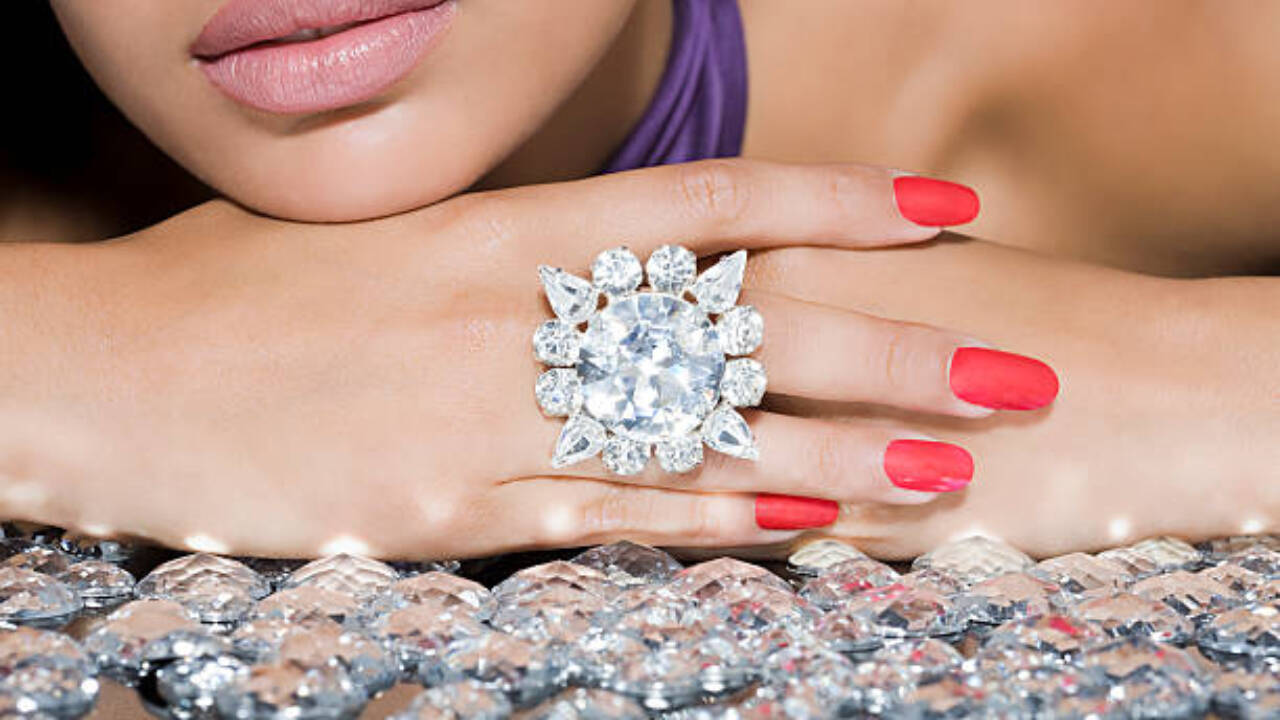
And for some, putting on a pair of diamonds is just that. A small sense of control. A quiet reminder of self.Nothing dramatic. Just personal.
5. Jewellery always carries social meaning in India
We can’t ignore this part.In India, jewellery isn’t just decoration. It’s language.Diamonds especially carry meanings like success, stability, celebration, or “we’ve arrived.” This is where Social Identity Theory (Tajfel & Turner) fits in – the idea that people express identity through symbols linked to their social world.So when a woman wears diamonds, it can mean many things at once:a celebration, a milestone, a cultural tradition, or simply a personal style choice.And honestly, all of that can exist together without cancelling each other out.That’s what makes it so interesting.
6. Diamonds hold memory in a very real way
Ask most people about their diamond jewellery, and they rarely start with design.They start with a story.A ring from a partner. Earrings gifted by parents. A necklace bought after a big life moment. These things stick emotionally.Psychologists call this autobiographical memory cues – objects that trigger strong personal memories just by being seen or worn.Over time, diamonds stop being just jewellery sitting in a box.They become tied to chapters of life.
So what does psychology really say?
It doesn’t box women into one category.It doesn’t say “this is what she is.”Instead, it points to something more human.Diamonds can be identity. Or confidence. Or memory. Or reward. Or culture. Or just beauty. Sometimes all at once, depending on the person and the moment.And in India, where jewellery often carries emotion and tradition together, that meaning only gets stronger.So the next time someone says, “She loves diamonds,” it’s probably not as simple as it sounds.It’s rarely just about sparkle.It’s usually about everything the sparkle reminds her of.


