
Quote of the day by Robert A. Heinlein: “Everything is theoretically impossible, until…” – why the word “impossible” has such a poor track record

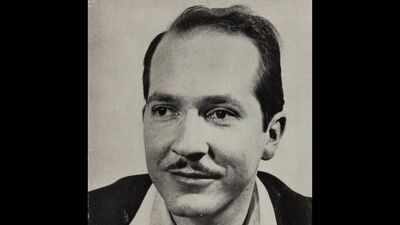
History is full of confident predictions that turned out to be spectacularly wrong. Flight was impossible, right up until two bicycle makers got a machine off the ground. Reaching the moon was a fantasy, right up until a man stepped onto it. The science fiction writer Robert A. Heinlein captured this pattern in a single, sharp line. Things are theoretically impossible, he said, only until someone goes ahead and does them. The moment a thing is actually done, all the careful arguments about why it could never happen simply vanish. It is a quietly thrilling thought, and a useful warning against trusting the word impossible too quickly.
Quote of the day by Robert A. Heinlein
“Everything is theoretically impossible, until it is done.”
Robert A. Heinlein: The science fiction master behind the line
Robert A. Heinlein, who lived from 1907 to 1988, was one of the most influential science fiction writers of all time. Often called the dean of the genre, he wrote classics like Stranger in a Strange Land and The Moon Is a Harsh Mistress, and he was known for grounding his imagined futures in real science and engineering.This particular line comes from his 1973 novel Time Enough for Love, spoken by his famous character Lazarus Long, whose collected sayings are full of sharp, witty observations. It is fitting that the quote comes from a science fiction author. Heinlein spent his career dreaming up technologies and futures that sounded impossible at the time, and he watched many of them, from space travel to pocket communicators, slowly turn into everyday reality. He had a front row seat to how often impossible becomes ordinary.
When “impossible” just means “not yet”
The genius of the quote is the way it exposes a hidden truth about that word. When people say something is impossible, they usually mean one of a few much smaller things. It is very difficult. We do not know how yet. Nobody has managed it so far. None of those are the same as truly impossible.Heinlein actually went further in the full version of the line. He suggested you could write a complete history of science backwards, simply by collecting all the solemn announcements from top experts about what could never be done, each made shortly before someone did exactly that. In other words, theoretical impossibility has an embarrassing habit of crumbling the instant somebody refuses to accept it. The doing is what settles the matter, not the theorising about whether it can be done.
A history of experts being wrong
The record backs Heinlein up almost comically well. Not long before the Wright brothers flew, respected voices were still insisting that heavier than air flight was impossible. Breaking the sound barrier was widely believed to be deadly or unachievable until a pilot simply flew through it. The idea of walking on the moon was pure fantasy, until it became a live broadcast watched by millions.The same story repeats in smaller ways all the time. New inventions, from the telephone to the personal computer, were often dismissed by serious people as useless or impossible right before they changed the world. This does not mean experts are foolish. Their knowledge is genuinely valuable. It simply means that knowing how things currently work is not the same as knowing the limits of what is possible. The frontier always looks like a wall until someone walks through it.
How to make your own impossible things happen
You do not need to invent an aeroplane to use this idea. It is really about how you respond when you are told something cannot be done.
- Be suspicious of the word impossible. More often than not it really means difficult, or not figured out yet. Treat it as a problem to investigate rather than a final verdict to accept.
- Do not let other people’s doubts end the story. Listen to those with more experience, weigh their warnings, and then decide for yourself what is worth attempting. Doubt is information, not a stop sign.
- Begin before you are certain it will work. Many breakthroughs started with someone trying despite having no proof of success. You discover what is actually possible by attempting it, not by waiting for a guarantee.
- Let doing settle the argument. Endless debate about whether something can be done proves nothing. One small real attempt teaches you more than a hundred confident opinions.
Other famous quotes by Robert A. Heinlein
Heinlein had a gift for blunt, memorable wisdom. Here are a few more of his lines.
- “Always listen to experts. They’ll tell you what can’t be done and why. Then do it!”
- “One man’s magic is another man’s engineering.”
- “Certainly the game is rigged. Don’t let that stop you; if you don’t bet, you can’t win.”
- “When faced with a problem you do not understand, do any part of it you do understand, then look at it again.”
The word that keeps being proven wrong
Of all the words we use with such confidence, impossible may be the least reliable. Time and again, it has turned out to be the very last thing said before someone went ahead and did the thing anyway. The history of progress is, in large part, a long list of impossibilities that quietly became facts.Heinlein, who imagined impossible futures for a living and lived to see many of them arrive, understood that the line between impossible and ordinary is often just time, effort and someone stubborn enough to try. So the next time you hear that something cannot be done, take it with a pinch of salt. Very often, that is not the end of the story. It is exactly where the interesting part begins.


