
This hidden Karnataka destination is home to India’s most surreal black stone monoliths |

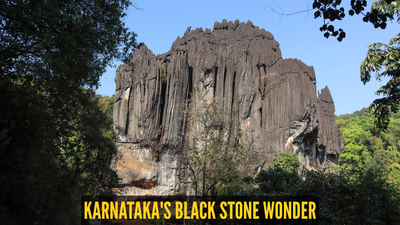
Sitting in the Western Ghats of Karnataka, there is a landscape that feels completely from a different planet. Massive, dark rock formations shoot up suddenly from an endless blanket of lush green forests. Their surfaces are steeped in age-old tales of deities, demons, and epic clashes. For hundreds of years, everyone from devout pilgrims and seasoned trekkers to simply inquisitive travellers have ventured into this isolated pocket of the Uttara Kannada district. They come to see one of South India’s most bizarre natural marvels.Yana, a spot where geology, local myth, and sheer wilderness crash together brilliantly. Here is all you need to know about this place before visiting.
A land of giant black rocks
Situated roughly between Kumta and Sirsi, Yana is best known for a pair of black limestone monoliths bursting out of the forest floor. These towering stones go by the names Bhairaveshwara Shikhara and Mohini Shikhara, reaching staggering heights of about 120 metres and 90 metres, respectively. Together, they form a theatrical backdrop that you just won’t find anywhere else in the Western Ghats.Catching your first glimpse of these giants is something you don’t easily forget. As you move forward the black peaks rise with stark contrast against the green backdrop. The visual has constantly pulled photographers and nature buffs. In fact, Yana recently was in headlines in April 2026, when it was officially designated a Geo-heritage Site of National Importance. This newly minted status highlights the area’s massive geological value and ensures the terrain stays protected for generations down the line.
Why is Yana like this?
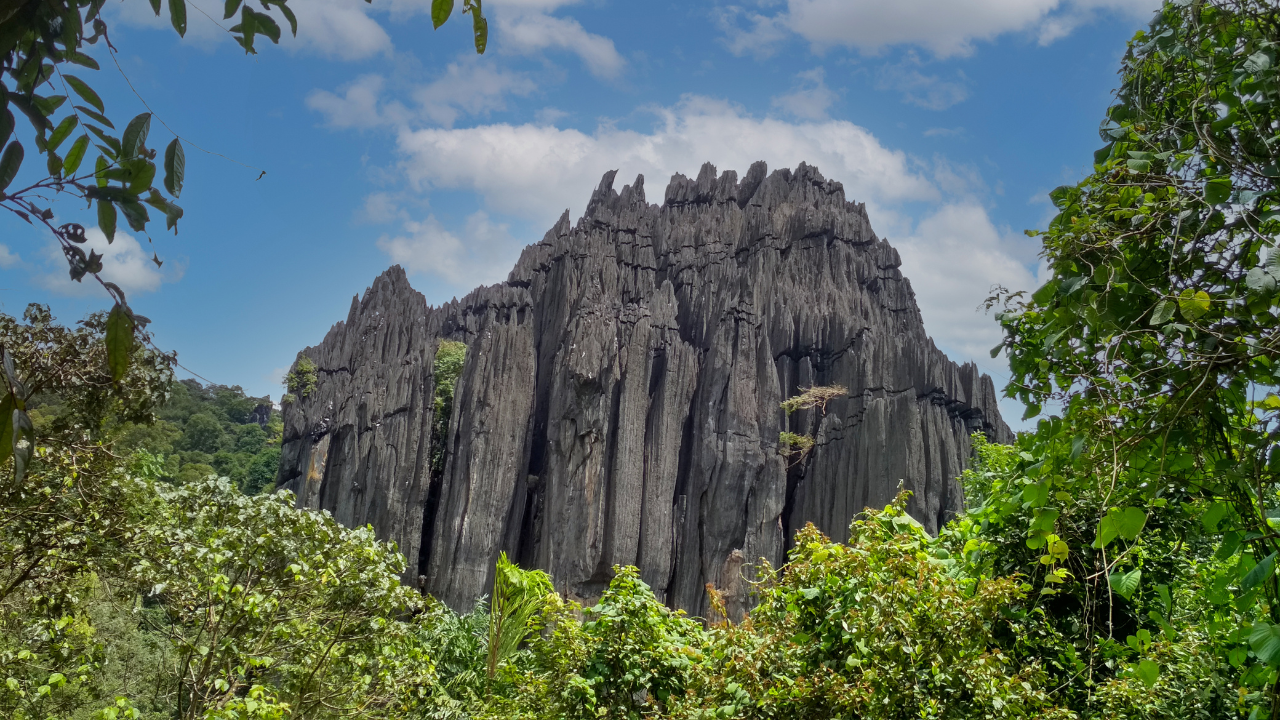
Image Credit: Canva
Science certainly has its say on why Yana looks the way it does, but local folklore serves up a much punchier narrative.According to Hindu myth, a demon king named Bhasmasura undertook severe penance to win the favour of Lord Shiva. His reward? A terrifying boon that allowed him to turn absolutely anyone into a pile of ashes just by touching their head. Puffed up with arrogance, Bhasmasura made the rather foolish decision to test this new power out on Shiva himself.Stepping in to save the day, Lord Vishnu morphed into the beguiling Mohini and lured the demon into a dance-off. Completely under her spell, Bhasmasura mimicked her every move. The moment Mohini gracefully touched her own head, the mesmerised demon copied her, instantly triggering his own boon and reducing himself to a heap of ash.Folklore insists that the blistering heat unleashed by Bhasmasura’s fiery end scorched the nearby rocks, baking them black forever. Consequently, the two great monoliths were christened after Shiva’s Bhairava form and Vishnu’s Mohini avatar. Honestly, whether you buy into the myth or not, standing right under these looming rocks makes it dead easy to see how such wild tales took root.
Millions of years in the making
The actual geology of Yana is every bit as gripping. These monoliths are carved from ancient limestone, battered and sculpted by rain, howling winds, and natural erosion over millions of years. Strangely enough, the pitch-black tint that gives the area its moody vibe isn’t actually part of the rock itself. Researchers reckon the colour comes from vast colonies of lichens and microscopic organisms that live on the damp limestone, thanks to the incredibly humid climate of the Western Ghats.Throw in the massive honeybee nests casually dangling from the cliff edges, the dense tangles of rainforest plants, and the unrelenting hum of forest birds and insects, and the atmosphere becomes incredibly intense.
A sacred cave hidden beneath the rock
Tucked right at the foot of Bhairaveshwara Shikhara is a cave temple that still draws a massive crowd of pilgrims.Inside the cave sits a Shiva Linga, which devotees believe to be self-manifested. Water continuously drips onto the Shiva Linga that holds a sacred meaning for worshippers. Stepping into the chilly, dimly lit cave provides a stark, spiritual shift from the massive rock walls baking outside.Come Maha Shivaratri, this usually tranquil woodland is completely transformed. Thousands of devotees pack into the area, turning the quiet forest into an incredibly vibrant hub of celebration and prayer.
The journey here
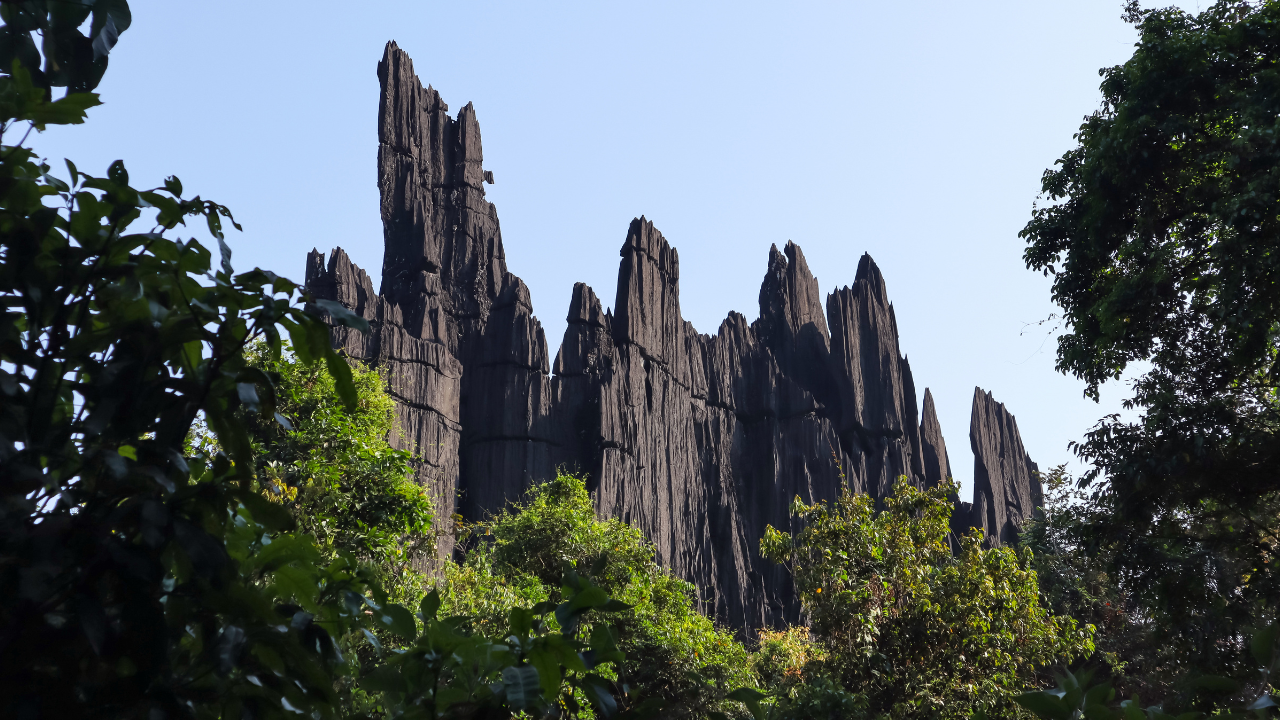
Image Credit: Canva
Leaving the designated car park, you’ll amble down a gorgeous trail completely boxed in by thick foliage and towering timber. The route starts off rather gently, meaning just about anyone can manage it.The final leg, however, demands you conquer several hundred stone steps leading up to the cave and the monoliths. It’s certainly a bit of a thigh-burner, but the payoff at the top is completely worth the sweat. As you climb, you’re treated to sneak peeks of the imposing black rocks, sweeping views of the canopy, and the odd butterfly darting past.
How to reach Yana
By rail: If you’re on the Konkan Railway route, Kumta Railway Station is your best bet for a major railhead, sitting roughly 25 kilometres away.By road: The caves are about 25 km from Kumta, 40 km from Sirsi, and a 50 km drive from Gokarna. Hiring a taxi or renting a two-wheeler are the usual go-to options for getting there.By air: Hubballi Airport is the closest local hub, though the airports over in Goa are incredibly handy if you fancy linking your Yana trip with a coastal getaway.Loads of folks actually base themselves in Gokarna and just pop over to Yana for the day, neatly wrapping up beaches, deep forests, and ancient mythology into one single itinerary.
What to do at Yana
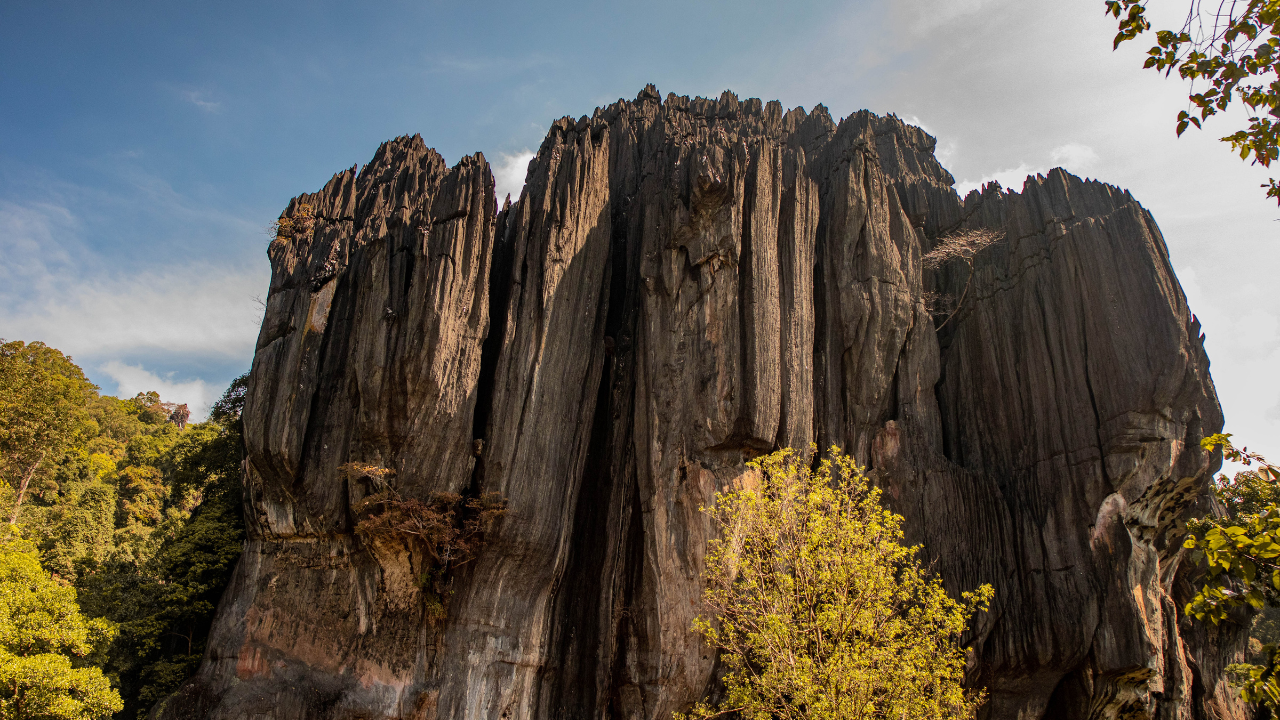
Image Credit: Canva
Explore the monoliths: These huge, dark stones are obviously the main event. They easily offer some of the most striking photo ops you’ll find in all of Karnataka.Visit the cave temple: The age-old shrine nestled under Bhairaveshwara Shikhara is brilliant to look at and carries immense spiritual weight.Enjoy the forest trek: The brief hike through the Western Ghats gives you a front-row seat to one of the most biodiverse stretches in India.Spot wildlife and birds: Keep your eyes peeled, as these woods are packed with various bird species, butterflies, and weird and wonderful plant life.Combine it with nearby attractions: It’s super common to pair a hike here with a detour to the nearby Vibhooti Falls, or a relaxing afternoon hitting the beaches and temples down in Gokarna.
Best time to visit
You’re best off planning your trip between October and March. The weather cools down nicely, making the trek far more pleasant.When the monsoons hit from June to September, the whole place explodes into a lush, vibrant green, and the scenery is absolutely brilliant. That being said, the paths get incredibly slick, and access can sometimes be shut off entirely if the rain gets too heavy.


