
NEW DELHI: Scientists have identified warning signals in the blood that can predict lung cancer more than five years before the disease is diagnosed, a breakthrough that could help tackle one of India’s deadliest cancers, where most patients are detected only at an advanced stage.The findings are particularly relevant for India, where lung cancer cases are projected to rise from about 63,700 in 2015 to more than 81,000 by 2025 and nearly 80-85% of patients are diagnosed at an advanced stage. Published in ‘Cell’, the study identified a 14-protein blood signature that predicted lung cancer risk a median of 5.6 years before diagnosis, potentially enabling earlier monitoring, screening and preventive interventions.Dr Abhishek Shankar, radiation oncologist at AIIMS Delhi, said the test should be viewed as a risk-assessment tool rather than a screening test. “The blood-based protein signature does not detect a tumour but identifies people at higher risk of developing lung cancer in future. Such people can then undergo more definitive screening. The finding is an important scientific advance because it opens the possibility of identifying high-risk individuals years before cancer develops and may eventually help guide preventive interventions. However, these protein signatures will need validation in Indian populations before they can be widely applied here,” he said.The researchers analysed blood samples and health data from over 48,000 participants in the UK Biobank and found a combination of 14 proteins, along with factors such as age, smoking history and chronic lung disease, predicted future lung cancer risk more accurately than existing models.The findings were validated across eight international cohorts involving more than 2,000 lung cancer cases. Researchers also found the protein signature was elevated not only in smokers but also in people exposed to particulate air pollution, a finding of particular significance for India, where air pollution is an increasing public health concern.The study sheds new light on how lung cancer develops, suggesting air pollution, cancer-causing mutations and inflammation driven by the immune molecule IL-1β may converge on pathways that promote tumour formation.While further validation is needed before the test can be used routinely, researchers believe such blood-based risk assessment tools could eventually complement screening programmes and enable earlier detection.About the AuthorAnuja JaiswalAnuja Jaiswal is a Senior Assistant Editor at The Times of India, with an impressive 18-year career in narrative journalism. She specializes in health and heritage reporting, expertly simplifying complex health information to make it engaging and understandable for readers. Her deep dives into heritage topics are well-researched, resulting in captivating narratives that resonate with her audience. Over the years, she has worked in Chandigarh, Chhattisgarh and West UP, gaining diverse on-ground experience that shapes her storytelling.Read MoreEnd of ArticleFollow Us On Social MediaVideosPatna Protest Case: Khan Sir Booked Under Attempted Murder ChargeTMC Reorganises Bengal Unit: Chandrima Bhattacharya Appointed PresidentWhat Training 5 Lakh Indian Army Personnel In Drone Operations Means For Future Wars?Indian Navy Invites Domestic Industry to Build 80-mm Aero Rockets for MiG-29K FleetDelhi Fire Horror: Owner’s Bangladesh-Linked Arrest Draws AttentionIndia Urges Faster Bangladesh Verification To Deport Illegal MigrantsFrom Locked Exits To No NOC: Ground Report Exposes Delhi’s Fire Safety CrisisShehbaz Sharif Hails Trump As ‘Man Of Peace’, Credits Him For India-Pakistan CeasefireTMC Crisis Could Boost NDA’s Numbers For Delimitation, One Nation One Election Bills | WatchAmid NEET Paper Leak Row, IIT Roorkee Denies JEE Advanced Data Breach Allegations123PhotostoriesFrom a throne-like toilet seat and a Jaipur-sourced vintage door to a tree bark in the living room: A look inside Choreographer Terence Lewis’ Mumbai homeAre you sleeping or suffocating? Doctor shares the early signs of sleep apnea you should never ignoreHandwashing can cut infections by 50%, but most people still don’t do it properlyFrom Aamir Khan to Shoaib Malik: 8 famous celebrities who got married three timesFrom Chaach to Papaya: UP Chief Minister Yogi Adityanath’s daily diet at the age of 54Psychology says emotionally exhausted people don’t always cry — they start saying “it’s fine”Six Signs That Guardian Angels Guide YouWhich lucky charm should you place on your office desk; based on your date of birth?8 everyday habits that build strong problem-solving skills in kidsSonakshi Sinha and Zaheer Iqbal’s penthouse is a relaxing abode of minimalism with bright bohemian colours: Art inspirations to steal123Hot PicksH1B ProgramKS BharatCaitlin ClarkJoe BurrowKCET result 2026Cooper KuppCockroach Janta PartyDonald TrumpEarthquake NewsTop TrendingCM VijayDelhi Greater Kailash FireRBI MPC Meeting 2026K AnnamalaiMohali Office MurderMamata BanerjeeIndian RupeeTCS Nashik CaseDelhi Plice HCM Result 2026Pawan Kalyan

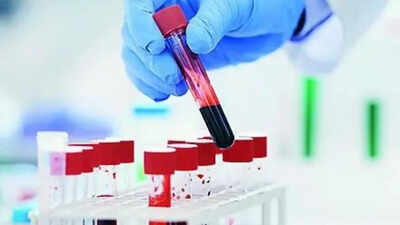
NEW DELHI: Scientists have identified warning signals in the blood that can predict lung cancer more than five years before the disease is diagnosed, a breakthrough that could help tackle one of India’s deadliest cancers, where most patients are detected only at an advanced stage.The findings are particularly relevant for India, where lung cancer cases are projected to rise from about 63,700 in 2015 to more than 81,000 by 2025 and nearly 80-85% of patients are diagnosed at an advanced stage. Published in ‘Cell’, the study identified a 14-protein blood signature that predicted lung cancer risk a median of 5.6 years before diagnosis, potentially enabling earlier monitoring, screening and preventive interventions.Dr Abhishek Shankar, radiation oncologist at AIIMS Delhi, said the test should be viewed as a risk-assessment tool rather than a screening test. “The blood-based protein signature does not detect a tumour but identifies people at higher risk of developing lung cancer in future. Such people can then undergo more definitive screening. The finding is an important scientific advance because it opens the possibility of identifying high-risk individuals years before cancer develops and may eventually help guide preventive interventions. However, these protein signatures will need validation in Indian populations before they can be widely applied here,” he said.The researchers analysed blood samples and health data from over 48,000 participants in the UK Biobank and found a combination of 14 proteins, along with factors such as age, smoking history and chronic lung disease, predicted future lung cancer risk more accurately than existing models.The findings were validated across eight international cohorts involving more than 2,000 lung cancer cases. Researchers also found the protein signature was elevated not only in smokers but also in people exposed to particulate air pollution, a finding of particular significance for India, where air pollution is an increasing public health concern.The study sheds new light on how lung cancer develops, suggesting air pollution, cancer-causing mutations and inflammation driven by the immune molecule IL-1β may converge on pathways that promote tumour formation.While further validation is needed before the test can be used routinely, researchers believe such blood-based risk assessment tools could eventually complement screening programmes and enable earlier detection.


