
AI-generated image “We the people of India” saved the nation during Covid by “living like soldiers”. Today, citizens are again being asked to help the country by “living responsibly”.The language has changed from pandemic precautions to economic discipline, but the political pattern feels familiar.One way to detect coming trouble is to watch how governments speak. When administrations begin talking less about policy and more about behaviour — conserving fuel, avoiding excess spending, reducing travel, consuming responsibly — it often means the state is psychologically preparing society for harder economic measures.India has now seen this twice within five years: during Covid and now during the ongoing Gulf crisis triggered by the US-Israrel-Iran war.In both moments, governance shifted from direct administration to behavioural management. Citizens were no longer treated merely as taxpayers or voters, but as participants in national survival.The BJP-led NDA government has in the past resorted to direct administration when it believed it was necessary. Demonetisation, the rollout of GST are examples of high-impact executive action that had a huge impact on public life.However, during periods of economic or geopolitical stress, the Centre often changes tone before it changes policy.This is the politics of behavioural governance, and it may be one of the clearest early warning signs of a nation facing stress.The grammar of distressPrime Minister Narendra Modi’s recent speech in Hyderabad carried echoes familiar to anyone who remembers the pandemic years. The message was framed as an appeal, not an emergency order. There was no announcement of rationing or restrictions. Instead, the emphasis was on restraint, conservation and collective responsibility.The tone mattered.Governments rarely begin crisis management with force. They begin with persuasion.Economists often describe this as behavioural economics applied to governance — influencing public decision-making through messaging rather than compulsion. Instead of immediately imposing harsh measures, governments attempt to gently reshape behaviour first: consume less fuel, postpone discretionary spending, reduce imports, avoid panic buying, travel differently, work from home where possible.“The basic economics is that behavioural appeals are generally fast and low-cost because major fiscal interventions—subsidies, tax changes, stimulus packages, rationing systems, or price controls — require legislative approval, budget allocation, administrative coordination, and so on. Whereas, behavioural appeals, or a sort of signal, which sometimes also called ‘demand-side adjustment through norms’, shift part of the adjustment burden onto citizens voluntarily, reducing immediate state expenditure,” said Surya Bhushan, an alumnus of CESP, JNU, and now economics professor at DMI, Patna.Adding a political logic to it, he said “behavioural messaging avoids politically painful policies”.Are crises psychological before they get administrative?Economic distress is not only about shortages or numbers on a spreadsheet. They are also about public emotion.Bhushan argues that governments increasingly recognise this psychological dimension.“Crises are often partly psychological … economic crises are not only about material shortages; expectations matter enormously. For instance, if consumers panic: they hoard, rush to banks, speculate, overbuy fuel, or trigger inflationary spirals. In this regard, behavioural appeals aim to stabilize expectations and reduce panic behaviour.”This helps explain why official communication during crises often sounds calm even when underlying risks are serious. The objective is not only economic management, but emotional management.The speech itself becomes an economic tool.That was visible during Covid. It is visible again now amid fears surrounding oil supply disruptions and instability in the Persian Gulf that has impacted countries across the globe.Has India seen this form of governance before?Yes, long before behavioural governance became an academic phrase, governments were already using it during moments of national stress.During the 1962 India-China war, then PM Jawaharlal Nehru appealed directly to citizens not merely for support, but for participation. Asking Indians to contribute to the Prime Minister’s National Defence Fund, he framed the war effort as a collective civic responsibility rather than a task for the state alone.“The hardships which our soldiers are facing are not unknown to you,” Nehru said, urging citizens to become “comrades in this great struggle”.The appeal was not only financial. It psychologically transformed civilians into stakeholders in national defence.A similar pattern emerged during the 1965 Indo-Pak war, when Lal Bahadur Shastri urged citizens to voluntarily fast once a week to conserve food supplies amid shortages. Importantly, Shastri reportedly implemented the practice within his own household before asking the country to follow, giving the appeal moral legitimacy.By the 1971 war and the Bangladesh refugee crisis, behavioural messaging had become even more explicit. With the country’s economy under severe strain, Indira Gandhi appealed for “stern national discipline” and sacrifice.“Our factories and farms must produce more. Our railways and our entire transport and communication system must work uninterruptedly,” she said, warning that “everything must be subordinated” to preserving national stability.What connects these moments across decades is the language of collective duty. During crises, governments begin treating citizens not simply as governed populations, but as instruments of national resilience.The current appeals around fuel conservation, restrained consumption and “duty-first” behaviour follow the same political grammar — only updated for a modern economy shaped by oil shocks, global supply chains and digital life.The recent fuel price increase is a case in point.Petrol and diesel prices are not just economic indicators in India. They are deeply political symbols. Fuel prices shape transport costs, food inflation and household budgets, affecting nearly every layer of daily life. That is perhaps why fuel prices were not raised in the last four years.Finally, when the fuel prices were hiked it was timed to avoid the ongoing assembly election period despite rising global crude prices linked to West Asian tensions. Economically, the increase reflected global pressures. Politically, the timing reflected management.And before citizens fully processed the implications, the language of conservation had already entered public discourse.Why oil shocks hit India so deeply?India’s vulnerability to energy shocks makes behavioural governance especially relevant.Bhushan points out that oil is not just another commodity in the Indian economy: “Of course, India is structurally vulnerable to a prolonged oil-supply disruption because crude oil sits at the center of multiple systems simultaneously: transport, agriculture, logistics, chemicals, inflation management, fiscal stability, and the rupee itself.”That interconnectedness explains why governments become cautious when disruptions emerge around the Strait of Hormuz or the wider Gulf region. A sustained oil shock quickly spills into inflation, transport costs, fertiliser prices, currency pressure and household budgets.“What needs to be kept in mind is that the government had already cushioned the impact by cutting the excise duty on petrol and diesel by Rs 10 at the end of March. That has significant fiscal impact on the finances of both the Central and state governments,” said Ananth Krishna Varahe, head of the Nation First Policy Research Centre (NFPRC).“As a country without significant petroleum resources, we are downstream of a huge oil shock that we have more or less not seen the full effect of. The Government of India has taken in my opinion a calibrated approach in managing that shock to the domestic economy, which was the only right approach,” he added.He further argued that rising prices were unavoidable “considering that the OMCs were making losses up to Rs 1,000 crore a day”.How does behavioural governance work?Behavioural governance works by making citizens feel like active participants in managing a national crisis rather than passive subjects of state control. Governments first shape public behaviour through emotion, symbolism and collective responsibility before enforcing stricter measures.The Covid-19 pandemic offered perhaps the clearest example of this strategy.Before the nationwide lockdown was announced, Prime Minister Narendra Modi appealed for a voluntary “Janta Curfew” on March 22, 2020. There was no immediate coercive enforcement attached to it. Yet millions across the country stayed indoors, roads emptied, markets shut and public life paused almost entirely.What made the appeal effective was not law, but psychological mobilisation.The language used during the period deliberately transformed ordinary citizens into participants in a national mission. PM Modi repeatedly framed the pandemic as a collective battle and citizens as “soldiers” fighting it together.A similar vocabulary is visible again in the current Gulf-linked economic stress. Speaking at a public event in Secunderabad, PM Modi argued that rising global energy prices and supply-chain disruptions required “collective restraint” and a “duty-first” approach from citizens, once again framing behavioural adjustment as part of a national response.“Crises are often partly psychological … economic crises are not only about material shortages; expectations matter enormously,” said Bhushan.Can everyone equally participate in ‘national sacrifice’?Behavioural governance works best when sacrifice appears collective. But in practice, the ability to participate in it is deeply unequal.The Covid experience exposed this divide sharply. While sections of the middle class shifted to online meetings, home offices and app-based services, millions of migrant workers and informal labourers faced immediate economic collapse once transportation systems shut down and work disappeared almost overnight.The migrant crisis during the lockdown became one of the starkest reminders of how unevenly national sacrifice is experienced. As cities closed and transport networks stopped, thousands of migrant workers were forced to walk hundreds of kilometres back to their villages, often without income, food or shelter. For many of them, “staying home” was never a realistic option because survival itself depended on physical mobility and daily wages.“Behavioural austerity has hard limits, we all know because of informality of the economy, like, a street vendor, factory worker, truck driver, or migrant labourer cannot easily ‘opt out’ of fuel dependence. So we still need to think and work towards energy security,” Bhushan said.Crisis management or shifting responsibility?Many argue that behavioural governance builds resilience during emergencies. Encouraging lower fuel consumption, restrained imports and moderated spending can genuinely reduce pressure on foreign exchange reserves during periods of global instability.Critics, however, ask where responsible citizenship ends and the shifting of state responsibility begins.Varahe rejected the argument that responsibility is being outsourced to citizens. “The state responsibility has not been ‘shifted’. While there has been a ‘call to action’ from the PM himself, the Government has introduced measures to increase duty on imported gold or cap import of duty free gold. Similarly, the petrol/diesel prices have been increased. There are likely going to be many other measures that the Government will take.”He argued that the government is attempting to balance intervention with economic flexibility.“The line of thought is that the citizen should be pointed to ideal action, but not limited from making their own decisions.”Behavioural governance works because it turns citizens from passive recipients of policy into participants in crisis management. But it also raises a difficult question: how much of the burden of crisis should be absorbed by citizens themselves?That is why political language matters during uncertain times. When leaders begin speaking about discipline, restraint, conservation and sacrifice, they are also preparing society psychologically for the turbulence ahead.The speech becomes a policy instrument.And perhaps that is the real warning sign of a crisis – not when governments impose restrictions, but when they begin asking citizens to voluntarily change how they live.About the AuthorAastha JhaAastha Jha is a writer at The Times of India, covering politics. She also writes on business, global affairs, social issues, with a focus on policy, governance and their impact on everyday lives. Her work brings together reportage and analysis, tracking developments in India and abroad while examining the broader social and economic currents shaping public discourse.Read MoreEnd of ArticleFollow Us On Social MediaVideos‘The World Needs More Sambandh’: Iceland PM Kristrún Frostadóttir Praises PM Modi At Oslo SummitTMC Candidate Jahangir Khan Pulls Out Of Falta Re-Poll 2 Days Before Voting | Headlines@9Out On Bail, Rape Accused Gets Grand Welcome In UP’s GhaziabadKanpur: ITBP Soldier Carries Mother’s Severed Hand to Police HQ After Alleged Hospital NegligenceFrom Islampura Back To Krishan Nagar: Pakistan Moves To Restore Lahore’s Pre-Partition Names’New Sunrise’: Amit Shah Unveils Bastar Development Push, Slams Previous Congress GovtDelhi Court Rejects Umar Khalid’s Interim Bail Plea In 2020 Riots CaseTMC Candidate Jahangir Khan Withdraws From Falta Repoll Days After ‘Pushpa’ Face-Off10 Arrests, 3 States: Meet The ‘Masterminds’ Of NEET-UG 2026 Paper Leak Now In CBI CustodyNationwide Chemists’ Strike Explained: Why 12.4 Lakh Pharmacies Are Protesting Against E-Pharmacies123PhotostoriesThink they’re polar bears? These 5 dogs can easily fool youDelhi records 44°C temperature: Ministry of Ayush recommends 12 foods and drinks for protection against heat-related illnessesVaping vs cigarettes: Why cancer doctors say young adults should stop believing the “safer alternative” mythSummer skincare tips: Natural ingredients to treat tanning and breakoutsMovies that were turned into popular web series: ‘LOTR,’ ‘Cobra Kai,’ ‘Dune: Prophecy,’ and moreInside Nawazuddin Siddiqui’s Rs. 96 crore net worth: Bungalow named after his father, pay packages, cars and everything you need to know10 surprising facts about gharials that make them different from other crocodiliansMeet the eyelash viper: One of nature’s most striking snakesCannes 2026: Barbara Palvin and Dylan Sprouse make a surprise baby bump reveal look like high fashionHigh blood pressure? 5 best foods to lower it naturally123Hot PicksSBI apprentice recruitment 2026US Iran warCBSE Class 12 re-evaluation 2026Gold price predictionAdani Group stocksNEET exam cancelledTamil Nadu assemblyTop TrendingTwisha SharmaJEE AdvancedFifa World Cup 2026Subnautica 2 Enameled Glass GuideWWE Raw HighlightsIPL 2026IPL Orange Cap 2026India VS Afghanistan Squad AnnouncementLeviathan in Subnautica 2Fuel Price Hike

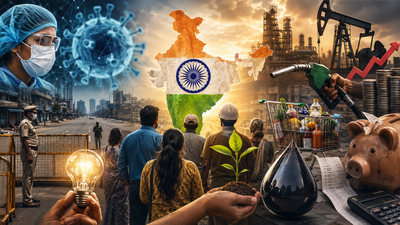
“We the people of India” saved the nation during Covid by “living like soldiers”. Today, citizens are again being asked to help the country by “living responsibly”.The language has changed from pandemic precautions to economic discipline, but the political pattern feels familiar.One way to detect coming trouble is to watch how governments speak. When administrations begin talking less about policy and more about behaviour — conserving fuel, avoiding excess spending, reducing travel, consuming responsibly — it often means the state is psychologically preparing society for harder economic measures.India has now seen this twice within five years: during Covid and now during the ongoing Gulf crisis triggered by the US-Israrel-Iran war.In both moments, governance shifted from direct administration to behavioural management. Citizens were no longer treated merely as taxpayers or voters, but as participants in national survival.The BJP-led NDA government has in the past resorted to direct administration when it believed it was necessary. Demonetisation, the rollout of GST are examples of high-impact executive action that had a huge impact on public life.However, during periods of economic or geopolitical stress, the Centre often changes tone before it changes policy.This is the politics of behavioural governance, and it may be one of the clearest early warning signs of a nation facing stress.
The grammar of distress
Prime Minister Narendra Modi’s recent speech in Hyderabad carried echoes familiar to anyone who remembers the pandemic years. The message was framed as an appeal, not an emergency order. There was no announcement of rationing or restrictions. Instead, the emphasis was on restraint, conservation and collective responsibility.The tone mattered.
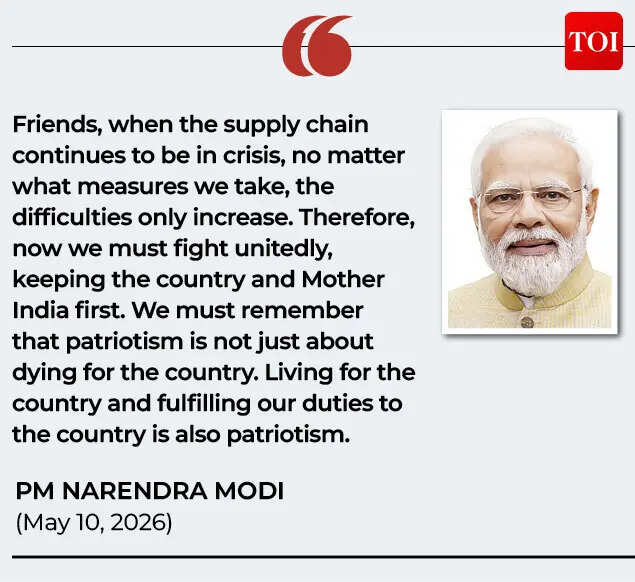
Governments rarely begin crisis management with force. They begin with persuasion.Economists often describe this as behavioural economics applied to governance — influencing public decision-making through messaging rather than compulsion. Instead of immediately imposing harsh measures, governments attempt to gently reshape behaviour first: consume less fuel, postpone discretionary spending, reduce imports, avoid panic buying, travel differently, work from home where possible.“The basic economics is that behavioural appeals are generally fast and low-cost because major fiscal interventions—subsidies, tax changes, stimulus packages, rationing systems, or price controls — require legislative approval, budget allocation, administrative coordination, and so on. Whereas, behavioural appeals, or a sort of signal, which sometimes also called ‘demand-side adjustment through norms’, shift part of the adjustment burden onto citizens voluntarily, reducing immediate state expenditure,” said Surya Bhushan, an alumnus of CESP, JNU, and now economics professor at DMI, Patna.Adding a political logic to it, he said “behavioural messaging avoids politically painful policies”.
Are crises psychological before they get administrative?
Economic distress is not only about shortages or numbers on a spreadsheet. They are also about public emotion.Bhushan argues that governments increasingly recognise this psychological dimension.“Crises are often partly psychological … economic crises are not only about material shortages; expectations matter enormously. For instance, if consumers panic: they hoard, rush to banks, speculate, overbuy fuel, or trigger inflationary spirals. In this regard, behavioural appeals aim to stabilize expectations and reduce panic behaviour.”This helps explain why official communication during crises often sounds calm even when underlying risks are serious. The objective is not only economic management, but emotional management.The speech itself becomes an economic tool.That was visible during Covid. It is visible again now amid fears surrounding oil supply disruptions and instability in the Persian Gulf that has impacted countries across the globe.
Has India seen this form of governance before?
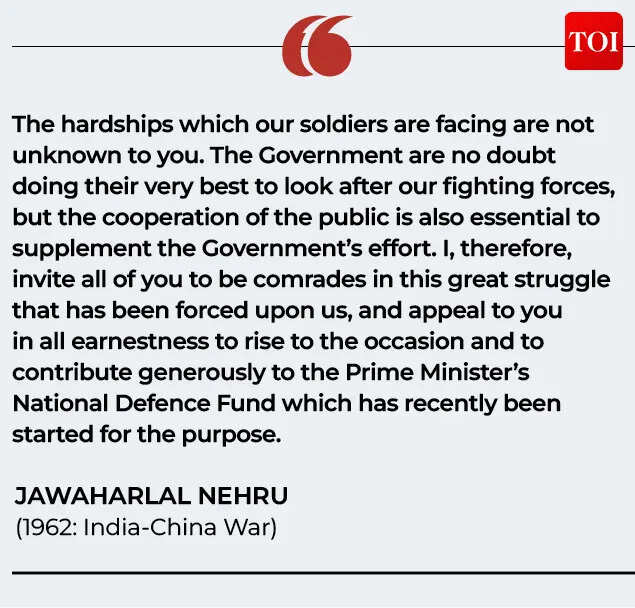
Yes, long before behavioural governance became an academic phrase, governments were already using it during moments of national stress.During the 1962 India-China war, then PM Jawaharlal Nehru appealed directly to citizens not merely for support, but for participation. Asking Indians to contribute to the Prime Minister’s National Defence Fund, he framed the war effort as a collective civic responsibility rather than a task for the state alone.“The hardships which our soldiers are facing are not unknown to you,” Nehru said, urging citizens to become “comrades in this great struggle”.The appeal was not only financial. It psychologically transformed civilians into stakeholders in national defence.
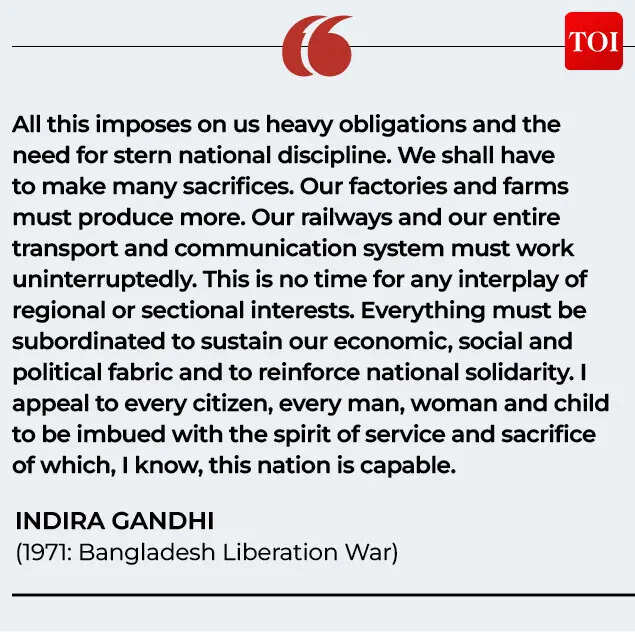
A similar pattern emerged during the 1965 Indo-Pak war, when Lal Bahadur Shastri urged citizens to voluntarily fast once a week to conserve food supplies amid shortages. Importantly, Shastri reportedly implemented the practice within his own household before asking the country to follow, giving the appeal moral legitimacy.By the 1971 war and the Bangladesh refugee crisis, behavioural messaging had become even more explicit. With the country’s economy under severe strain, Indira Gandhi appealed for “stern national discipline” and sacrifice.“Our factories and farms must produce more. Our railways and our entire transport and communication system must work uninterruptedly,” she said, warning that “everything must be subordinated” to preserving national stability.What connects these moments across decades is the language of collective duty. During crises, governments begin treating citizens not simply as governed populations, but as instruments of national resilience.
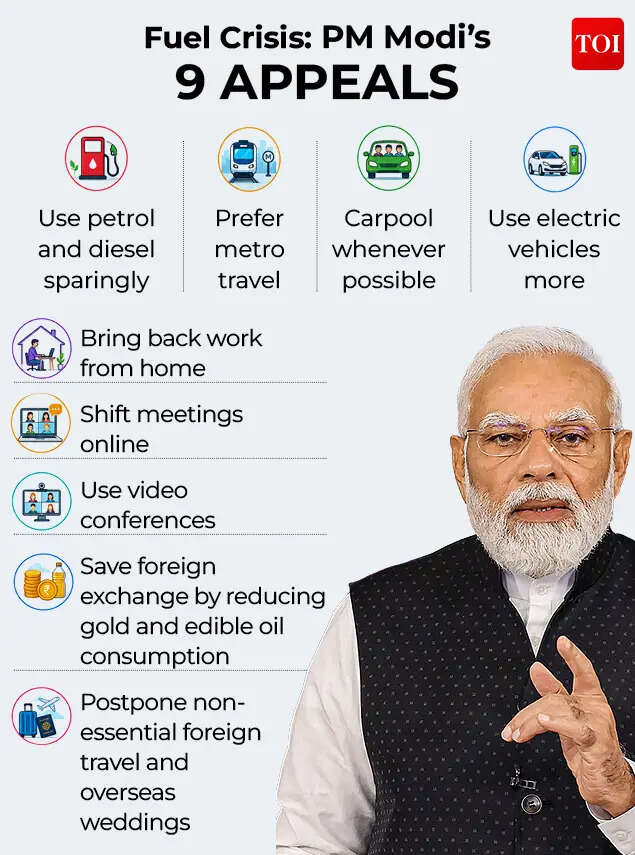
The current appeals around fuel conservation, restrained consumption and “duty-first” behaviour follow the same political grammar — only updated for a modern economy shaped by oil shocks, global supply chains and digital life.The recent fuel price increase is a case in point.Petrol and diesel prices are not just economic indicators in India. They are deeply political symbols. Fuel prices shape transport costs, food inflation and household budgets, affecting nearly every layer of daily life. That is perhaps why fuel prices were not raised in the last four years.Finally, when the fuel prices were hiked it was timed to avoid the ongoing assembly election period despite rising global crude prices linked to West Asian tensions. Economically, the increase reflected global pressures. Politically, the timing reflected management.And before citizens fully processed the implications, the language of conservation had already entered public discourse.
Why oil shocks hit India so deeply?
India’s vulnerability to energy shocks makes behavioural governance especially relevant.Bhushan points out that oil is not just another commodity in the Indian economy: “Of course, India is structurally vulnerable to a prolonged oil-supply disruption because crude oil sits at the center of multiple systems simultaneously: transport, agriculture, logistics, chemicals, inflation management, fiscal stability, and the rupee itself.”That interconnectedness explains why governments become cautious when disruptions emerge around the Strait of Hormuz or the wider Gulf region. A sustained oil shock quickly spills into inflation, transport costs, fertiliser prices, currency pressure and household budgets.“What needs to be kept in mind is that the government had already cushioned the impact by cutting the excise duty on petrol and diesel by Rs 10 at the end of March. That has significant fiscal impact on the finances of both the Central and state governments,” said Ananth Krishna Varahe, head of the Nation First Policy Research Centre (NFPRC).“As a country without significant petroleum resources, we are downstream of a huge oil shock that we have more or less not seen the full effect of. The Government of India has taken in my opinion a calibrated approach in managing that shock to the domestic economy, which was the only right approach,” he added.He further argued that rising prices were unavoidable “considering that the OMCs were making losses up to Rs 1,000 crore a day”.
How does behavioural governance work?
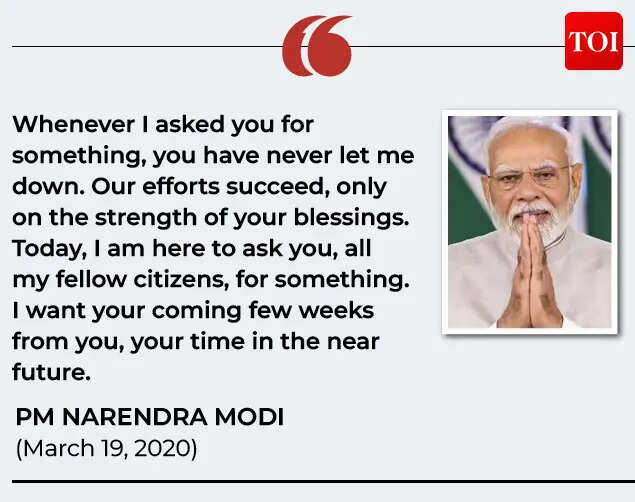
Behavioural governance works by making citizens feel like active participants in managing a national crisis rather than passive subjects of state control. Governments first shape public behaviour through emotion, symbolism and collective responsibility before enforcing stricter measures.The Covid-19 pandemic offered perhaps the clearest example of this strategy.Before the nationwide lockdown was announced, Prime Minister Narendra Modi appealed for a voluntary “Janta Curfew” on March 22, 2020. There was no immediate coercive enforcement attached to it. Yet millions across the country stayed indoors, roads emptied, markets shut and public life paused almost entirely.What made the appeal effective was not law, but psychological mobilisation.The language used during the period deliberately transformed ordinary citizens into participants in a national mission. PM Modi repeatedly framed the pandemic as a collective battle and citizens as “soldiers” fighting it together.A similar vocabulary is visible again in the current Gulf-linked economic stress. Speaking at a public event in Secunderabad, PM Modi argued that rising global energy prices and supply-chain disruptions required “collective restraint” and a “duty-first” approach from citizens, once again framing behavioural adjustment as part of a national response.“Crises are often partly psychological … economic crises are not only about material shortages; expectations matter enormously,” said Bhushan.
Can everyone equally participate in ‘national sacrifice’?
Behavioural governance works best when sacrifice appears collective. But in practice, the ability to participate in it is deeply unequal.The Covid experience exposed this divide sharply. While sections of the middle class shifted to online meetings, home offices and app-based services, millions of migrant workers and informal labourers faced immediate economic collapse once transportation systems shut down and work disappeared almost overnight.The migrant crisis during the lockdown became one of the starkest reminders of how unevenly national sacrifice is experienced. As cities closed and transport networks stopped, thousands of migrant workers were forced to walk hundreds of kilometres back to their villages, often without income, food or shelter. For many of them, “staying home” was never a realistic option because survival itself depended on physical mobility and daily wages.“Behavioural austerity has hard limits, we all know because of informality of the economy, like, a street vendor, factory worker, truck driver, or migrant labourer cannot easily ‘opt out’ of fuel dependence. So we still need to think and work towards energy security,” Bhushan said.
Crisis management or shifting responsibility?
Many argue that behavioural governance builds resilience during emergencies. Encouraging lower fuel consumption, restrained imports and moderated spending can genuinely reduce pressure on foreign exchange reserves during periods of global instability.Critics, however, ask where responsible citizenship ends and the shifting of state responsibility begins.Varahe rejected the argument that responsibility is being outsourced to citizens. “The state responsibility has not been ‘shifted’. While there has been a ‘call to action’ from the PM himself, the Government has introduced measures to increase duty on imported gold or cap import of duty free gold. Similarly, the petrol/diesel prices have been increased. There are likely going to be many other measures that the Government will take.”He argued that the government is attempting to balance intervention with economic flexibility.“The line of thought is that the citizen should be pointed to ideal action, but not limited from making their own decisions.”Behavioural governance works because it turns citizens from passive recipients of policy into participants in crisis management. But it also raises a difficult question: how much of the burden of crisis should be absorbed by citizens themselves?That is why political language matters during uncertain times. When leaders begin speaking about discipline, restraint, conservation and sacrifice, they are also preparing society psychologically for the turbulence ahead.The speech becomes a policy instrument.And perhaps that is the real warning sign of a crisis – not when governments impose restrictions, but when they begin asking citizens to voluntarily change how they live.


