
Remove sticky labels from glass jars in minutes using this common ingredient |

There have been times when we’ve all experienced it. Find the ideal vintage glass bottle at a garage sale, or even finish a bottle of delicious pasta sauce which is just too gorgeous to discard. Imagine it in your kitchen counter housing sourdough starters or vibrant dried lentils. You then see it: the sturdily hard-to-read label, which seems connected to the glass through an old, strong connection. This usually leads to frustration, broken nails and the sour smell of dizzying chemicals that remove adhesive.But the answer to your storage issues will not require a trip to the local hardware store to purchase harmful solvents. The best tool for changing your pantry space is located right beside the baking flour you use. Vegetable shortening is a delicious kitchen staple that is used to make flaky pastry crusts that are flaky and other baked goods. It is the secret tool against stuck-on remnants.Why oil trumps chemicals for adhesive removalUtilising shortening for cleaning your containers is not an imaginative “hack” taken from the groups on social media like Reddit or Facebook, but is based on the fundamentals of chemistry. Adhesives that are used to make labels for commercial use are usually non-polar chemicals. In the field of science, there’s the golden rule that says like dissolves similarly. Since shortening’s components are liquids, it functions as a solvent, breaking through the molecular bonds of the glue.Research reported by The Journal of Adhesion Science and Technology investigates the ways in which the different oils work with polymer adhesives. The research reveals that vegetable-based fats have the ability to get into the adhesive layer to reduce its hold on smooth surfaces, similar to glass. Even though liquid oils could be sucked up by the curving edges of jars and make a mess, the shortening process of hydrogenation makes it semi-solid. It is able to remain precisely where it is so that it is able to completely cover the paper and glue without spilling onto your counter.This technique is attractive for people who want a safe home. The majority of products sold as “goo” removers are made of D-Limonene and petroleum distillates, which, although effective, may create irritation on the skin and irritation to the respiratory system. Shortening is a safe alternative which is gentle on your hands and non-odorous.
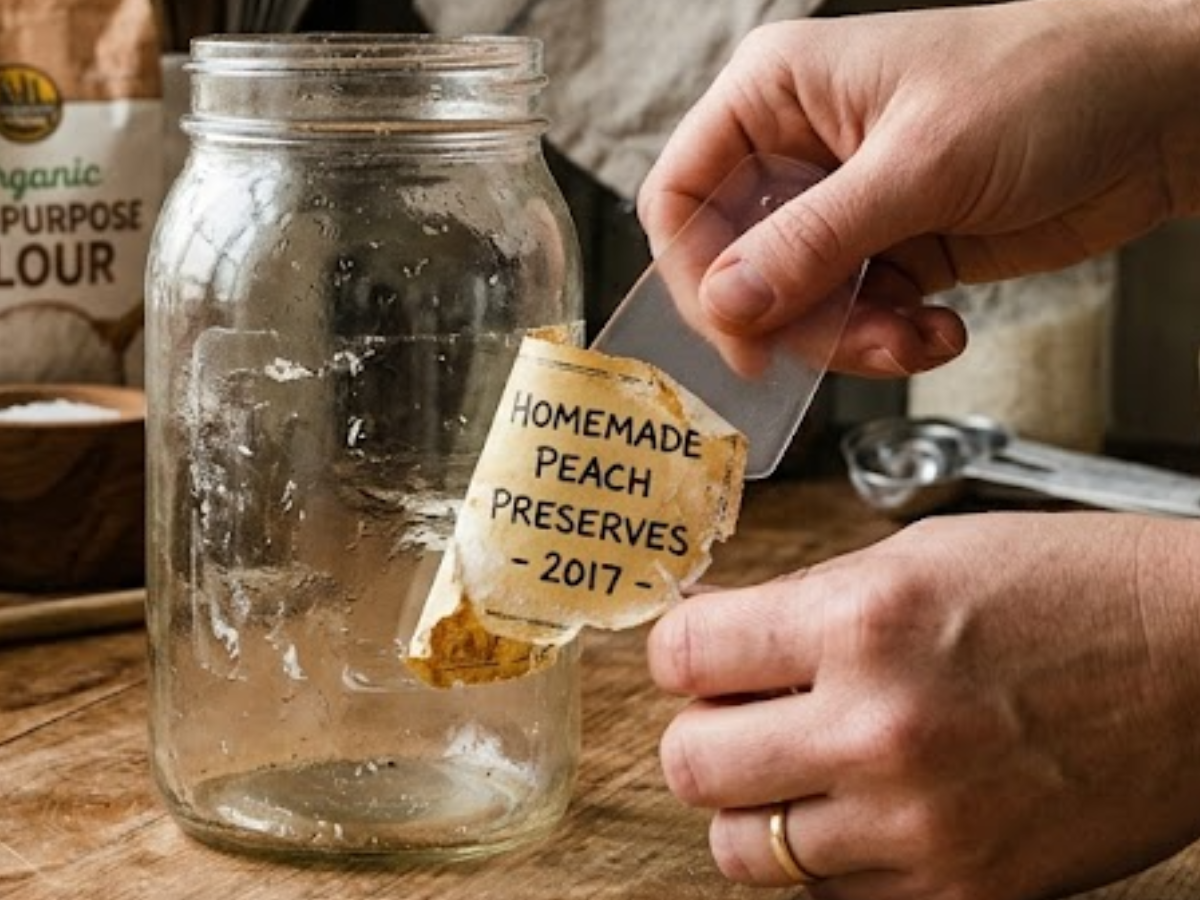
Simple kitchen shortening loosens sticky labels from glass jars | Image Credit: Gemini
The simple step-by-step process for a label free finishIn order to begin your jar transformation, it’s all you need is only a little bit of shortening as well as a touch of perseverance. Before beginning, set the jar in a secure place, such as a silicone mat or old newspaper. Also, think about using an apron. Because shortening is a type of oil, it could cause a rash on your clothing, especially when it spills.Utilise a clean cloth or paper towel and spread out a dense, even thin layer of shortening across the whole label. Make sure your edges are completely covered since that’s usually the area where glue becomes resistant. The jar should be left to rest for at least 20 hours. This time is important as it permits the fats to penetrate the fibres of paper and get to the backing that is sticky.After the duration is over, beware of the urge to grab metal scrapers or a razor blade. Metal is a great way to leave permanent scratches on glass, creating a look that is not what you’re seeking to create. Instead, you can use scrapers made of plastic or an old credit card to lift the label gently. The paper slid off in pleasantly huge chunks, rather than breaking into small, annoying pieces.The study in ACS Applied Materials & Interfaces examines the way in which the tension on the surface of lipids decreases the “peel force” that is required to peel off the stickers from non-porous materials. The scientific basis for this study explains how the sticker appears to dissolve with the force of your scraper, made of plastic.When the label has gone, there may be some oily remnants. An easy wash in the sink using hot soapy water can rid the glass of dirt and make the glass shining and ready to take on its new beginnings. If you’re organising your pantry or making DIY spice jars with this straightforward method will ensure that your kitchen stays stylish, durable and without glue.


