
. NEW DELHI: Nearly two in five NEET (UG) aspirants this year came from just four states, highlighting the concentration of India’s medical education aspirants, even as the overall exam base continues to expand. Data from National Testing Agency (NTA)’s state-wise report for NEET (UG) 2026 shows that Uttar Pradesh, Maharashtra, Rajasthan and Bihar together accounted for about 9.4 lakh candidates, or 41.4% of the total 22.7 lakh candidates for the exam. Overall participation remained high. Of the 22.7 lakh candidates, over 22 lakh appeared, translating into an attendance rate of 96.9%. A total of 69,976 candidates were absent, or 3% of those allotted centres. The four largest states also topped the list individually. Uttar Pradesh recorded the highest allocation at around 3.6 lakh candidates, followed by Maharashtra with 2.2 lakh, Rajasthan with 2 lakh and Bihar with 1.5 lakh. Other high-volume states included Karnataka (1.5 lakh), Tamil Nadu (1.4 lakh), Madhya Pradesh (1.2 lakh), Kerala (1.1 lakh) and West Bengal (1 lakh). Together, the top nine states — from Uttar Pradesh to West Bengal — accounted for over 17 lakh candidates, or roughly threefourths of total pool, indicating a sharp clustering of aspirants in a limited set of large states. In contrast, several smaller states and Union territories reported allocations below 5,000 candidates, underlining the uneven geographic spread of participation. But attendance levels were consistently high across states. Gujarat recorded the highest attendance rate at 98.1%, followed by Puducherry at 98% and Rajasthan at 97.9%. Among large states, Uttar Pradesh (97.5%) and Maharashtra (97.4%) also reported strong turnout. Kerala had lowest attendance rate among major states at 94.4%, followed by Assam (95.1%) and Tamil Nadu (95.9%).About the AuthorManash Pratim GohainManash Pratim Gohain is a seasoned journalist with over two decades at The Times of India, where he has built a rich body of work spanning education policy, politics, and governance. Renowned for his incisive coverage of the National Education Policy (NEP) 2020, accreditation reforms, and skilling initiatives, he has also reported on student politics, urban policy, and social movements. His political reportage—both reflective and news-driven—adds depth to his writing, bridging policy with public impact. Through his 2,500 articles and related outlets, he has emerged as a trusted voice in national discourse, particularly in linking education reform to broader societal change.Read MoreEnd of ArticleFollow Us On Social MediaVideos‘Congress Will Be Wiped Out Everywhere’: DMK Warns Cong Over Support To Vijay’s TVK2 Dead, 200+ FIRs, 433 Arrested, Over 1100 Detained In Post-Poll Violence In West Bengal‘Asked Me To Pay Rs 5 Crore’: Ex-Cricketer Makes Shocking Claim On TMC After Bengal PollsPakistan Navy Helps Stranded Indian Ship In Arabian Sea After Distress Call: ReportTVK Emerges Largest, But Vijay Needs Critical Backing To Form Govt; Will He Succeed?Election Commission Blocks 68 Lakh Cyber Attacks; ECINET Handles Record Traffic on Counting Day‘Directly Promoting ISI Narrative’: BJP Slams Bhagwant Mann’s Remark On Punjab BlastsIndia–Vietnam Upgrade Ties | $25 Billion Trade Push, UPI Link & Big Strategic Signal to China‘Shortage Of Funds’: Akhilesh Yadav Reveals Why SP Ended Contract With I-PAC Ahead Of UP PollsTeesta Issue Explained: Can Bengal Result Unlock Deal As China Factor Raises Stakes123PhotostoriesHow to make Oats, Besan, and Chaach Chilla for a light summer breakfastAre you storing fruits all wrong? Why your fridge may be ruining their taste, nutrition, and shelf life10 subtle body language cues that reveal your true feelingsKL Rahul’s Bangalore home is a crores-worth luxury retreat built on cricket success and strong family rootsVisa hacks 2026: What smart Indian travellers are doing differently this yearComfort foods that are the quiet healers of your body (health benefits inside)From human-sized birds to pebble ‘proposals’: 6 facts that will change how you see penguinsEating the same food every day? Nutritionist explains what it secretly does to your gut bacteria over time10 funny marriage quotes by famous people that every couple will relate to7 small lifestyle upgrades under ₹1000 that make life easier123Hot PicksGSEB 10th Result 2026Delhi traffic advisoryDelhi rainPune child rape-murder casePerambur election resultIndia-New Zealand FTASugarcane price hikeTop TrendingNFL Trade RumorsIPL 2026 Orange CapCBSE Class 10 admit card 2026IPL Playoff Qualification ScenariosIPL 2026 Points TableMI IPL Playoff Qualification ScenariosJalandhar BlastNEET 2026: Exam-day guideGSEB Class 10th result 2026TVK Chief Vijay

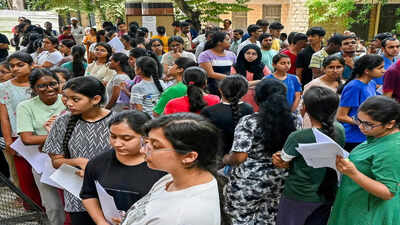
NEW DELHI: Nearly two in five NEET (UG) aspirants this year came from just four states, highlighting the concentration of India’s medical education aspirants, even as the overall exam base continues to expand. Data from National Testing Agency (NTA)’s state-wise report for NEET (UG) 2026 shows that Uttar Pradesh, Maharashtra, Rajasthan and Bihar together accounted for about 9.4 lakh candidates, or 41.4% of the total 22.7 lakh candidates for the exam. Overall participation remained high. Of the 22.7 lakh candidates, over 22 lakh appeared, translating into an attendance rate of 96.9%. A total of 69,976 candidates were absent, or 3% of those allotted centres. The four largest states also topped the list individually. Uttar Pradesh recorded the highest allocation at around 3.6 lakh candidates, followed by Maharashtra with 2.2 lakh, Rajasthan with 2 lakh and Bihar with 1.5 lakh. Other high-volume states included Karnataka (1.5 lakh), Tamil Nadu (1.4 lakh), Madhya Pradesh (1.2 lakh), Kerala (1.1 lakh) and West Bengal (1 lakh). Together, the top nine states — from Uttar Pradesh to West Bengal — accounted for over 17 lakh candidates, or roughly threefourths of total pool, indicating a sharp clustering of aspirants in a limited set of large states. In contrast, several smaller states and Union territories reported allocations below 5,000 candidates, underlining the uneven geographic spread of participation. But attendance levels were consistently high across states. Gujarat recorded the highest attendance rate at 98.1%, followed by Puducherry at 98% and Rajasthan at 97.9%. Among large states, Uttar Pradesh (97.5%) and Maharashtra (97.4%) also reported strong turnout. Kerala had lowest attendance rate among major states at 94.4%, followed by Assam (95.1%) and Tamil Nadu (95.9%).


