
NEW DELHI: As counting trends firm up across five states and UT, the 2026 assembly elections are already changing the political map in dramatic ways. From Vijay’s blockbuster debut in Tamil Nadu to the saffron breakthrough in West Bengal and Kerala’s return to rotation, the verdict is throwing up clear winners and decisive losers. This is not just about who forms governments, but about who has redefined the narrative and who has been pushed to the margins. Established power centres have been shaken, new forces have emerged, and old assumptions have collapsed.Follow complete coverage of election results 2026Here’s a look at the top 10 winners and losers who define the story of assembly election results 2026.Note: This list is based on trends and leads. Counting is still underway and final results will be out in a few hours. WINNERS1. Vijay Vijay is hands down the biggest winner of the 2026 assembly elections, not just in terms of numbers. Election Results 2026Vijay’s TVK party emerges as formidable force in Tamil Nadu; all you need to know about its journeyWest Bengal election results: Mamata lags behind Suvendu Adhikari after 2nd round in BhabanipurTVK pushes DMK, AIADMK to margins; BJP may oust Mamata in Bengal, retain AssamWest BengalTamil NaduKeralaAssamPuducherry PreviousBJP LEADINGWest BengalParty ViewAlliance ViewSeats282/294Total: 294Note: Repolling for the Falta assembly constituency in West Bengal has been scheduled for May 21.L + WMajority: 148BJP0AITC0CONG0CPI(M)0OTH0TVK LEADINGTamil NaduParty ViewAlliance ViewSeats227/234Total: 234L + WMajority: 118TVK0AIADMK0DMK0BJP0CONG0OTH0CONG LEADINGKeralaParty ViewAlliance ViewSeats140/140Total: 140L + WMajority: 71CONG0CPI(M)0IUML0CPI0BJP0OTH0BJP LEADINGAssamParty ViewAlliance ViewSeats126/126Total: 126L + WMajority: 64BJP0CONG0AGP0AIUDF0OTH0AINRC LEADINGPuducherryParty ViewAlliance ViewSeats29/30Total: 30L + WMajority: 16AINRC0BJP0CONG0DMK0OTH0 Next12345Source: PValueBy emerging as the biggest party in Tamil Nadu with over 100 seats, Vijay has fundamentally changed the state’s political grammar. Leading Tamilaga Vettri Kazhagam to cross the majority mark in trends, Vijay has effectively disrupted a five-decade-old Dravidian duopoly.With this, Vijay has set a new election debut standard.At the heart of this shift is what many are calling the ‘MGR 2.0’ effect. Much like MG Ramachandran, Vijay translated cinematic charisma into a mass political movement, but with a contemporary edge. His decision to contest all 234 seats independently proved crucial that positioned TVK as a clean, alternative force outside traditional alliances. This ‘third way’ seems to have resonated strongly with young and first-time voters seeking a break from the DMK-AIADMK cycle.Ideologically, Vijay crafted a broad idea — combining social justice with a calibrated political positioning that challenged both Dravidian incumbency and national party expansion. The impact was eventually visible on the result day: TVK didn’t just compete, it disrupted. This is more than an electoral victory. It marks the arrival of a new pole in Tamil Nadu politics and potentially, the beginning of a post-bipolar era.2. PM Modi and Amit Shah Continuing the script, Prime Minister Narendra Modi and Amit Shah once again emerged as the biggest winners of 2026 assembly elections.At its core, this election was not just about five states/UT, it was a referendum on whether the BJP’s national dominance can sustain across diverse regional terrains. Any gains in states like West Bengal or incremental growth in Tamil Nadu signal that the Modi-Shah electoral model is no longer geographically confined. The biggest story is Bengal where PM Modi held several rallies and Amit Shah camped for 20 days, holding numerous public meetings and rallies in the run-up to voting.These results are not isolated, they feed directly into the road to next years crutial assembly elections in Punjab, Uttar Pradesh and other states and eventually to 2029 Lok Sabha. A strong performance allows PM Modi to retain the narrative of electoral invincibility, while Amit Shah strengthens his reputation as the architect of booth-level dominance. 3. Himanta Biswa SarmaHimanta Biswa Sarma’s position as one of the standout winners of the 2026 assembly elections rests on a rare political achievement: converting incumbency into advantage and delivering a third straight victory for the BJP-led NDA in Assam.In a state where anti-incumbency has historically played a decisive role, Sarma has managed to ride a pro-incumbency wave. His government’s emphasis on infrastructure expansion and targeted welfare delivery, especially schemes like Orunodoi, created a direct connect with rural households and women voters. Instead of fatigue, there is evidence of continuity in voter support.His dominance in Jalukbari, where he continues to lead by massive margins, underscores his personal popularity. More importantly, he has been able to transfer that appeal across the state, a key factor behind the NDA’s ability to aim for and achieve a commanding tally.Sarma’s campaign leaned heavily on identity politics and security concerns, particularly around illegal infiltration and indigenous rights. This sharpened messaging helped consolidate the majority vote base and blunted the challenge posed by the Congress-led alliance.This victory does more than secure another term. It elevates Sarma’s stature within the BJP as a leader who can repeatedly deliver electoral success in a complex, multi-ethnic state. 4. VD Satheesan and Rahul GandhiVD Satheesan and Rahul Gandhi stand out as the twin pillars behind a landmark political turnaround in Kerala. The Congress-led United Democratic Front (UDF) has crossed the majority mark in first few hours of counting, bringing an end to the decade-long rule of the Left Democratic Front (LDF) led by Pinarayi Vijayan.As leader of the opposition, Satheesan emerged as the principal architect of the UDF’s revival. His statewide outreach and sustained campaign sharpened anti-incumbency and rebuilt the alliance’s grassroots machinery. Retaining a strong lead in Paravur, he reinforced his credibility as both a mass leader and a strategist.By halting the Left’s bid for a third straight term and restoring Kerala’s traditional power rotation, he is now the clear frontrunner for the chief minister’s post.On the other hand, Rahul Gandhi’s sustained engagement with Kerala, especially as MP from Wayanad, amplified the UDF’s campaign. His rallies drew strong youth participation and boosted momentum across key regions. This victory also gives Rahul Gandhi a significant political boost at the national level, strengthening his position within the opposition bloc and reinforcing the Congress’s ability to take on entrenched regional forces.5. Suvendu AdhikariSuvendu Adhikari emerges as the central figure behind the BJP’s historic breakthrough in West Bengal, widely seen as the strategist who converted momentum into a majority. As leader of opposition, he played the role of both architect and executor, guiding the party past the majority mark at the time of writing this article and ending the TMC’s 15-year rule.His campaign hinged on a sharp Hindu consolidation narrative, which delivered results across border districts and tribal belts, flipping dozens of former TMC strongholds. Even as he took on Mamata Banerjee in the high-profile Bhabanipur contest, he seems to have firm control over his base in Nandigram.Adhikari also capitalised on public anger over issues like the RG Kar case and allegations of corruption, reframing the election as a referendum on governance and accountability.Even if his personal contest remains tight, the larger verdict cements him as the BJP’s decisive force in Bengal’s political shift and a top contender for the CM post.LOSERS6. MK Stalin The 2026 assembly elections verdict marks a stunning political reversal for MK Stalin, not just a loss of power, but a collapse of the DMK’s long-held dominance in Tamil Nadu’s political order.For decades, Tamil Nadu politics revolved around the DMK–AIADMK axis. This election has disrupted that equilibrium. The DMK slipped to third position in several regions.After five years in office, the DMK faced a sharp anti-incumbency wave. Allegations around corruption, concerns over law and order and persistent attacks on ‘family rule’ created a narrative that the opposition successfully amplified.The emergence of Vijay’s TVK proved decisive. By directly targeting the DMK as the principal adversary and positioning itself as a fresh alternative, TVK drew away core segments of the DMK vote base, especially youth and urban voters. The symbolism of the result is as damaging as the numbers. Stalin trailing in Kolathur and Udhayanidhi Stalin facing a tight contest in Chepauk point to a deeper rejection, not just of governance, but of leadership itself. The DMK’s electoral calculus depended on opposition fragmentation. Instead, the surge of TVK overwhelmed that assumption. Rather than dividing the anti-incumbency vote, the new entrant absorbed it, leaving the DMK with a sharply reduced tally.Perhaps the most significant warning sign is the shift in urban Tamil Nadu, especially Chennai and its surrounding belts. These were once DMK strongholds. Their movement toward TVK reflects a generational and aspirational shift that the party failed to anticipate or counter.7. Mamata BanerjeeMamata Banerjee’s defeat marks the end of a 15-year political dominance in West Bengal, with the BJP surging past the majority mark in trends. The loss of CM chair reflects a convergence of multiple pressures. The fallout from the RG Kar incident became a powerful symbol of public anger over governance and women’s safety, cutting through the brand ‘Didi’. The Special Intensive Revision of voter rolls added another layer of controversy, with the TMC blaming large-scale deletions for eroding its core base.After three terms, anti-incumbency finally caught up. The BJP, led in the state by Suvendu Adhikari, capitalised on this with a strong identity and infiltration narrative, flipping key districts. A record turnout signalled a decisive voter push for change. Even if Mamata retains her own seat, the larger verdict represents a structural collapse of TMC dominance.8. Pinarayi VijayanPinarayi Vijayan and the Left Democratic Front (LDF) fall into the losers’ list after their bid for a historic third consecutive term was decisively blocked by the Congress-led UDF. The defeat signals the limits of Vijayan’s centralised ‘Captain’ leadership model, which critics successfully reframed as authoritarian, eroding its earlier appeal.The symbolism is stark: Vijayan himself locked in a tight contest in Dharmadam, alongside multiple cabinet ministers trailing or losing, points to a broader rejection of governance. Internal dissent, including rebellion by PV Anvar, fractured the vote base in key regions. Combined with a strong anti-incumbency narrative around corruption and policy fatigue, the result marks a decisive breach in the Left’s Kerala stronghold and the end of its continuity push. With this, the Left also loses the only state it governed and will be now fighting for relevance.9. Gaurav GogoiGaurav Gogoi finds himself among the losers of Assam election results 2026 after failing to convert a high-profile campaign into a credible electoral challenge against the BJP and Himanta Biswa Sarma. His personal setback, losing Jorhat against BJP’s Hitendranath Goswami, undercuts his attempt to transition from a national figure to a state-level chief ministerial face.The Congress-led Asom Sonmilito Morcha (ASM), despite stitching alliances, failed to dent the BJP’s dominance, falling far short of expectations. Gogoi’s reliance on the legacy of his father, Tarun Gogoi, did not resonate strongly enough against the BJP’s welfare-driven ‘Himanta model’.Late-stage allegations around EVM security and strong room breaches also backfired, appearing defensive rather than mobilising. Crucially, Congress failed to regain lost ground in key regions like upper Assam and tea garden belts.For Gogoi, this election was meant to be a breakthrough moment; instead, it leaves him leading a weakened opposition.10. Edappadi K Palaniswami EPS may be able to hold his ground personally, but politically, he lands on this list for failing to reclaim power or reposition the AIADMK as Tamil Nadu’s primary alternative. Despite visible anti-incumbency against the DMK and MK Stalin, the party could not score much seats, leaving EPS in opposition yet again.The defining setback is the rise of Vijay’s TVK, which effectively occupied the opposition space that traditionally belonged to the AIADMK. Equally telling is the stagnation in seat share, with numbers broadly similar to 2021, indicating no real growth after five years out of power. Even EPS’s alliance strategy with the BJP and others failed to counter the surge.The result points to a simple fact: AIADMK is no longer the default challenger in Tamil Nadu politics.Follow the latest election results 2026, live updates, winner lists, constituency-wise results, party-wise trends and full coverage for Tamil Nadu election results, West Bengal election results, Kerala election results, Assam election results and Puducherry election results results on Times of India.About the AuthorPallaviNews desk journalist, digital, at The Times of India, with a focus on Indian politics. Over a decade of chasing stories, taming headlines and arguing with commas like they’re part of the opposition. Tracks elections, policy pivots, party drama and the fine print of power, where every word can tilt the narrative. Believes good journalism is clarity under pressure, ideally filed before the next breaking alert crashes in. Powered by deadlines, context, sharp edits and a steady supply of strong tea.Read MoreEnd of ArticleFollow Us On Social MediaVideosIndia Rejects Nepal’s Objection To Kailash Mansarovar Yatra Route Via Lipulekh PassNepal Objects To India-China Plan To Conduct Kailash Mansarovar Yatra Via LipulekhIndia-Linked LPG Tanker MT Sarv Shakti Heads To Visakhapatnam After Crossing HormuzPassenger Opens Emergency Exit Door On Air Arabia Flight While Taxiing At Chennai Airport, ArrestedAhead Of Counting, Gunmen Open Fire At BJP Leader’s House In Bengal’s Noapara‘I Am Also A Victim’: Vinesh Phogat Identifies As Complainant In Brij Bhushan Sexual Harassment CaseBJP MP Sandeep Pathak Claims ‘No Information’ On FIRs, Alleges Misuse Of State Machinery In PunjabIndian Startup Launches Mission Drishti, World’s First OptoSAR Satellite, Aboard SpaceX Falcon 9Diljit Dosanjh Confronts Khalistan Supporters at Calgary Concert, Explains KBC AppearanceDelhi Approves ₹48,000 Crore Metro Expansion Plan To Connect Outer Regions With City Core123PhotostoriesMohammed Siraj’s ₹13 crore bungalow in Jubilee Hills Hyderabad tells a story of family support, early struggle, and cricket stardomBest pots for plants: Terracotta vs Cement vs Plastic –which one wins?GK Fact of the Day: 7 carnivorous plants that trap and eat insectsNoorjahan Mango: Why it’s called the Queen of Mangoes, sold at Rs 1000 a piece and its connection with AfghanistanHugh Jackman’s Ball State speech has life lessons on failure and intuition: ‘Even mistakes may turn out to be the best thing’12 foods that can help you sleep better naturallyKatrina Kaif makes her first public appearance post maternity in an all-black airport look, and fans are officially obsessedMira Rajput and Shahid Kapoor’s home is an amalgamation of fashion and artsThe 7 most venomous sea snakes in the world5 daily phrases that build a child’s self-worth (backed by psychology)123Hot PicksAssam key constituenciesKerala key constituenciesPuducherry election resultsTamil Nadu constituenciesPerambur election resultMamata Banerjee vs Suvendu AdhikariGold rate todayTop TrendingWest Bengal Assembly Election ResultsAssam Assembly Election ResultsTamil Nadu Assembly Election ResultsKerala Assembly Election ResultsPuducherry Assembly Election ResultsBhabanipur election results 2026CBSE Class 12th ResultNEET 2026: Exam-day guideHPBose 12th ResultGSEB HSC Result

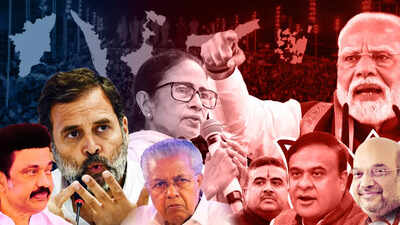
NEW DELHI: As counting trends firm up across five states and UT, the 2026 assembly elections are already changing the political map in dramatic ways. From Vijay’s blockbuster debut in Tamil Nadu to the saffron breakthrough in West Bengal and Kerala’s return to rotation, the verdict is throwing up clear winners and decisive losers. This is not just about who forms governments, but about who has redefined the narrative and who has been pushed to the margins. Established power centres have been shaken, new forces have emerged, and old assumptions have collapsed.Follow complete coverage of election results 2026
Here’s a look at the top 10 winners and losers who define the story of assembly election results 2026 .
Note: This list is based on trends and leads. Counting is still underway and final results will be out in a few hours.
WINNERS
1. Vijay
Vijay is hands down the biggest winner of the 2026 assembly elections, not just in terms of numbers. By emerging as the biggest party in Tamil Nadu with over 100 seats, Vijay has fundamentally changed the state’s political grammar. Leading Tamilaga Vettri Kazhagam to cross the majority mark in trends, Vijay has effectively disrupted a five-decade-old Dravidian duopoly.With this, Vijay has set a new election debut standard.At the heart of this shift is what many are calling the ‘MGR 2.0’ effect. Much like MG Ramachandran, Vijay translated cinematic charisma into a mass political movement, but with a contemporary edge. His decision to contest all 234 seats independently proved crucial that positioned TVK as a clean, alternative force outside traditional alliances. This ‘third way’ seems to have resonated strongly with young and first-time voters seeking a break from the DMK-AIADMK cycle.Ideologically, Vijay crafted a broad idea — combining social justice with a calibrated political positioning that challenged both Dravidian incumbency and national party expansion. The impact was eventually visible on the result day: TVK didn’t just compete, it disrupted. This is more than an electoral victory. It marks the arrival of a new pole in Tamil Nadu politics and potentially, the beginning of a post-bipolar era.
2. PM Modi and Amit Shah
Continuing the script, Prime Minister Narendra Modi and Amit Shah once again emerged as the biggest winners of 2026 assembly elections.At its core, this election was not just about five states/UT, it was a referendum on whether the BJP’s national dominance can sustain across diverse regional terrains. Any gains in states like West Bengal or incremental growth in Tamil Nadu signal that the Modi-Shah electoral model is no longer geographically confined. The biggest story is Bengal where PM Modi held several rallies and Amit Shah camped for 20 days, holding numerous public meetings and rallies in the run-up to voting.These results are not isolated, they feed directly into the road to next years crutial assembly elections in Punjab, Uttar Pradesh and other states and eventually to 2029 Lok Sabha. A strong performance allows PM Modi to retain the narrative of electoral invincibility, while Amit Shah strengthens his reputation as the architect of booth-level dominance.
3. Himanta Biswa Sarma
Himanta Biswa Sarma’s position as one of the standout winners of the 2026 assembly elections rests on a rare political achievement: converting incumbency into advantage and delivering a third straight victory for the BJP-led NDA in Assam.In a state where anti-incumbency has historically played a decisive role, Sarma has managed to ride a pro-incumbency wave. His government’s emphasis on infrastructure expansion and targeted welfare delivery, especially schemes like Orunodoi, created a direct connect with rural households and women voters. Instead of fatigue, there is evidence of continuity in voter support.His dominance in Jalukbari, where he continues to lead by massive margins, underscores his personal popularity. More importantly, he has been able to transfer that appeal across the state, a key factor behind the NDA’s ability to aim for and achieve a commanding tally.Sarma’s campaign leaned heavily on identity politics and security concerns, particularly around illegal infiltration and indigenous rights. This sharpened messaging helped consolidate the majority vote base and blunted the challenge posed by the Congress-led alliance.This victory does more than secure another term. It elevates Sarma’s stature within the BJP as a leader who can repeatedly deliver electoral success in a complex, multi-ethnic state.
4. VD Satheesan and Rahul Gandhi
VD Satheesan and Rahul Gandhi stand out as the twin pillars behind a landmark political turnaround in Kerala. The Congress-led United Democratic Front (UDF) has crossed the majority mark in first few hours of counting, bringing an end to the decade-long rule of the Left Democratic Front (LDF) led by Pinarayi Vijayan.As leader of the opposition, Satheesan emerged as the principal architect of the UDF’s revival. His statewide outreach and sustained campaign sharpened anti-incumbency and rebuilt the alliance’s grassroots machinery. Retaining a strong lead in Paravur, he reinforced his credibility as both a mass leader and a strategist.By halting the Left’s bid for a third straight term and restoring Kerala’s traditional power rotation, he is now the clear frontrunner for the chief minister’s post.On the other hand, Rahul Gandhi’s sustained engagement with Kerala, especially as MP from Wayanad, amplified the UDF’s campaign. His rallies drew strong youth participation and boosted momentum across key regions. This victory also gives Rahul Gandhi a significant political boost at the national level, strengthening his position within the opposition bloc and reinforcing the Congress’s ability to take on entrenched regional forces.
5. Suvendu Adhikari
Suvendu Adhikari emerges as the central figure behind the BJP’s historic breakthrough in West Bengal, widely seen as the strategist who converted momentum into a majority. As leader of opposition, he played the role of both architect and executor, guiding the party past the majority mark at the time of writing this article and ending the TMC’s 15-year rule.His campaign hinged on a sharp Hindu consolidation narrative, which delivered results across border districts and tribal belts, flipping dozens of former TMC strongholds. Even as he took on Mamata Banerjee in the high-profile Bhabanipur contest, he seems to have firm control over his base in Nandigram.Adhikari also capitalised on public anger over issues like the RG Kar case and allegations of corruption, reframing the election as a referendum on governance and accountability.Even if his personal contest remains tight, the larger verdict cements him as the BJP’s decisive force in Bengal’s political shift and a top contender for the CM post.
LOSERS
6. MK Stalin
The 2026 assembly elections verdict marks a stunning political reversal for MK Stalin, not just a loss of power, but a collapse of the DMK’s long-held dominance in Tamil Nadu’s political order.For decades, Tamil Nadu politics revolved around the DMK–AIADMK axis. This election has disrupted that equilibrium. The DMK slipped to third position in several regions.After five years in office, the DMK faced a sharp anti-incumbency wave. Allegations around corruption, concerns over law and order and persistent attacks on ‘family rule’ created a narrative that the opposition successfully amplified.The emergence of Vijay’s TVK proved decisive. By directly targeting the DMK as the principal adversary and positioning itself as a fresh alternative, TVK drew away core segments of the DMK vote base, especially youth and urban voters. The symbolism of the result is as damaging as the numbers. Stalin trailing in Kolathur and Udhayanidhi Stalin facing a tight contest in Chepauk point to a deeper rejection, not just of governance, but of leadership itself. The DMK’s electoral calculus depended on opposition fragmentation. Instead, the surge of TVK overwhelmed that assumption. Rather than dividing the anti-incumbency vote, the new entrant absorbed it, leaving the DMK with a sharply reduced tally.Perhaps the most significant warning sign is the shift in urban Tamil Nadu, especially Chennai and its surrounding belts. These were once DMK strongholds. Their movement toward TVK reflects a generational and aspirational shift that the party failed to anticipate or counter.
7. Mamata Banerjee
Mamata Banerjee’s defeat marks the end of a 15-year political dominance in West Bengal, with the BJP surging past the majority mark in trends. The loss of CM chair reflects a convergence of multiple pressures. The fallout from the RG Kar incident became a powerful symbol of public anger over governance and women’s safety, cutting through the brand ‘Didi’. The Special Intensive Revision of voter rolls added another layer of controversy, with the TMC blaming large-scale deletions for eroding its core base.After three terms, anti-incumbency finally caught up. The BJP, led in the state by Suvendu Adhikari, capitalised on this with a strong identity and infiltration narrative, flipping key districts. A record turnout signalled a decisive voter push for change. Even if Mamata retains her own seat, the larger verdict represents a structural collapse of TMC dominance.
8. Pinarayi Vijayan
Pinarayi Vijayan and the Left Democratic Front (LDF) fall into the losers’ list after their bid for a historic third consecutive term was decisively blocked by the Congress-led UDF. The defeat signals the limits of Vijayan’s centralised ‘Captain’ leadership model, which critics successfully reframed as authoritarian, eroding its earlier appeal.The symbolism is stark: Vijayan himself locked in a tight contest in Dharmadam, alongside multiple cabinet ministers trailing or losing, points to a broader rejection of governance. Internal dissent, including rebellion by PV Anvar, fractured the vote base in key regions. Combined with a strong anti-incumbency narrative around corruption and policy fatigue, the result marks a decisive breach in the Left’s Kerala stronghold and the end of its continuity push. With this, the Left also loses the only state it governed and will be now fighting for relevance.
9. Gaurav Gogoi
Gaurav Gogoi finds himself among the losers of Assam election results 2026 after failing to convert a high-profile campaign into a credible electoral challenge against the BJP and Himanta Biswa Sarma. His personal setback, losing Jorhat against BJP’s Hitendranath Goswami, undercuts his attempt to transition from a national figure to a state-level chief ministerial face.The Congress-led Asom Sonmilito Morcha (ASM), despite stitching alliances, failed to dent the BJP’s dominance, falling far short of expectations. Gogoi’s reliance on the legacy of his father, Tarun Gogoi, did not resonate strongly enough against the BJP’s welfare-driven ‘Himanta model’.Late-stage allegations around EVM security and strong room breaches also backfired, appearing defensive rather than mobilising. Crucially, Congress failed to regain lost ground in key regions like upper Assam and tea garden belts.For Gogoi, this election was meant to be a breakthrough moment; instead, it leaves him leading a weakened opposition.
10. Edappadi K Palaniswami
EPS may be able to hold his ground personally, but politically, he lands on this list for failing to reclaim power or reposition the AIADMK as Tamil Nadu’s primary alternative. Despite visible anti-incumbency against the DMK and MK Stalin, the party could not score much seats, leaving EPS in opposition yet again.The defining setback is the rise of Vijay’s TVK, which effectively occupied the opposition space that traditionally belonged to the AIADMK. Equally telling is the stagnation in seat share, with numbers broadly similar to 2021, indicating no real growth after five years out of power. Even EPS’s alliance strategy with the BJP and others failed to counter the surge.The result points to a simple fact: AIADMK is no longer the default challenger in Tamil Nadu politics.


