
In 1900, a storm blew a Greek diving crew off course and led to the discovery of a “computer” that was 1,500 years ahead of its time

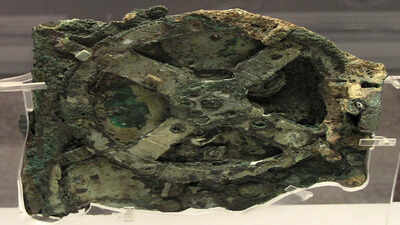
The Aegean is unpredictable yet beautiful. In the spring of 1900, a group of Greek sponge fishermen sailed into a ferocious windstorm that was threatening to overturn their fragile little craft. As a way of seeking safety, the captain chose to sail his ship to an island of rock called Antikythera. Their intention had been to weather the storm, but after the sea conditions settled down, the men opted to investigate the surrounding waters for any sponges. Little did they know that they were directly above one of the most technologically advanced wreck sites ever discovered.One diver, Elias Stadiatis, clad in a canvas diving suit with a brass helmet, descended to about 45 meters in murky depths. Instead of sponges or treasures at the bottom, he found himself confused and babbling about a heap of nude and lifeless women that he saw lying on the seafloor. Actually, he discovered a collection of weathered bronze and marble sculptures belonging to a Roman trading vessel that sank almost two millennia ago.The unusual item buried amongst the bronzesThe recovery process was very tough and even fatal for one of the divers. While they hoisted up boxes of ceramics, glassware, and unique artwork, there were also some greenish chunks of corroded metal that they hauled up. For almost two years, this piece of metal was neglected in a museum depot while scholars were examining those statues, but when it started drying up, someone noticed a glimmer of precision-cut gear teeth.This object is now known as the Antikythera Mechanism. According to the groundbreaking study published in the journal Nature, the device was a complex astronomical calculator used to predict the positions of the sun, moon, and planets. It even tracked the timing of the ancient Olympic Games. The level of engineering found within its bronze gears was so advanced that nothing of its kind would appear again in the historical record for another fifteen centuries.
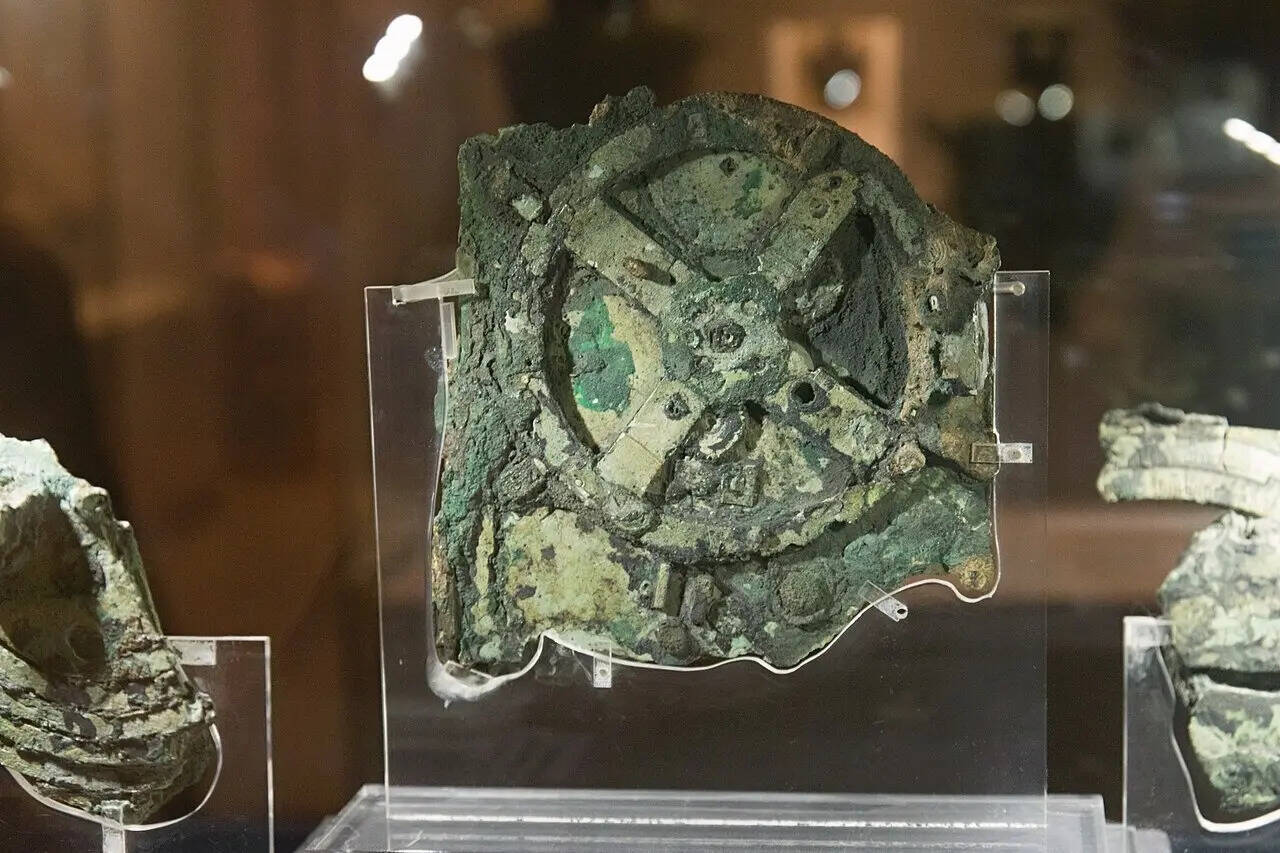
Its rediscovery forced historians to re-evaluate ancient Greek technological prowess, proving advanced mechanical knowledge existed far earlier than previously believed. Image Credits: Zde, via Wikimedia Commons
The discovery caused historians to completely reevaluate the history of the Greeks’ technology. As shown by the research titled In Search of Lost Time, the Antikythera Mechanism proves the existence of gearing technology among the ancients long before the Renaissance era. But not only is it a piece of machinery, but it is also the actual map of the universe, which could enable scientists to predict the future of the universe.The enigma of the missing linkIt is the enigma surrounding the idea that it is the lost technology that causes such a feeling of amazement when one learns about the Antikythera Mechanism. For some reason, since the wreck of the ship occurred circa 60 BC, the knowledge of how to build similar machines seemed to be lost forever from the world’s technological progress. And perhaps if the weather of that day of the year 1900 did not cause sponge divers to change their direction, we would believe even today that the ancients were deprived of advanced mechanics.Today, the fragments of the mechanism are the crown jewels of the National Archaeological Museum in Athens. Modern scientists continue to study them using high-resolution X-rays and 3D modelling, uncovering new inscriptions and hidden gears that were previously invisible to the naked eye. Each new finding confirms that the device was even more accurate than we first thought, capable of accounting for the subtle “wobble” in the moon’s orbit.This story is captivating even for archaeologists because it demonstrates how luck can determine history. The change in wind direction, combined with the curiosity of the diver, made a fragment of the future rise from the depths of history. Now it teaches us that maybe we need to look around ourselves, because sometimes the solutions for our most challenging questions lie there, waiting for our attention in the form of rusty metal pieces or entangled marine trash.For the people who brought this mechanism up from the bottom of the water, it was only an unusual burden to carry home. However, for us, it represents a bridge between the past full of genius, which is just emerging before our eyes. Every time we penetrate deeper into the depths of the oceans, we remember the Antikythera Mechanism.


