
Rahul Gandhi’s recent rally remarks in Bihar, targeting PM Modi’s performative politics and corporate ties, subtly highlighted Congress’s own aspirations. This comes amid a tense seat-sharing tussle with ally RJD, exposing the INDIA bloc’s internal power dynamics. The situation mirrors similar patterns where allies, like RJD, once emerged by eroding Congress’s base, now vie for dominance. Photo: Generative AI NEW DELHI: Campaign heat in Bihar intensified this week after Congress leader Rahul Gandhi told a rally that Prime Minister Narendra Modi could “even dance for a vote.” The line was framed as a critique of spectacle-driven politics. But the timing gave it layered political weight.Just days earlier, Tejashwi Yadav had gone viral while dancing with local youth during an outreach event. And when Rahul linked PM Modi to the Ambani family, it was quickly noted that Tejashwi and the Lalu family had also attended the same wedding celebrations. Though the attack landed on PM Modi, the echo pierced into the INDIA bloc.PM Modi Warns of Cong, RJD’s ‘Dangerous Plot’ to Alter Demographic Balance in Bihar Border DistrictsThe alliance contradiction in BiharCongress and RJD stand together today, but their power trajectories were shaped in opposition to each other. In the 1985 Bihar assembly election, Congress was the state’s dominant force, winning 196 of 324 seats with about 39 per cent vote share. The rise of Lalu Prasad Yadav in the post-Mandal decade reconfigured the social base with OBC consolidation, and new caste mobilisations shifted the centre of gravity. By 1990, Congress had fallen to 71 seats, and Lalu’s Janata Dal had come to power.When Lalu formed the Rashtriya Janata Dal (RJD) in 1997, the shift became permanent. The party inherited Congress’s Yadav–Muslim core, organisational networks, and district-level nodes. By the 2020 election, RJD was the single largest party with 75 seats, while Congress was reduced to 19 seats, struggling to hold even pockets it once dominated.Rahul’s line carried more than one messageRahul’s rhetoric targeted the BJP by casting Modi as performative and aligned with corporate power. But it also subtly differentiated Congress from its ally. That signalling was directed at urban, youth and minority constituencies where the Congress hopes to rebuild.In that frame, Tejashwi’s dance clip became a visual contrast, and the Ambani reference brushed against RJD because both leaderships were seen in the same frame of elite access. The outcome was political shading: an attack outward that cast a carefully measured shadow inward.The seat-sharing tussle exposed the balance of powerSeat-sharing negotiations between RJD and Congress this season were prolonged and tense. RJD, backed by a larger cadre structure and broader voter base, argued for limiting Congress to a smaller quota than in 2020. Congress, citing national visibility and Rahul Gandhi’s campaign traction, pushed for expansion.The disagreement spilled into public view. Congress leaders accused RJD of treating it as dispensable. RJD leaders countered that Congress’s ground presence did not justify its demands. The standoff delayed candidate announcements, forced hurried swaps, and left smaller allies squeezed. The episode indicated that the alliance is driven by electoral compulsion, not ideological alignment.A familiar pattern across the INDIA blocThe contradiction on display in Bihar is part of a broader pattern across the INDIA bloc, where several of Congress’s current allies originally rose by eroding its own political base. In Uttar Pradesh, Mulayam Singh Yadav formed the Samajwadi Party in 1992 and consolidated the OBC and Muslim vote that had once anchored the Congress.In West Bengal, Mamata Banerjee broke away in 1998 to form the Trinamool Congress and, over time, absorbed Congress’s organisational networks in both urban centres and rural belts. In Maharashtra, Sharad Pawar’s split in 1999 and the creation of the NCP established a parallel power structure that drew away district leaders, cooperative institutions and vote blocs from the Congress.These parties did not simply emerge alongside Congress; they expanded by replacing it in the very regions where Congress had once been dominant.Bihar exposes the reality againRJD seeks to retain primacy. Congress seeks to prove it is not a junior spectator. Rahul’s remark, therefore, worked on two planes: it targeted Modi’s persona politics while subtly reminding the Bihar electorate that Congress is still a political claimant, not an accessory. The INDIA bloc remains together. But in Bihar, as always, the real contest is not who stands on the same stage, but who stands taller.About the AuthorTOI News DeskThe TOI News Desk comprises a dedicated and tireless team of journalists who operate around the clock to deliver the most current and comprehensive news and updates to the readers of The Times of India worldwide. With an unwavering commitment to excellence in journalism, our team is at the forefront of gathering, verifying, and presenting breaking news, in-depth analysis, and insightful reports on a wide range of topics. The TOI News Desk is your trusted source for staying informed and connected to the ever-evolving global landscape, ensuring that our readers are equipped with the latest developments that matter most.”Read MoreEnd of ArticleFollow Us On Social MediaVideosFirst Border Crossing Since Op Sindoor Turns Sour; Pak Blocks 14 Indian Pilgrims For Being ‘Hindu’India Will Not Compromise in FTA With New Zealand, Focus on Mutual Gains, Says Piyush Goyal”Kumari Selja herself had said…” BJP Lambasts Rahul Gandhi’s ‘H-files’ expose’Don’t Drag Army Into Politics’: Rajnath Singh Tears Into Rahul Gandhi Over Remarks On Army’Your Future Is Being Stolen’: Rahul Gandhi’s Bold Message to India’s Gen Z For Democratic ChangeGhazala Hashmi Makes History in Virginia, Becomes First Indian-American Lieutenant Governor at 60’Seema, Sweety, Saraswati’: Rahul Gandhi’s Sensational ‘Vote Chori’ Claim In Haryana’Operation Sindoor May Be Postponed But Will Be Relaunched’: Rajnath Sounds Warning At Bihar RallyZohran Mamdani: The Mayor Whose Mispronounced Name Exposed Bias And Sparked A Debate On Respect’Last Time I Drove A Car’: Piyush Goyal Shares Speeding Fine Fiasco At India-NZ Business Forum123 Photostories Looking at Celina Jaitly’s precious social mediafamily memories amid her brother Vikrant Jaitly’s detention in UAEFrom not getting work to playing a mother to a grown up; Mahhi Vij on being back on TV with a new show amid divorce rumoursWhat happens when you eat moringa leaves daily and 6 easy recipes to try10 modern-sounding baby names that begin with letter ‘T’Taylor Swift’s winter wardrobe: 5 fashion cues to steal from the Showgirl10 timeless William Shakespeare quotes on love, relationships, and lifeGoat milk vs cow milk: Which is healthierAnanya Panday to Bhumi Pednekar: 5 best celebrity looks of the dayInside Smriti Mandhana’s minimal and modern home in Sangli, MaharashtraWhere not to travel solo: Destinations that scream ‘Bring a Partner!’123Hot PicksStock market holidayBank HolidayBihar Election 2025Gold rate todaySilver rate todayPublic Holidays NovemberBank Holidays NovemberTop TrendingPrince HarryNYC Mayor Election ResultZion WilliamsonWilliam NylanderKayla NicoleMiguel RojasChhattisgarh Train AccidentRoope HintzTyrese Haliburton InjuryBengaluru Scooter Accident
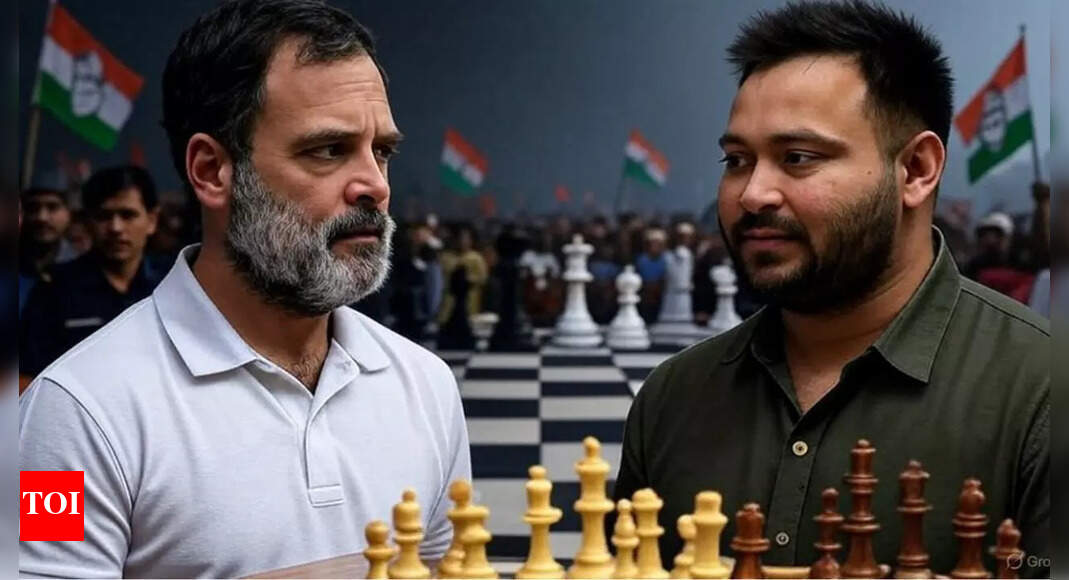
NEW DELHI: Campaign heat in Bihar intensified this week after Congress leader Rahul Gandhi told a rally that Prime Minister Narendra Modi could “even dance for a vote.” The line was framed as a critique of spectacle-driven politics. But the timing gave it layered political weight.Just days earlier, Tejashwi Yadav had gone viral while dancing with local youth during an outreach event. And when Rahul linked PM Modi to the Ambani family, it was quickly noted that Tejashwi and the Lalu family had also attended the same wedding celebrations. Though the attack landed on PM Modi, the echo pierced into the INDIA bloc.
The alliance contradiction in Bihar
Congress and RJD stand together today, but their power trajectories were shaped in opposition to each other. In the 1985 Bihar assembly election, Congress was the state’s dominant force, winning 196 of 324 seats with about 39 per cent vote share. The rise of Lalu Prasad Yadav in the post-Mandal decade reconfigured the social base with OBC consolidation, and new caste mobilisations shifted the centre of gravity. By 1990, Congress had fallen to 71 seats, and Lalu’s Janata Dal had come to power.When Lalu formed the Rashtriya Janata Dal (RJD) in 1997, the shift became permanent. The party inherited Congress’s Yadav–Muslim core, organisational networks, and district-level nodes. By the 2020 election, RJD was the single largest party with 75 seats, while Congress was reduced to 19 seats, struggling to hold even pockets it once dominated.
Rahul’s line carried more than one message
Rahul’s rhetoric targeted the BJP by casting Modi as performative and aligned with corporate power. But it also subtly differentiated Congress from its ally. That signalling was directed at urban, youth and minority constituencies where the Congress hopes to rebuild.In that frame, Tejashwi’s dance clip became a visual contrast, and the Ambani reference brushed against RJD because both leaderships were seen in the same frame of elite access. The outcome was political shading: an attack outward that cast a carefully measured shadow inward.
The seat-sharing tussle exposed the balance of power
Seat-sharing negotiations between RJD and Congress this season were prolonged and tense. RJD, backed by a larger cadre structure and broader voter base, argued for limiting Congress to a smaller quota than in 2020. Congress, citing national visibility and Rahul Gandhi’s campaign traction, pushed for expansion.The disagreement spilled into public view. Congress leaders accused RJD of treating it as dispensable. RJD leaders countered that Congress’s ground presence did not justify its demands. The standoff delayed candidate announcements, forced hurried swaps, and left smaller allies squeezed. The episode indicated that the alliance is driven by electoral compulsion, not ideological alignment.
A familiar pattern across the INDIA bloc
The contradiction on display in Bihar is part of a broader pattern across the INDIA bloc, where several of Congress’s current allies originally rose by eroding its own political base. In Uttar Pradesh, Mulayam Singh Yadav formed the Samajwadi Party in 1992 and consolidated the OBC and Muslim vote that had once anchored the Congress.In West Bengal, Mamata Banerjee broke away in 1998 to form the Trinamool Congress and, over time, absorbed Congress’s organisational networks in both urban centres and rural belts. In Maharashtra, Sharad Pawar’s split in 1999 and the creation of the NCP established a parallel power structure that drew away district leaders, cooperative institutions and vote blocs from the Congress.These parties did not simply emerge alongside Congress; they expanded by replacing it in the very regions where Congress had once been dominant.
Bihar exposes the reality again
RJD seeks to retain primacy. Congress seeks to prove it is not a junior spectator. Rahul’s remark, therefore, worked on two planes: it targeted Modi’s persona politics while subtly reminding the Bihar electorate that Congress is still a political claimant, not an accessory. The INDIA bloc remains together. But in Bihar, as always, the real contest is not who stands on the same stage, but who stands taller.


