
How your slicing style is silently ruining your fresh bread |

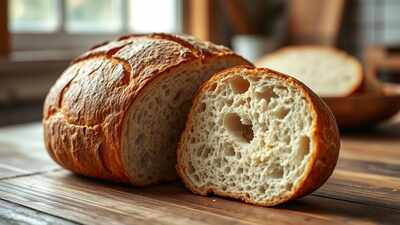
There is a unique type of heartbreak that happens in the kitchen whenever one tries to grab a loaf of artisanal bread only to find that it has been transformed into a hard brick of a thing. Staling of bread has always been considered an inevitable process due to time, humidity, the use of paper bags, or the lack of preservatives in good bread. However, recent scientific discoveries suggest that the key to preserving bread lies in the utensils drawer.The reality is that how you slice your bread is just as important as how you bake it. Bread is a delicate network of starches and proteins, and every slice that you take cuts away a little bit of engineering. Get it wrong, and the bread will lose its moisture at an accelerated rate. Understanding the science of the crust allows anyone to turn their one-day bread into a week-long treat.Staling by the numbersIn order to prevent our bread from becoming stale, the first thing we have to do is understand the concept of staling. Staling isn’t just the moisture evaporating; rather, it’s the process known as starch retrogradation, which causes the starches within the bread to reform crystals, pushing moisture to the surface of the crust.According to an article from the Journal of Food Engineering, staling involves a decrease in elasticity. From scientific studies, the scientists used sophisticated machines and found that as time went by, the cellular structure of the bread was becoming increasingly stiff. When cutting bread using a blunt knife or pressing it too hard, we end up squeezing its soft cells. This squeezing creates additional surfaces for evaporation of water, thus accelerating the staling process.Loaves should be cut from the middle to the edges so that the halves may be put back together for preservation. By cutting the loaf from the middle, less of the loaf comes into contact with the air. Instead of viewing each slice of bread separately, see the entire piece of bread as a single entity that maintains the pressure needed to trap the moisture within.
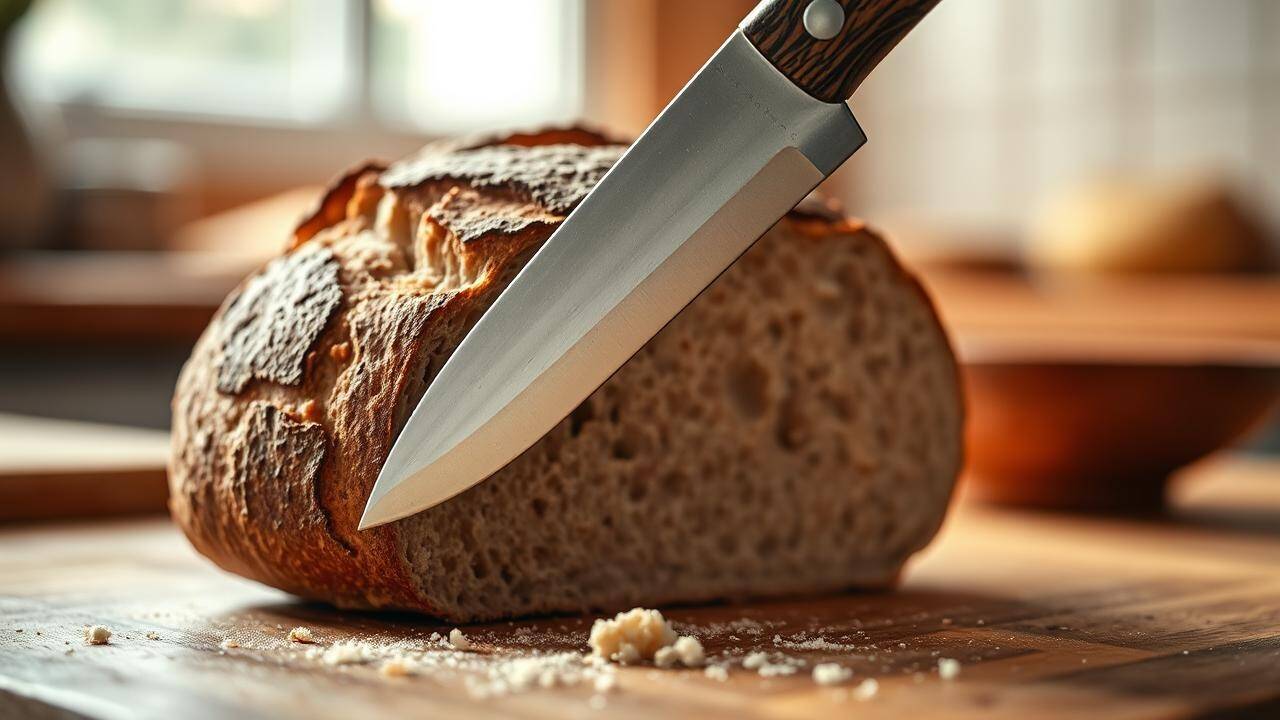
Slicing from the middle and rejoining halves traps moisture, extending freshness. Understanding starch retrogradation is key to enjoying your artisanal loaves longer.
Protecting the barrier and the grainWhereas the crumb forms the core of the bread, the crust is its protector. Think of the crust as a barrier against moisture loss to the environment in which the bread is kept. With each cut made with a dull or improper bread knife, you leave little escape valves on the crust. A proper bread knife is not a luxury but a necessity because it ensures clean cuts along the tough crust without damaging the soft interior.Innovative research on Crust treatments to reduce bread staling emphasises just how vital the outer layer is in preserving the freshness of bread. In their study, researchers discovered how the presence of even thin layers can significantly delay moisture loss. While commercial bread makers use waxed materials, it could be achieved at home by maintaining the integrity of the crust. Every small hole in the crust gives way to staleness.Findings showed that an effective barrier results in less weight loss over multiple days. In practice, this translates to home cooks being advised to cut slices of bread only after they need to eat them immediately. Storing a loaf as whole as possible allows moisture to be locked in the matrix formed by gluten and starches. Moreover, cutting against the grain of the bread will maintain its cohesion.However, apart from the surface crust, the interior composition of the dough affects its shelf life. Generally, dough that is made using sourdough or contains naturally occurring fats, like olive oil and butter, resists staleness for a much longer period. The process of acidification in sourdough bread retards starch crystallisation, thus maintaining its tenderness. Nonetheless, even a perfect sourdough bread will fall victim to air attacks if poorly sliced.In essence, the longevity of bread depends on science. If one uses an appropriate blade and slices only the amount that is to be consumed at once, while taking care of the crust, then it is possible to extend the life of their favourite bread for quite some time. Just a little bit of knowledge about science goes a long way towards guaranteeing freshness.


