‘Bha. Bha. Ba.’ box office collections day 14: Dileep’s film sees big drop; Earns only Rs 15 lakhs

‘Bha. Bha. Ba.’ box office collections day 14: Dileep’s film sees big drop; Earns only Rs 15 lakhs

Dileep’s film ‘Bha. Bha. Ba.’ is experiencing a significant box office decline, with collections dropping sharply. After a promising start, the mass spoof movie only managed to earn Rs 15 lakhs on its 14th day, bringing the total India net collection to Rs 23.10 crores. The film also saw very low theater occupancy on December…

Read More
Canadian YouTuber explains why moving to India was one of the ‘best decisions’ of his life

Canadian YouTuber explains why moving to India was one of the ‘best decisions’ of his life

Caleb, a Canadian YouTuber who made India his home eight years back, passionately champions the country’s incredible potential and transformative journey. He argues that many influencers present a skewed image of India, neglecting its flourishing tech landscape and vibrant economy. Caleb, a Canadian YouTuber, shared why moving to India eight years ago was one of…

Read More
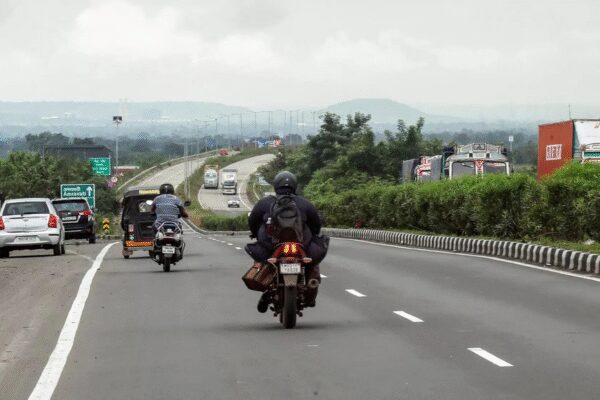
NEW DELHI: In a relief for highway commuters, toll on under expansion stretches — from two-lane to four-lane — will soon be halved during the construction period and the user fee on partially opened expressways such as Delhi-Mumbai and Amritsar-Jamnagar will be same as that of other NHs. At present, the toll on expressways is 1.25 times of other NH stretches.TOI has learnt that the finance ministry has given the green light to the two proposals from the road transport and highways ministry. The latter had proposed to halve toll during expansion of 10-metre-wide two-lane highways with paved shoulders to four-lane highways since commuters don’t get the desired service as the width of road gets reduced available while construction is underway.Currently, during expansion of a two-lane highway to four lanes, the toll charged is around 60% of the normal NH toll. With the concurrence of the finance ministry to the proposal, soon user fee will drop to 30% of normal toll during the construction phase. The finance ministry has asked the highways ministry to monitor and ensure strict enforcement of penalties on contractors for missing timeline in such widening projects.Officials said that while giving the go ahead for bringing toll rates on partially opened expressways on par with other NHs, the finance ministry said such relief should be for one year or till the expressway is fully operational, whichever is earlier. The highways ministry had submitted that vehicles, particularly heavy commercial vehicles, were not using expressways for higher toll rates.The finance ministry has said a decision on continuing this relaxation beyond one year may be taken based on actual uptake of traffic on such expressways. It has also asked the highways ministry to impose penalties on contractors for delay in completion of works.End of ArticleFollow Us On Social MediaVideosCongress Leader Nana Patole’s ‘Rahul Like Ram’ Remark Sparks Row; BJP Hits BackWest Bengal SIR Brings Home A Man Presumed Dead For 28 Years In UP’s MuzaffarnagarIndia And Pakistan Exchange List Of Nuclear Installations Under 1988 Agreement‘Vote Theft In Bengal’: TMC MP Abhishek Banerjee Slams ECI Over SIR, BJP Fires Back180 Kmph While You Sleep! India’s Latest Vande Bharat Sleeper Marks New Era. Check Fares, FeaturesBJP Leader Attacks Shah Rukh Khan Over KKR’s Bangladeshi Cricketer Amid Hindu Lynching in BangladeshRajnath Singh Links Lord Ram’s Ethics To Operation Sindoor, Says India Fought Terror With DignityCleanliness Crown Cracks As Indore Loses 13 Lives To Poisoned Water And Administrative Lapses’India Belongs To Everyone’: RSS Chief Mohan Bhagwat After Tripura Student Dies In Racial AttackIndia’s Silent Warriors On Kartavya Path Bring Army’s Battle-Tested Animals To Republic Day Parade123Photostories7 plants believed to attract luck and positive energy into your home as per Vastu’Avengers: Doomsday’, ‘The Odyssey’, ‘Dune Part Three’: Hollywood’s biggest films releasing in 2026Robin Sharma reveals 7 winning habits to adopt in 20265 denim trends for 2026 that are actually worth the hypeHow to make Banana Almond Cake in a pressure cookerVande Bharat Sleeper Train Launch Soon On This Route! Indian Railways’ New Train Better Than Rajdhani – Check Photos, Ticket Price & Top 10 Facts10 iconic dishes the Mughals gave to IndiaCalcium isn’t enough: The bone mineral women forgetKidney damage: 10 symptoms of kidney problems people mistake for dehydration3 bitter truths about packaged foods you didn’t know123Hot PicksSaudi Strike YemenPAN-Aadhaar link statusBank holiday New YearGold rate todayIncome Tax RefundBahrain Golden Visa 2025Bank Holidays DecemberTop TrendingJustin Thomas Net WorthWWE Star Nikki BellaCardi BCeeDee Lamb Luxury Car CollectionStefon DiggsCaitlin ClarkTom BradyMicah Parsons vs CeeDee Lamb Net WorthNHL Injury UpdateVanessa Bryant

NEW DELHI: In a relief for highway commuters, toll on under expansion stretches — from two-lane to four-lane — will soon be halved during the construction period and the user fee on partially opened expressways such as Delhi-Mumbai and Amritsar-Jamnagar will be same as that of other NHs. At present, the toll on expressways is 1.25 times of other NH stretches.TOI has learnt that the finance ministry has given the green light to the two proposals from the road transport and highways ministry. The latter had proposed to halve toll during expansion of 10-metre-wide two-lane highways with paved shoulders to four-lane highways since commuters don’t get the desired service as the width of road gets reduced available while construction is underway.Currently, during expansion of a two-lane highway to four lanes, the toll charged is around 60% of the normal NH toll. With the concurrence of the finance ministry to the proposal, soon user fee will drop to 30% of normal toll during the construction phase. The finance ministry has asked the highways ministry to monitor and ensure strict enforcement of penalties on contractors for missing timeline in such widening projects.Officials said that while giving the go ahead for bringing toll rates on partially opened expressways on par with other NHs, the finance ministry said such relief should be for one year or till the expressway is fully operational, whichever is earlier. The highways ministry had submitted that vehicles, particularly heavy commercial vehicles, were not using expressways for higher toll rates.The finance ministry has said a decision on continuing this relaxation beyond one year may be taken based on actual uptake of traffic on such expressways. It has also asked the highways ministry to impose penalties on contractors for delay in completion of works.End of ArticleFollow Us On Social MediaVideosCongress Leader Nana Patole’s ‘Rahul Like Ram’ Remark Sparks Row; BJP Hits BackWest Bengal SIR Brings Home A Man Presumed Dead For 28 Years In UP’s MuzaffarnagarIndia And Pakistan Exchange List Of Nuclear Installations Under 1988 Agreement‘Vote Theft In Bengal’: TMC MP Abhishek Banerjee Slams ECI Over SIR, BJP Fires Back180 Kmph While You Sleep! India’s Latest Vande Bharat Sleeper Marks New Era. Check Fares, FeaturesBJP Leader Attacks Shah Rukh Khan Over KKR’s Bangladeshi Cricketer Amid Hindu Lynching in BangladeshRajnath Singh Links Lord Ram’s Ethics To Operation Sindoor, Says India Fought Terror With DignityCleanliness Crown Cracks As Indore Loses 13 Lives To Poisoned Water And Administrative Lapses’India Belongs To Everyone’: RSS Chief Mohan Bhagwat After Tripura Student Dies In Racial AttackIndia’s Silent Warriors On Kartavya Path Bring Army’s Battle-Tested Animals To Republic Day Parade123Photostories7 plants believed to attract luck and positive energy into your home as per Vastu’Avengers: Doomsday’, ‘The Odyssey’, ‘Dune Part Three’: Hollywood’s biggest films releasing in 2026Robin Sharma reveals 7 winning habits to adopt in 20265 denim trends for 2026 that are actually worth the hypeHow to make Banana Almond Cake in a pressure cookerVande Bharat Sleeper Train Launch Soon On This Route! Indian Railways’ New Train Better Than Rajdhani – Check Photos, Ticket Price & Top 10 Facts10 iconic dishes the Mughals gave to IndiaCalcium isn’t enough: The bone mineral women forgetKidney damage: 10 symptoms of kidney problems people mistake for dehydration3 bitter truths about packaged foods you didn’t know123Hot PicksSaudi Strike YemenPAN-Aadhaar link statusBank holiday New YearGold rate todayIncome Tax RefundBahrain Golden Visa 2025Bank Holidays DecemberTop TrendingJustin Thomas Net WorthWWE Star Nikki BellaCardi BCeeDee Lamb Luxury Car CollectionStefon DiggsCaitlin ClarkTom BradyMicah Parsons vs CeeDee Lamb Net WorthNHL Injury UpdateVanessa Bryant

NEW DELHI: In a relief for highway commuters, toll on under expansion stretches — from two-lane to four-lane — will soon be halved during the construction period and the user fee on partially opened expressways such as Delhi-Mumbai and Amritsar-Jamnagar will be same as that of other NHs. At present, the toll on expressways is…

Read More
Usman Khawaja retires: ‘They told me I’d never play for Australia’ — Pakistan-born cricketer calls out stereotypes

Usman Khawaja retires: ‘They told me I’d never play for Australia’ — Pakistan-born cricketer calls out stereotypes

Usman Khawaja poses for a photo with his family after announcing his international cricket retirement. (Getty Images) Usman Khawaja will walk out at the Sydney Cricket Ground one final time this week, bringing the curtain down on a 15-year international career that redefined what Australian cricket could look like — and who it could belong…

Read More
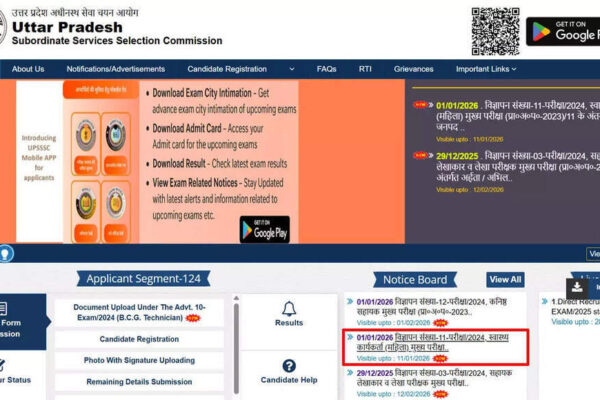
UPSSSC ANM Recruitment 2026: Main exam date released for 5272 female health worker posts; check official notice here

UPSSSC ANM Recruitment 2026: Main exam date released for 5272 female health worker posts; check official notice here

UPSSSC releases ANM Recruitment 2026 main exam schedule for 5272 female health worker posts UPSSSC ANM Recruitment 2026: The Uttar Pradesh Subordinate Services Selection Commission has released an important notice for candidates waiting for the ANM recruitment main examination. The notice confirms the proposed date and key details for the Health Worker (Female) main exam…

Read More
Delhi air pollution: City slips into ‘very poor’ category as AQI touches 311, cold wave persists

Delhi air pollution: City slips into ‘very poor’ category as AQI touches 311, cold wave persists

NEW DELHI: Air quality in Delhi deteriorated on Friday, with the overall Air Quality Index (AQI) recorded at 311, placing it in the ‘very poor’ category, according to data from the Central Pollution Control Board’s (CPCB) SAMEER app. The decline in air quality came amid chilly winter conditions in the national capital, with pollutants lingering…

Read More
‘My dad came from India…’: British TV personality Narinder Kaur says immigrants must be given ‘other chances’ in 2026

‘My dad came from India…’: British TV personality Narinder Kaur says immigrants must be given ‘other chances’ in 2026

In a poignant recount of her father’s immigrant story from the 1960s, broadcaster Narinder Kaur illuminated the struggles he faced while working tirelessly in a steel foundry. She passionately spoke of his unwavering dedication amidst adversity, battling both racism and physical hardships to forge a better future for his family. British broadcaster and television personality…

Read More
Regulator allows banks to sponsor NPS pension funds

Regulator allows banks to sponsor NPS pension funds

MUMBAI: Soon, banks will be able to independently sponsor funds for managing National Pension System (NPS) assets, as PFRDA on Thursday approved in principle a framework that seeks to remove regulatory constraints that had thus far limited banks’ participation in the pension fund management business. “PFRDA board has approved, in principle, a framework to permit…

Read More
Will Smith faces sexual harassment, wrongful termination lawsuit from violinist over 2025 tour

Will Smith faces sexual harassment, wrongful termination lawsuit from violinist over 2025 tour

Renowned violinist Brian King Joseph has taken legal action against Will Smith and his production company, claiming he was wrongfully dismissed after disclosing a sexual assault during the ‘Based on a True Story’ tour. Joseph accuses Smith of engaging in predatory conduct and exploiting his position. Read on to know more. Will Smith is rocking…

Read More
When throat clearing isn’t a habit but a hidden diagnosis: What is laryngopharyngeal reflux

When throat clearing isn’t a habit but a hidden diagnosis: What is laryngopharyngeal reflux

Ever cleared your throat one too many times during a meeting, or felt like something’s stuck there no matter how much you swallow? You’re not alone. That nagging sensation often points to laryngopharyngeal reflux, or LPR, a sneaky form of acid reflux hitting the throat without the classic chest burn. Florida-based gastroenterologist Dr. Joseph Salhab,…

Read More
Romulus WhitakerRomulus WhitakerRomulus WhitakerRomulus WhitakerRomulus Whitaker12 A tiger appeared without warning, gliding like a shadow along the forest edge as a boat drifted through the Periyar waters. For a 13-year-old boy visiting Kerala in 1957, the moment was electrifying. Wildlife then was not something confined to sanctuaries; it was visible, immediate, woven into everyday landscapes. That fleeting encounter stayed with Romulus Whitaker long before he became one of India’s most influential conservationists, shaping a life devoted to understanding-and defending-creatures most people feared. Whitaker’s first journey to Kerala was part of a family trip. His sister was graduating from high school, and the itinerary included Kochi, where they stayed at the Malabar Hotel, then considered the city’s finest. Boat rides through rivers like the Periyar were already popular, and wildlife sightings were common. “Gaurs and deer were easily spotted, and tigers still roamed freely at a time when hunting was legal. I never saw a king cobra on that trip, but the habit of looking closely had already taken root,” Whitaker recalls. That fascination had formed much earlier, far from India. Growing up in northern New York State, Whitaker once watched neighbourhood boys kill a snake out of fear. “I knew more about snakes than the other kids, and that made a difference,” he says. His mother encouraged his curiosity, buying him a book on snakes that helped replace fear with knowledge. When he later brought a live snake home, she admired it rather than panicking, calling it beautiful. An old aquarium with cracked glass became a makeshift enclosure. Without realizing it, Whitaker had taken his first step into a lifelong engagement with reptiles-a fascination that deepened after his family moved to India in the 1950s. Janaki Lenin, Whitaker’s partner and co-author of his autobiography “Snakes, Drugs and Rock ‘n’ Roll: My Early Years”, says writing the book gave her a deeper understanding of the extraordinary life he has lived. His schooling, she notes, was anything but conventional-camping in forests, fishing in lakes, and once even discovering a python under his bed. Boredom was never an option. If a classroom failed to hold his attention, he simply walked away to explore something more compelling outdoors. Comparing his life to her own, Lenin describes Whitaker as someone who has “lived six or seven lifetimes in one.” Formal education never quite suited him. After finishing school, Whitaker enrolled in college but soon realized classrooms could not compete with hands-on learning. His real education began at the Miami Serpentarium under Bill Haast, the legendary snake handler who pioneered venom extraction in the United States. Working alongside Haast, Whitaker learned to handle venomous snakes, maintain them in captivity, and extract venom for medical use. “Bill Haast was my guru,” he says. “He taught me respect for snakes, not just technique.” When Whitaker returned to India, he had a clear idea: The country needed a place where people could learn about snakes scientifically rather than fear them blindly. That idea took shape in 1969 with the opening of the Madras Snake Park. Visitors arrived sceptical-some expecting spectacle, others danger. Whitaker himself was often viewed as an eccentric outsider. But the park was never meant to entertain. It was an educational experiment. For the first time, ordinary people could see snakes up close, learn to identify species, and understand that most snakes were not out to harm them. Over the decades, the impact has been profound. India today has thousands of snake rescuers, a reality Whitaker views with cautious optimism. While rescue work has reduced routine killings, it has also become performative in some cases. Kerala, he notes, stands out for institutionalizing rescue work. By registering rescuers, issuing identity cards, and maintaining an online database, the state has created a system rooted in accountability and data. The model has since been adopted by Karnataka and is being replicated in Tamil Nadu. Snakebite, however, remains one of India’s most under-recognized public health crises. For decades, official statistics claimed around 1,400 deaths annually. A nationwide “Million Deaths Study” based on verbal autopsies revealed a far grimmer reality: Over 50,000 deaths every year, with nearly one million snakebite incidents. Many victims never reach hospitals, either dying en route or seeking traditional remedies instead of medical treatment. “The key word is prevention,” Whitaker says. Simple measures-using a torch at night, wearing footwear, being cautious near pump houses-could prevent a significant proportion of bites. Improved reporting, he adds, has made it seem as though cases are increasing, when in fact awareness and documentation have improved. Treating snakebite as a medical emergency rather than a cultural or mystical phenomenon remains the biggest challenge. Few initiatives illustrate Whitaker’s belief in practical, science-based solutions better than his long association with the Irula tribal community of Tamil Nadu. For generations, the Irulas survived by catching snakes for their skins. When the skin trade was banned, their livelihood vanished overnight. Working with the community, Whitaker helped develop a new model: Irula snake catchers would capture snakes, extract venom under controlled conditions, and release them back into the wild. The venom would then be supplied to pharmaceutical companies to manufacture antivenom. “They are saving lakhs of human lives,” Whitaker says. Today, around 350 Irula families supply venom that meets India’s entire antivenom requirement. For him, it remains the country’s only true example of sustainable wildlife use-one that benefits both people and animals without depleting wild populations. Human-animal conflict remains one of conservation’s most complex challenges. India’s tiger, leopard, and crocodile populations have all increased-a remarkable achievement by global standards. But many of these animals now live outside protected forests. Leopards, in particular, thrive in agricultural landscapes, raising cubs in sugarcane fields and feeding on small animals and stray dogs. “Leopards don’t need forests the way we think they do,” Whitaker explains. “They’ve adapted to living alongside people.” Problems arise when human panic leads to capture and relocation-an intervention that often worsens conflict. Whitaker’s own experience reinforced this lesson. Living on a small farm near Chennai, he once lost a dog to a leopard. His first instinct was to call the forest department. Then came the realisation: “We moved into his territory. He didn’t move into ours.” Simple precautions, like keeping dogs indoors at night, resolved the issue without endangering the cat. Lenin agrees that human-wildlife conflict is not new, but says its nature has changed. Earlier, communities managed interactions locally. “The law took away that freedom, but the state did not fulfil its responsibility of sorting out the issue,” she says. Many conflicts today, she argues, are effectively state-created-especially in the case of elephants, which require vast landscapes and abundant food. Habitat disruption leaves marginalized communities bearing the burden of coexistence, even though they are the least equipped to do so. Whitaker is critical of how crop-raiding wildlife is managed, particularly in Kerala, one of the few states where wild boars that devastate farmlands are legally permitted to be killed but must then be buried. Recalling ecologist Madhav Gadgil’s public criticism of the policy, Whitaker questions the logic of wasting what is a valuable protein source. “These animals can destroy paddy or peanut fields as much as an elephant does, but after killing them, you are told to bury the meat. People are always in need of protein, especially in rural areas. He recounts seeing electric fences in parts of north India where nilgai, jackals, and peacocks were killed indiscriminately and left to rot. For him, science-based preventive infrastructure works far better than reactionary measures. He regards Indira Gandhi as India’s most conservation-minded Prime Minister, instrumental in legislations such as the Wildlife Protection Act of 1972. “She had come to the Snake Park in Madras in 1972, and then we told her about the problems that were happening. When Rajiv became the prime minister, we spoke to him about the Andamans and the deforestation there, and they stopped it. These were the times when you could actually speak to a prime minister and the next day you might see some action; I would love to see that happening today.” When Whitaker received the Padma Shri, he briefly met Prime Minister Narendra Modi but did not get the chance to speak at length. He later sent a draft message to the PM’s office, hoping for a mention of snakebite prevention during Mann Ki Baat. “If the PM spoke for even one minute about snakebite as a medical emergency, and about the importance of govt hospitals being equipped to handle it, thousands of lives could be saved,” he says. When he first documented India’s snakes, around 275 species were known. Today, more than 360 have been recorded. For young people entering herpetology, he sees unprecedented opportunities through universities and research institutions.  “Go there, volunteer, and learn,” he advises. “Observe, respect, and don’t try to be a hero. Conservation is about patience and understanding, not spectacle.” Now in his eighties, Whitaker continues to focus on snakebite mitigation through films and awareness campaigns. From a child defending a snake to a man who has spent a lifetime persuading a nation to rethink its fears, his story is ultimately about understanding nature and choosing scientific knowledge over fear. (Romulus Whitaker was in Kochi with his partner, writer Janaki Lenin, for a climate literature festival at the Kerala University of Fisheries and Ocean Studies)About the AuthorSreerag PSSreerag PS is a Senior Correspondent with The Times of India, covering education, culture, civic issues, and crime. With over five years of experience in journalism, he has previously worked with leading online and magazine publications in India. He has also done ground breaking interviews of prominent individuals and has keen interest in long-form storytelling.Read MoreEnd of ArticleFollow Us On Social MediaVideosCongress Leader Nana Patole’s ‘Rahul Like Ram’ Remark Sparks Row; BJP Hits BackWest Bengal SIR Brings Home A Man Presumed Dead For 28 Years In UP’s MuzaffarnagarIndia And Pakistan Exchange List Of Nuclear Installations Under 1988 Agreement‘Vote Theft In Bengal’: TMC MP Abhishek Banerjee Slams ECI Over SIR, BJP Fires Back180 Kmph While You Sleep! India’s Latest Vande Bharat Sleeper Marks New Era. Check Fares, FeaturesBJP Leader Attacks Shah Rukh Khan Over KKR’s Bangladeshi Cricketer Amid Hindu Lynching in BangladeshRajnath Singh Links Lord Ram’s Ethics To Operation Sindoor, Says India Fought Terror With DignityCleanliness Crown Cracks As Indore Loses 13 Lives To Poisoned Water And Administrative Lapses’India Belongs To Everyone’: RSS Chief Mohan Bhagwat After Tripura Student Dies In Racial AttackIndia’s Silent Warriors On Kartavya Path Bring Army’s Battle-Tested Animals To Republic Day Parade123Photostories7 plants believed to attract luck and positive energy into your home as per Vastu’Avengers: Doomsday’, ‘The Odyssey’, ‘Dune Part Three’: Hollywood’s biggest films releasing in 2026Robin Sharma reveals 7 winning habits to adopt in 20265 denim trends for 2026 that are actually worth the hypeHow to make Banana Almond Cake in a pressure cookerVande Bharat Sleeper Train Launch Soon On This Route! Indian Railways’ New Train Better Than Rajdhani – Check Photos, Ticket Price & Top 10 Facts10 iconic dishes the Mughals gave to IndiaCalcium isn’t enough: The bone mineral women forgetKidney damage: 10 symptoms of kidney problems people mistake for dehydration3 bitter truths about packaged foods you didn’t know123Hot PicksSaudi Strike YemenPAN-Aadhaar link statusBank holiday New YearGold rate todayIncome Tax RefundBahrain Golden Visa 2025Bank Holidays DecemberTop TrendingJustin Thomas Net WorthWWE Star Nikki BellaCardi BCeeDee Lamb Luxury Car CollectionStefon DiggsCaitlin ClarkTom BradyMicah Parsons vs CeeDee Lamb Net WorthNHL Injury UpdateVanessa Bryant

Romulus WhitakerRomulus WhitakerRomulus WhitakerRomulus WhitakerRomulus Whitaker12 A tiger appeared without warning, gliding like a shadow along the forest edge as a boat drifted through the Periyar waters. For a 13-year-old boy visiting Kerala in 1957, the moment was electrifying. Wildlife then was not something confined to sanctuaries; it was visible, immediate, woven into everyday landscapes. That fleeting encounter stayed with Romulus Whitaker long before he became one of India’s most influential conservationists, shaping a life devoted to understanding-and defending-creatures most people feared. Whitaker’s first journey to Kerala was part of a family trip. His sister was graduating from high school, and the itinerary included Kochi, where they stayed at the Malabar Hotel, then considered the city’s finest. Boat rides through rivers like the Periyar were already popular, and wildlife sightings were common. “Gaurs and deer were easily spotted, and tigers still roamed freely at a time when hunting was legal. I never saw a king cobra on that trip, but the habit of looking closely had already taken root,” Whitaker recalls. That fascination had formed much earlier, far from India. Growing up in northern New York State, Whitaker once watched neighbourhood boys kill a snake out of fear. “I knew more about snakes than the other kids, and that made a difference,” he says. His mother encouraged his curiosity, buying him a book on snakes that helped replace fear with knowledge. When he later brought a live snake home, she admired it rather than panicking, calling it beautiful. An old aquarium with cracked glass became a makeshift enclosure. Without realizing it, Whitaker had taken his first step into a lifelong engagement with reptiles-a fascination that deepened after his family moved to India in the 1950s. Janaki Lenin, Whitaker’s partner and co-author of his autobiography “Snakes, Drugs and Rock ‘n’ Roll: My Early Years”, says writing the book gave her a deeper understanding of the extraordinary life he has lived. His schooling, she notes, was anything but conventional-camping in forests, fishing in lakes, and once even discovering a python under his bed. Boredom was never an option. If a classroom failed to hold his attention, he simply walked away to explore something more compelling outdoors. Comparing his life to her own, Lenin describes Whitaker as someone who has “lived six or seven lifetimes in one.” Formal education never quite suited him. After finishing school, Whitaker enrolled in college but soon realized classrooms could not compete with hands-on learning. His real education began at the Miami Serpentarium under Bill Haast, the legendary snake handler who pioneered venom extraction in the United States. Working alongside Haast, Whitaker learned to handle venomous snakes, maintain them in captivity, and extract venom for medical use. “Bill Haast was my guru,” he says. “He taught me respect for snakes, not just technique.” When Whitaker returned to India, he had a clear idea: The country needed a place where people could learn about snakes scientifically rather than fear them blindly. That idea took shape in 1969 with the opening of the Madras Snake Park. Visitors arrived sceptical-some expecting spectacle, others danger. Whitaker himself was often viewed as an eccentric outsider. But the park was never meant to entertain. It was an educational experiment. For the first time, ordinary people could see snakes up close, learn to identify species, and understand that most snakes were not out to harm them. Over the decades, the impact has been profound. India today has thousands of snake rescuers, a reality Whitaker views with cautious optimism. While rescue work has reduced routine killings, it has also become performative in some cases. Kerala, he notes, stands out for institutionalizing rescue work. By registering rescuers, issuing identity cards, and maintaining an online database, the state has created a system rooted in accountability and data. The model has since been adopted by Karnataka and is being replicated in Tamil Nadu. Snakebite, however, remains one of India’s most under-recognized public health crises. For decades, official statistics claimed around 1,400 deaths annually. A nationwide “Million Deaths Study” based on verbal autopsies revealed a far grimmer reality: Over 50,000 deaths every year, with nearly one million snakebite incidents. Many victims never reach hospitals, either dying en route or seeking traditional remedies instead of medical treatment. “The key word is prevention,” Whitaker says. Simple measures-using a torch at night, wearing footwear, being cautious near pump houses-could prevent a significant proportion of bites. Improved reporting, he adds, has made it seem as though cases are increasing, when in fact awareness and documentation have improved. Treating snakebite as a medical emergency rather than a cultural or mystical phenomenon remains the biggest challenge. Few initiatives illustrate Whitaker’s belief in practical, science-based solutions better than his long association with the Irula tribal community of Tamil Nadu. For generations, the Irulas survived by catching snakes for their skins. When the skin trade was banned, their livelihood vanished overnight. Working with the community, Whitaker helped develop a new model: Irula snake catchers would capture snakes, extract venom under controlled conditions, and release them back into the wild. The venom would then be supplied to pharmaceutical companies to manufacture antivenom. “They are saving lakhs of human lives,” Whitaker says. Today, around 350 Irula families supply venom that meets India’s entire antivenom requirement. For him, it remains the country’s only true example of sustainable wildlife use-one that benefits both people and animals without depleting wild populations. Human-animal conflict remains one of conservation’s most complex challenges. India’s tiger, leopard, and crocodile populations have all increased-a remarkable achievement by global standards. But many of these animals now live outside protected forests. Leopards, in particular, thrive in agricultural landscapes, raising cubs in sugarcane fields and feeding on small animals and stray dogs. “Leopards don’t need forests the way we think they do,” Whitaker explains. “They’ve adapted to living alongside people.” Problems arise when human panic leads to capture and relocation-an intervention that often worsens conflict. Whitaker’s own experience reinforced this lesson. Living on a small farm near Chennai, he once lost a dog to a leopard. His first instinct was to call the forest department. Then came the realisation: “We moved into his territory. He didn’t move into ours.” Simple precautions, like keeping dogs indoors at night, resolved the issue without endangering the cat. Lenin agrees that human-wildlife conflict is not new, but says its nature has changed. Earlier, communities managed interactions locally. “The law took away that freedom, but the state did not fulfil its responsibility of sorting out the issue,” she says. Many conflicts today, she argues, are effectively state-created-especially in the case of elephants, which require vast landscapes and abundant food. Habitat disruption leaves marginalized communities bearing the burden of coexistence, even though they are the least equipped to do so. Whitaker is critical of how crop-raiding wildlife is managed, particularly in Kerala, one of the few states where wild boars that devastate farmlands are legally permitted to be killed but must then be buried. Recalling ecologist Madhav Gadgil’s public criticism of the policy, Whitaker questions the logic of wasting what is a valuable protein source. “These animals can destroy paddy or peanut fields as much as an elephant does, but after killing them, you are told to bury the meat. People are always in need of protein, especially in rural areas. He recounts seeing electric fences in parts of north India where nilgai, jackals, and peacocks were killed indiscriminately and left to rot. For him, science-based preventive infrastructure works far better than reactionary measures. He regards Indira Gandhi as India’s most conservation-minded Prime Minister, instrumental in legislations such as the Wildlife Protection Act of 1972. “She had come to the Snake Park in Madras in 1972, and then we told her about the problems that were happening. When Rajiv became the prime minister, we spoke to him about the Andamans and the deforestation there, and they stopped it. These were the times when you could actually speak to a prime minister and the next day you might see some action; I would love to see that happening today.” When Whitaker received the Padma Shri, he briefly met Prime Minister Narendra Modi but did not get the chance to speak at length. He later sent a draft message to the PM’s office, hoping for a mention of snakebite prevention during Mann Ki Baat. “If the PM spoke for even one minute about snakebite as a medical emergency, and about the importance of govt hospitals being equipped to handle it, thousands of lives could be saved,” he says. When he first documented India’s snakes, around 275 species were known. Today, more than 360 have been recorded. For young people entering herpetology, he sees unprecedented opportunities through universities and research institutions. “Go there, volunteer, and learn,” he advises. “Observe, respect, and don’t try to be a hero. Conservation is about patience and understanding, not spectacle.” Now in his eighties, Whitaker continues to focus on snakebite mitigation through films and awareness campaigns. From a child defending a snake to a man who has spent a lifetime persuading a nation to rethink its fears, his story is ultimately about understanding nature and choosing scientific knowledge over fear. (Romulus Whitaker was in Kochi with his partner, writer Janaki Lenin, for a climate literature festival at the Kerala University of Fisheries and Ocean Studies)About the AuthorSreerag PSSreerag PS is a Senior Correspondent with The Times of India, covering education, culture, civic issues, and crime. With over five years of experience in journalism, he has previously worked with leading online and magazine publications in India. He has also done ground breaking interviews of prominent individuals and has keen interest in long-form storytelling.Read MoreEnd of ArticleFollow Us On Social MediaVideosCongress Leader Nana Patole’s ‘Rahul Like Ram’ Remark Sparks Row; BJP Hits BackWest Bengal SIR Brings Home A Man Presumed Dead For 28 Years In UP’s MuzaffarnagarIndia And Pakistan Exchange List Of Nuclear Installations Under 1988 Agreement‘Vote Theft In Bengal’: TMC MP Abhishek Banerjee Slams ECI Over SIR, BJP Fires Back180 Kmph While You Sleep! India’s Latest Vande Bharat Sleeper Marks New Era. Check Fares, FeaturesBJP Leader Attacks Shah Rukh Khan Over KKR’s Bangladeshi Cricketer Amid Hindu Lynching in BangladeshRajnath Singh Links Lord Ram’s Ethics To Operation Sindoor, Says India Fought Terror With DignityCleanliness Crown Cracks As Indore Loses 13 Lives To Poisoned Water And Administrative Lapses’India Belongs To Everyone’: RSS Chief Mohan Bhagwat After Tripura Student Dies In Racial AttackIndia’s Silent Warriors On Kartavya Path Bring Army’s Battle-Tested Animals To Republic Day Parade123Photostories7 plants believed to attract luck and positive energy into your home as per Vastu’Avengers: Doomsday’, ‘The Odyssey’, ‘Dune Part Three’: Hollywood’s biggest films releasing in 2026Robin Sharma reveals 7 winning habits to adopt in 20265 denim trends for 2026 that are actually worth the hypeHow to make Banana Almond Cake in a pressure cookerVande Bharat Sleeper Train Launch Soon On This Route! Indian Railways’ New Train Better Than Rajdhani – Check Photos, Ticket Price & Top 10 Facts10 iconic dishes the Mughals gave to IndiaCalcium isn’t enough: The bone mineral women forgetKidney damage: 10 symptoms of kidney problems people mistake for dehydration3 bitter truths about packaged foods you didn’t know123Hot PicksSaudi Strike YemenPAN-Aadhaar link statusBank holiday New YearGold rate todayIncome Tax RefundBahrain Golden Visa 2025Bank Holidays DecemberTop TrendingJustin Thomas Net WorthWWE Star Nikki BellaCardi BCeeDee Lamb Luxury Car CollectionStefon DiggsCaitlin ClarkTom BradyMicah Parsons vs CeeDee Lamb Net WorthNHL Injury UpdateVanessa Bryant

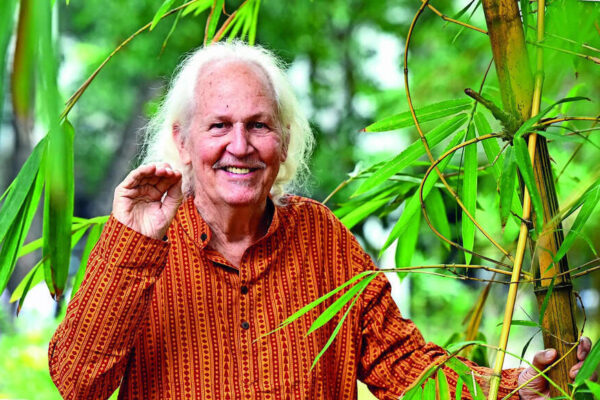
A tiger appeared without warning, gliding like a shadow along the forest edge as a boat drifted through the Periyar waters. For a 13-year-old boy visiting Kerala in 1957, the moment was electrifying. Wildlife then was not something confined to sanctuaries; it was visible, immediate, woven into everyday landscapes. That fleeting encounter stayed with Romulus…

Read More