Stock market today: Which are top 10 gainers and losers on NSE & BSE on February 10? Check list

Stock market today: Which are top 10 gainers and losers on NSE & BSE on February 10? Check list

Equity markets ended higher for the third consecutive session on Tuesday, tracking positive global cues and rising optimism around a potential India–US trade agreement. However, gains were capped as investors booked profits at higher levels.The BSE Sensex added 208.17 points, or 0.25 per cent, to settle at 84,273.92. During the day, the index climbed as…


Read More
Elite US campuses grapple with soaring disability claims and academic advantage debate

Elite US campuses grapple with soaring disability claims and academic advantage debate

Elite US campuses grapple with soaring disability claims and academic advantage debate For decades, disability accommodations on American campuses were understood as a moral and legal necessity. Extra time on exams, flexible deadlines, and priority housing were safeguards meant to level the playing field for students whose physical or cognitive limitations made learning more challenging.Now,…

Read More
​Kim Kardashian’s movie appearances and cameos from reality fame to Hollywood spotlight​

​Kim Kardashian’s movie appearances and cameos from reality fame to Hollywood spotlight​

Kim Kardashian built her screen journey in an unusual order, moving from reality dominance into scripted projects that tested how far recognition could translate into performance. Early spoofs, glossy dramas, quick celebrity cameos, voice roles in animation, and eventually prestige television created a path few predicted. Each appearance doubled as cultural commentary, asking viewers to…

Read More
“My heart broke. This is what we had been trying to prevent:”Why a 5-year old child was not allowed to sit on a swing in a famous park |

“My heart broke. This is what we had been trying to prevent:”Why a 5-year old child was not allowed to sit on a swing in a famous park |

When five-year-old Inika Sharma visited Sunder Nursery this weekend, she had no idea that a simple outing would turn into an experience her parents had spent years trying to shield her from.All Inika wanted to do was sit on a swing. She was refused. When her parents asked why, the security guard allegedly said, “Bachche…

Read More
Shanghai has been sinking for decades but something invisible beneath the ground is slowing it down | World News

Shanghai has been sinking for decades but something invisible beneath the ground is slowing it down | World News

Shanghai city is sinking (Image source: Canva) For decades, scientists have warned that Shanghai, one of the world’s largest and most densely populated coastal megacities, has been slowly sinking because of how humans have used the land beneath it. The problem is not new. As per reports, historical records show that parts of Shanghai have…

Read More
As much of the Western world recoils from Donald Trump’s return to the White House, India’s reaction looks strikingly different. The Munich Security Report 2026 presents Indian public opinion on US President Donald Trump as distinct from that of most Western democracies, marked by relatively higher approval of his policies, rising concern about US economic coercion, and declining belief in the necessity of US global leadership.Around 38% of Indian respondents agreed that Trump’s policies were good for India, and approximately 36% agreed they were good for the world. These levels of agreement are significantly higher than in Canada, France, Germany, and Japan, where agreement typically remains in the low teens What the report saysAccording to the MSI, India ranks among the more favorable countries when respondents were asked whether “Donald Trump’s policies are good for my country” and “good for the world.”The report noted that Indian respondents were less critical of Trump than Western public and more likely to express conditional or partial approval of his approach, even when uncertainty remains about its global impact.While Indian views of Trump’s geopolitical impact were comparatively less negative, the report recorded greater concern regarding his economic policies. Trump administration imposed 50% tariffs on India. With the recent India-US trade deal, the additional 25% tariffs was brought down to 18%.The report stated that the US risk score for India increased by 18 points between 2024 and 2025, the largest increase recorded among all risks in the Indian profile. Despite this rise, the US did not rank among India’s top perceived threats; China remained a higher concern, while Russia was viewed as comparatively low risk.The findings are based on the Munich Security Index (MSI), which surveys public attitudes across G7 and major Global South countries.Era of ‘wrecking-ball politics’The report framed Trump as a central figure in what it called an era of “wrecking-ball politics,” characterized by challenges to multilateral institutions and the post-1945 liberal order. In the Indian case, the report highlighted long-standing skepticism toward the Western “rules-based order,” which policymakers have criticized for selective application and double standards.The report cited external affairs minister S Jaishankar’s assessment that the existing order has often appeared “anarchic and permeated by double standards” from a Global South perspective. Within this context, the report suggested that Trump’s challenge to established institutions was not uniformly perceived as negative in India.About the AuthorTOI News DeskThe TOI News Desk comprises a dedicated and tireless team of journalists who operate around the clock to deliver the most current and comprehensive news and updates to the readers of The Times of India worldwide. With an unwavering commitment to excellence in journalism, our team is at the forefront of gathering, verifying, and presenting breaking news, in-depth analysis, and insightful reports on a wide range of topics. The TOI News Desk is your trusted source for staying informed and connected to the ever-evolving global landscape, ensuring that our readers are equipped with the latest developments that matter most.”Read MoreEnd of ArticleFollow Us On Social MediaVideosAfter Trump’s Zero Tariff Claim, White House Factsheet Reveals What India-US Trade Deal Really SaysOpposition Doubts Hindi Ability, Indian-Origin MP Ramkissoon’s Reply Leaves Guyana House Silent‘A Pre-Committed Purchase Agreement’: Shashi Tharoor Slams Modi Govt Over India-US Trade DealBJP MP’s ‘Mini Pakistan’ Remark On Bengal Land Sparks Govt-Oppn Clash In Rajya Sabha’From Nice To Necessary’: Greek Defence Minister Dendias Says India Now Central To Europe’s StrategyExplained: Why the 4.5-gen Rafale remains central to India’s air defence strategy’Trying To Ban India…’: Russian FM Lavrov Slams US Oil Curbs As India Refuses To Bend On Energy’Either Naravane Or Penguin Is Lying’: Rahul Gandhi Reacts To Publisher’s Statement On MemoirKiren Rijiju Slams Congress, Shares Video Of Women MPs At PM Modi’s Lok Sabha SeatUS Cuts Bangladesh Tariffs To 19% Days After India Deal, Redrawing Trade Priorities In South Asia123PhotostoriesWhat is Udan Yatri Cafe, its motive and Raghav Chadha’s connection with itFrom hours to minutes: Delhi-NCR’s plans air taxi corridor could transform commutesChennai metro phase-2: City set for major travel upgrade by 20277 tallest residential buildings in the world; where homes touch the clouds8 non-veg dishes one can make in an air fryer for a house party and howIndia ranks third globally in cancer cases, and over 50% of the cases could be prevented: Doctor reveals the lifestyle changes that matterWhen to say “sorry” (and when not to): Teaching kids the right way to apologize6 most powerful Lord Shani temples in India and what they are known forWhy Rajpal Yadav went to Tihar jail: Inside the Rs 5 crore loan case that landed the actor behind bars7 things you should avoid after sunset according to traditional wisdom123Hot PicksUAE Public School RegistrationGold Silver PricesParliament Budget SessionGCC Unified Visa 2026Income Tax CalculatorPublic holidays February 2026Bank Holidays februaryTop TrendingIndia Upcoming Matches TimingsRussian Oil ImportsNitish RajputCBSE Board ExamsSambhaji PatilCandace OwensLawrence Bishnoi GangNBA Trade RumorsJutta LeerdamKim Kardashian and Lewis Hamilton Net Worth

As much of the Western world recoils from Donald Trump’s return to the White House, India’s reaction looks strikingly different. The Munich Security Report 2026 presents Indian public opinion on US President Donald Trump as distinct from that of most Western democracies, marked by relatively higher approval of his policies, rising concern about US economic coercion, and declining belief in the necessity of US global leadership.Around 38% of Indian respondents agreed that Trump’s policies were good for India, and approximately 36% agreed they were good for the world. These levels of agreement are significantly higher than in Canada, France, Germany, and Japan, where agreement typically remains in the low teens What the report saysAccording to the MSI, India ranks among the more favorable countries when respondents were asked whether “Donald Trump’s policies are good for my country” and “good for the world.”The report noted that Indian respondents were less critical of Trump than Western public and more likely to express conditional or partial approval of his approach, even when uncertainty remains about its global impact.While Indian views of Trump’s geopolitical impact were comparatively less negative, the report recorded greater concern regarding his economic policies. Trump administration imposed 50% tariffs on India. With the recent India-US trade deal, the additional 25% tariffs was brought down to 18%.The report stated that the US risk score for India increased by 18 points between 2024 and 2025, the largest increase recorded among all risks in the Indian profile. Despite this rise, the US did not rank among India’s top perceived threats; China remained a higher concern, while Russia was viewed as comparatively low risk.The findings are based on the Munich Security Index (MSI), which surveys public attitudes across G7 and major Global South countries.Era of ‘wrecking-ball politics’The report framed Trump as a central figure in what it called an era of “wrecking-ball politics,” characterized by challenges to multilateral institutions and the post-1945 liberal order. In the Indian case, the report highlighted long-standing skepticism toward the Western “rules-based order,” which policymakers have criticized for selective application and double standards.The report cited external affairs minister S Jaishankar’s assessment that the existing order has often appeared “anarchic and permeated by double standards” from a Global South perspective. Within this context, the report suggested that Trump’s challenge to established institutions was not uniformly perceived as negative in India.About the AuthorTOI News DeskThe TOI News Desk comprises a dedicated and tireless team of journalists who operate around the clock to deliver the most current and comprehensive news and updates to the readers of The Times of India worldwide. With an unwavering commitment to excellence in journalism, our team is at the forefront of gathering, verifying, and presenting breaking news, in-depth analysis, and insightful reports on a wide range of topics. The TOI News Desk is your trusted source for staying informed and connected to the ever-evolving global landscape, ensuring that our readers are equipped with the latest developments that matter most.”Read MoreEnd of ArticleFollow Us On Social MediaVideosAfter Trump’s Zero Tariff Claim, White House Factsheet Reveals What India-US Trade Deal Really SaysOpposition Doubts Hindi Ability, Indian-Origin MP Ramkissoon’s Reply Leaves Guyana House Silent‘A Pre-Committed Purchase Agreement’: Shashi Tharoor Slams Modi Govt Over India-US Trade DealBJP MP’s ‘Mini Pakistan’ Remark On Bengal Land Sparks Govt-Oppn Clash In Rajya Sabha’From Nice To Necessary’: Greek Defence Minister Dendias Says India Now Central To Europe’s StrategyExplained: Why the 4.5-gen Rafale remains central to India’s air defence strategy’Trying To Ban India…’: Russian FM Lavrov Slams US Oil Curbs As India Refuses To Bend On Energy’Either Naravane Or Penguin Is Lying’: Rahul Gandhi Reacts To Publisher’s Statement On MemoirKiren Rijiju Slams Congress, Shares Video Of Women MPs At PM Modi’s Lok Sabha SeatUS Cuts Bangladesh Tariffs To 19% Days After India Deal, Redrawing Trade Priorities In South Asia123PhotostoriesWhat is Udan Yatri Cafe, its motive and Raghav Chadha’s connection with itFrom hours to minutes: Delhi-NCR’s plans air taxi corridor could transform commutesChennai metro phase-2: City set for major travel upgrade by 20277 tallest residential buildings in the world; where homes touch the clouds8 non-veg dishes one can make in an air fryer for a house party and howIndia ranks third globally in cancer cases, and over 50% of the cases could be prevented: Doctor reveals the lifestyle changes that matterWhen to say “sorry” (and when not to): Teaching kids the right way to apologize6 most powerful Lord Shani temples in India and what they are known forWhy Rajpal Yadav went to Tihar jail: Inside the Rs 5 crore loan case that landed the actor behind bars7 things you should avoid after sunset according to traditional wisdom123Hot PicksUAE Public School RegistrationGold Silver PricesParliament Budget SessionGCC Unified Visa 2026Income Tax CalculatorPublic holidays February 2026Bank Holidays februaryTop TrendingIndia Upcoming Matches TimingsRussian Oil ImportsNitish RajputCBSE Board ExamsSambhaji PatilCandace OwensLawrence Bishnoi GangNBA Trade RumorsJutta LeerdamKim Kardashian and Lewis Hamilton Net Worth

As much of the Western world recoils from Donald Trump’s return to the White House, India’s reaction looks strikingly different. The Munich Security Report 2026 presents Indian public opinion on US President Donald Trump as distinct from that of most Western democracies, marked by relatively higher approval of his policies, rising concern about US economic…

Read More
Feb 10, 2026, 17:02 IST

Feb 10, 2026, 17:02 IST

Ukraine’s Vladyslav Heraskevych (AP Photo) Ukrainian skeleton racer Vladyslav Heraskevych has been granted permission by the International Olympic Committee to wear a black armband during competition at the Milan Cortina Games, but he will not be allowed to use the helmet he designed to honour Ukrainian athletes killed in the ongoing war with Russia. The…

Read More
T20 World Cup, NZ vs UAE Preview: Seifert’s Faf-stance adds to his firepower

T20 World Cup, NZ vs UAE Preview: Seifert’s Faf-stance adds to his firepower

New Zealand’s Tim Seifert plays a shot during the match against Afghanistan. (AP Photo) CHENNAI: When New Zealand’s explosive opener Tim Seifert took stance to face Afghanistan’s new-ball bowler Fazalhaq Farooqi at MA Chidambaram Stadium on Sunday, it evoked memories of former South African great Faf du Plessis, who found considerable success here.Go Beyond The…

Read More
MAH CET 2026 registration deadline extended for MHMCT, MCA till this date: Check official notice here

MAH CET 2026 registration deadline extended for MHMCT, MCA till this date: Check official notice here

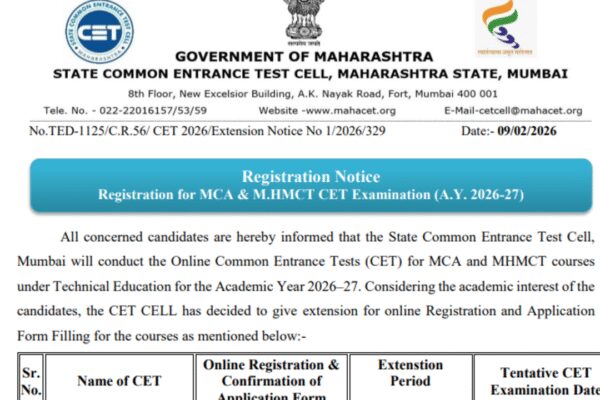
The State Common Entrance Test Cell, Maharashtra, has extended the registration deadline for MAH CET 2026 for Master of Computer Applications (MCA) and Master of Hotel Management and Catering Technology (MHMCT) courses. The decision has been taken in the interest of candidates applying for admission to the academic year 2026–27, as per the official notice…

Read More
Charan Kaur lovingly called Sidhu Moose Wala ‘Gaggu’, mother’s love that fame never changed

Charan Kaur lovingly called Sidhu Moose Wala ‘Gaggu’, mother’s love that fame never changed

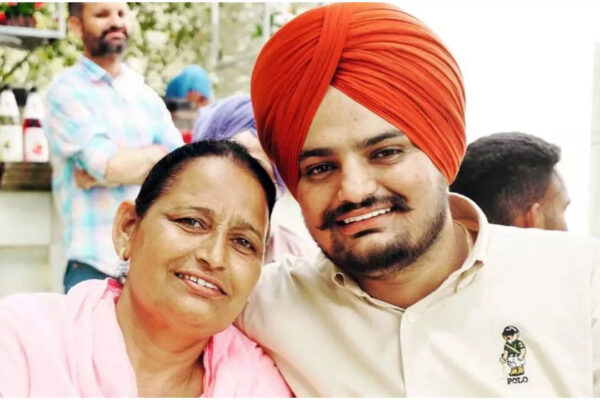
Charan Kaur and Balkaur Singh, the parents of Sidhu Moose Wala, are currently navigating a poignant mix of sorrow and renewal. Kaur finds comfort in the cherished memories of her son, lovingly referred to as ‘Gaggu,’ while Singh relies on their newborn son’s presence—an ‘angelic blessing’ that symbolizes a brighter future and the everlasting essence…

Read More
Why Nick Jonas says becoming a dad changed his music and his mind

Why Nick Jonas says becoming a dad changed his music and his mind

Nick Jonas shared that entering fatherhood has dramatically influenced both his musical journey and personal life. He speaks to the depth of empathy, cultural understanding, and spiritual growth that comes with nurturing his daughter alongside Priyanka Chopra Jonas. Valuing her privacy, he ensures that her formative years remain free from public scrutiny. Nick Jonas rarely…

Read More
‘Stand in complete solidarity’: JJD chief Tej Pratap Yadav announces Rs 11 lakh aid for actor Rajpal Yadav

‘Stand in complete solidarity’: JJD chief Tej Pratap Yadav announces Rs 11 lakh aid for actor Rajpal Yadav

Tej Pratap Yadav and Rajpal Yadav (Images/Agencies) NEW DELHI: Janshakti Janata Dal (JJD) chief Tej Pratap Yadav on Tuesday announced financial assistance of Rs 11 lakh for actor and comedian Rajpal Yadav after learning about his financial and legal difficulties.Tej Pratap Yadav said that he came to know about Rajpal Yadav’s condition through a social…

Read More
Representative AI image Artificial intelligence has become a handy tool these days. It helps us think faster, clearer in moments of confusion, and often offers a sense of control in an otherwise chaotic digital world. For many, AI tools like ChatGPT, Grok, Perplexity etc. are no longer optional aids but daily companions.There was a time when being stuck meant slowing down. Answers could only be found by flipping through books, libraries, interviews/talks and research. The process could often be frustrating, but it forced engagement. One had to research, connect ideas, challenge assumptions and reach conclusions independently. Critical thinking was not an optional skill that could be outsourced. ‘Biggest AI Summit’: Ashwini Vaishnaw Says India AI Impact Summit Getting ‘Phenomenal Response’ Today, a single prompt can generate an instant answer. Tasks that once took hours now take minutes. Quantitative productivity has undeniably improved. But speed comes with trade-offs. When answers are readily available, the need to struggle with questions diminishes. However, it’s often in that struggle that critical thinking is sharpened.  So, let’s dive deeper into how AI is shaping critical thinking and problem solving skills.AI in classroomsWhen we refer to artificial intelligence, we must start from the time critical thinking is in the process of development – the school age. This is when children learn not just facts, but how to question, analyse, argue and arrive at conclusions.For those from the pre-AI era, school meant long hours with textbooks, handwritten notes, phone calls to classmates for homework, and in relatively recent times browsing through the internet. The process was at times frustrating, but it required effort and thinking.Today, the school age looks very different. A single prompt on ChatGPT, Meta AI, or similar platforms can generate structured answers within seconds. Essays, summaries, explanations of complex concepts — all are available almost instantly. The efficiency is undeniable. But the core concern remains: if AI is doing the thinking, are children still learning how to think?Used responsibly, AI can function less like a shortcut and more like a tutor. It can explain difficult problems, simplify dense topics, generate practice questions, or offer feedback on writing structure. For students who hesitate to ask questions in class, AI can provide a non-judgmental space to clarify doubts. In that sense, it may democratise access to academic support.Although there is a risk of passive consumption. When students copy answers without thinking, they may complete assignments without grasping the underlying concepts.This was explained by Tulikaa, a high school teacher in Georgia, US. “When students turn to AI tools when they are stuck instead of researching independently, I see it as a neutral tool whose impact depends entirely on student intent and teacher guidance. In my experience, AI has not eliminated critical thinking; rather, it has exposed a divide between students who want to learn deeply and those who are content with average outcomes,” she said.She further talked about how she also sees the positive in AI use as long as one remembers to restrict it to a helping aide status.  Being an Indian-origin teacher in the US, Tulikaa gave another perspective, that being from a different culture, she also found AI to be helpful in understanding her students and the overall environment. Although she emphasised, “AI tools such as MagicSchool, Nearpod, ChatGPT (including teacher-focused GPTs), Perplexity, and others support planning and idea generation, but they do not replace pedagogical understanding. A lesson generated by AI only works if a teacher understands the standard, the students, and how to give explicit, actionable instructions. Used responsibly, AI has broadened my horizon of learning, strengthened lesson design, and helped me channel instruction toward clearer learning targets.”Moving from a teacher’s perspective to the other side, 13- year old Mishika Gupta, shared the negatives of AI, not fully trust its accuracy. Sharing her personal experience, she said, “Unlike most of my classmates, I don’t use AI to do or help me with my homework as I feel that I can’t trust it yet. I have seen on multiple occasions that it doesn’t give the right answers. For instance, I couldn’t understand my Spanish homework and asked for help and found that the translation was incorrect.”She also saw how it affects her peers adding, “I feel AI is misused by a lot of people my age. They use it to do their homework everyday. Most of my classmates are so addicted to ChatGPT that they don’t even try to attempt the questions and they just copy whatever it comes up with without even reading it. I feel like it has killed the creativity of the kids my age. Some of them literally chat with it like it’s their bff. They share their feelings with it and ask it to solve their life problems.”Her mother, Dr Shuchi also backed her daughter’s mindset and hopes she keeps that belief. Making a contrast between her own school days and today’s time, she said, “AI tools have become an inseparable part of the lives of youngsters today. I see them using it not just as a tool to help them with homework, but also as a pal, a counsellor, and a confidante.”“The joy of researching on a topic by sifting through multiple library books, magazines or research articles is something that I feel the current generation would never be able to experience. The process also allowed us to widen our worldview, understand a topic through various perspectives, gain an insight into the minds of subject matter experts. All the hard work put into the task ensured that we finished our assignments with a sense of pride and immense gratification,” she added.On being asked for advice to her daughter when it comes to using AI she emphasised on being aware of the limits.  Meanwhile, Om Prakash Bhatia, another parent, had his own reservations on AI, believing it’s killing children’s creativity.  Thus, the AI and homework debate is not black and white. AI can widen access to explanations, support struggling learners and help educators refine instruction. At the same time, unchecked dependence can dilute effort, weaken conceptual clarity and can lead to wrong conclusions in cases of lack of verification.Ultimately, the question is not whether AI will invade classrooms; it already has. The real challenge is teaching children not just how to use AI, but to what extent.AI in content writing: Efficient or shallow?One of the fields where AI is widely used is content writing. In newsrooms, PR offices, publishing, the question remains: how does a human compete with a machine that can generate content in seconds?AI undeniably accelerates production. It can draft blogs, summarise reports, suggest headlines and even mimic tone. But writing is not merely about grammatically correct sentences. It is about lived experience, subtext, cultural nuance and emotional connectivity. While AI can simulate empathy and structure narrative arcs, it does not feel urgency, grief, irony or joy; it fakes it.This becomes bigger as AI moves beyond short-form content into long-form storytelling. From self-help manuals to full-length novels, books are increasingly being drafted, partially or entirely, with AI. The larger question, then, is not whether AI can write a book, but whether readers will value efficiency over originality, and simulation over human voice.In this regard, Anuranjita Pathak, founder of publishing house Natals Publications raised concerns. “Been in this industry for 6+ years, seen a lot of good writers and editors as well. The time in delivery of content/novels has shrunk drastically. I know someone who wrote a book in 4 years- the depth of those 4 years, cannot be written with AI. So there’s a definite decline in original thoughts and critical depths.”Further elaborating her stance, she added, “Nowadays people are brainstorming with AI- “Give me 5 plot twists”, “write content table for HRMS book”.”Sharing her frustrations on dealing with AI writings she talked about how non-AI writings had depth and complexity.  Can we trust AI?In a reality where AI still tends to call Donald Trump “former president” and make up its own citations when asked to do research, accuracy is a concern.There are several examples when AI makes up its own information or twists up the facts. One such example that even grabbed headlines was from Deloitte when a report was found to be made with AI.Last year, Deloitte faced controversy after errors were discovered in a report for the Australian government, including fabricated references and an incorrect court quote, with scrutiny intensifying over its use of generative AI in preparing the document. Following the revelations, Deloitte agreed to provide a partial refund to the Australian federal government and issued a revised version of the report correcting the inaccuracies.Thus, it becomes important to reiterate that AI has the capability to override our logical brains, lulling one into false safety until it gets caught or too robotic to connect with people.AI’s side of the storySince we are talking about AI, it’s important to hear what the bots have to say too.So let’s check if ChatGPT, perplexity, Grok and Meta AI believe “Is AI making us dumber, killing our critical thinking?ChatGPT: The commonly used bot emphasised on the important aspect discussed by people as well, that it’s not about the AI itself but how it’s used that determines if it’s affecting human thinking. “It’s a tool—it can be a brain booster or a crutch,” it said.  Grok: Grok stood firm stating that “AI isn’t inherently “making us dumber” or “killing” critical thinking in some irreversible, universal way”. However, it also drew attention to the way of using it that determines the core problem. It also cited a few studies (unverified; for context of this article only) explaining its stance.  Perplexity: Perplexity also gave a balanced view. Like others, it listed the pros and cons. “AI can weaken critical thinking if we outsource too much of our thinking to it, but when used deliberately it can also strengthen critical thinking instead of “making us dumber,” it said, while citing various sources (not verified, only for context of this article)  Meta AI: Rather than giving a definitive answer, it gave various viewpoints of people, pointing out both sides of the debate, while also highlighting that intention and way of using that actually decides if AI is making us dumber. “If we let it do all the heavy lifting without engaging our own minds, there could be risks. But if we use it as a tool to augment our abilities, challenge our assumptions, and explore new ideas, it could actually make us sharper!” it said.  Ally or hurdle; choice is oursLooking at the insights of humans and bots, it becomes clear that the impact of AI on human thinking is not simply about using AI. In fact it depends on how we choose to use it. In itself, it is a neutral tool.When relied upon blindly, it risks killing creativity, problem-solving, and independent thought.On the other hand, when used responsibly, AI can augment human intelligence. It can help organise ideas, provide new perspectives, simplify complex concepts, and inspire creative solutions that we might not have considered on our own.  The key to that is balance, using AI as a helper rather than a substitute, a partner rather than a replacement for original thoughts.The fact is, we aren’t made smarter or dumber by artificial intelligence but by our choices about how we interact with it. We’re given a chance to think, to wonder, and to decide: will we let it think for us, or let it help us become even smarter? The answer will shape the future of learning and creativity in an AI-driven world.About the AuthorTrisha MahajanTrisha Mahajan is a journalist with The Times of India digital, with keen interest in covering business and corporate affairs. She also reports on key national and world developments and global news trends. A keen reader with a strong interest in storytelling that adds context, clarity, and depth to complex issues.Read MoreEnd of ArticleFollow Us On Social MediaVideosOpposition Doubts Hindi Ability, Indian-Origin MP Ramkissoon’s Reply Leaves Guyana House Silent‘A Pre-Committed Purchase Agreement’: Shashi Tharoor Slams Modi Govt Over India-US Trade DealBJP MP’s ‘Mini Pakistan’ Remark On Bengal Land Sparks Govt-Oppn Clash In Rajya Sabha’From Nice To Necessary’: Greek Defence Minister Dendias Says India Now Central To Europe’s StrategyExplained: Why the 4.5-gen Rafale remains central to India’s air defence strategy’Trying To Ban India…’: Russian FM Lavrov Slams US Oil Curbs As India Refuses To Bend On Energy’Either Naravane Or Penguin Is Lying’: Rahul Gandhi Reacts To Publisher’s Statement On MemoirKiren Rijiju Slams Congress, Shares Video Of Women MPs At PM Modi’s Lok Sabha SeatUS Cuts Bangladesh Tariffs To 19% Days After India Deal, Redrawing Trade Priorities In South Asia’Take Strictest Possible Action’: BJP Women MPs Write To Lok Sabha Speaker After Congress Letter123PhotostoriesWhat is Udan Yatri Cafe, its motive and Raghav Chadha’s connection with itFrom hours to minutes: Delhi-NCR’s plans air taxi corridor could transform commutesChennai metro phase-2: City set for major travel upgrade by 20277 tallest residential buildings in the world; where homes touch the clouds8 non-veg dishes one can make in an air fryer for a house party and howIndia ranks third globally in cancer cases, and over 50% of the cases could be prevented: Doctor reveals the lifestyle changes that matterWhen to say “sorry” (and when not to): Teaching kids the right way to apologize6 most powerful Lord Shani temples in India and what they are known forWhy Rajpal Yadav went to Tihar jail: Inside the Rs 5 crore loan case that landed the actor behind bars7 things you should avoid after sunset according to traditional wisdom123Hot PicksUAE Public School RegistrationGold Silver PricesParliament Budget SessionGCC Unified Visa 2026Income Tax CalculatorPublic holidays February 2026Bank Holidays februaryTop TrendingIndia Upcoming Matches TimingsRussian Oil ImportsNitish RajputCBSE Board ExamsSambhaji PatilCandace OwensLawrence Bishnoi GangNBA Trade RumorsJutta LeerdamKim Kardashian and Lewis Hamilton Net Worth

Representative AI image Artificial intelligence has become a handy tool these days. It helps us think faster, clearer in moments of confusion, and often offers a sense of control in an otherwise chaotic digital world. For many, AI tools like ChatGPT, Grok, Perplexity etc. are no longer optional aids but daily companions.There was a time when being stuck meant slowing down. Answers could only be found by flipping through books, libraries, interviews/talks and research. The process could often be frustrating, but it forced engagement. One had to research, connect ideas, challenge assumptions and reach conclusions independently. Critical thinking was not an optional skill that could be outsourced. ‘Biggest AI Summit’: Ashwini Vaishnaw Says India AI Impact Summit Getting ‘Phenomenal Response’ Today, a single prompt can generate an instant answer. Tasks that once took hours now take minutes. Quantitative productivity has undeniably improved. But speed comes with trade-offs. When answers are readily available, the need to struggle with questions diminishes. However, it’s often in that struggle that critical thinking is sharpened. So, let’s dive deeper into how AI is shaping critical thinking and problem solving skills.AI in classroomsWhen we refer to artificial intelligence, we must start from the time critical thinking is in the process of development – the school age. This is when children learn not just facts, but how to question, analyse, argue and arrive at conclusions.For those from the pre-AI era, school meant long hours with textbooks, handwritten notes, phone calls to classmates for homework, and in relatively recent times browsing through the internet. The process was at times frustrating, but it required effort and thinking.Today, the school age looks very different. A single prompt on ChatGPT, Meta AI, or similar platforms can generate structured answers within seconds. Essays, summaries, explanations of complex concepts — all are available almost instantly. The efficiency is undeniable. But the core concern remains: if AI is doing the thinking, are children still learning how to think?Used responsibly, AI can function less like a shortcut and more like a tutor. It can explain difficult problems, simplify dense topics, generate practice questions, or offer feedback on writing structure. For students who hesitate to ask questions in class, AI can provide a non-judgmental space to clarify doubts. In that sense, it may democratise access to academic support.Although there is a risk of passive consumption. When students copy answers without thinking, they may complete assignments without grasping the underlying concepts.This was explained by Tulikaa, a high school teacher in Georgia, US. “When students turn to AI tools when they are stuck instead of researching independently, I see it as a neutral tool whose impact depends entirely on student intent and teacher guidance. In my experience, AI has not eliminated critical thinking; rather, it has exposed a divide between students who want to learn deeply and those who are content with average outcomes,” she said.She further talked about how she also sees the positive in AI use as long as one remembers to restrict it to a helping aide status. Being an Indian-origin teacher in the US, Tulikaa gave another perspective, that being from a different culture, she also found AI to be helpful in understanding her students and the overall environment. Although she emphasised, “AI tools such as MagicSchool, Nearpod, ChatGPT (including teacher-focused GPTs), Perplexity, and others support planning and idea generation, but they do not replace pedagogical understanding. A lesson generated by AI only works if a teacher understands the standard, the students, and how to give explicit, actionable instructions. Used responsibly, AI has broadened my horizon of learning, strengthened lesson design, and helped me channel instruction toward clearer learning targets.”Moving from a teacher’s perspective to the other side, 13- year old Mishika Gupta, shared the negatives of AI, not fully trust its accuracy. Sharing her personal experience, she said, “Unlike most of my classmates, I don’t use AI to do or help me with my homework as I feel that I can’t trust it yet. I have seen on multiple occasions that it doesn’t give the right answers. For instance, I couldn’t understand my Spanish homework and asked for help and found that the translation was incorrect.”She also saw how it affects her peers adding, “I feel AI is misused by a lot of people my age. They use it to do their homework everyday. Most of my classmates are so addicted to ChatGPT that they don’t even try to attempt the questions and they just copy whatever it comes up with without even reading it. I feel like it has killed the creativity of the kids my age. Some of them literally chat with it like it’s their bff. They share their feelings with it and ask it to solve their life problems.”Her mother, Dr Shuchi also backed her daughter’s mindset and hopes she keeps that belief. Making a contrast between her own school days and today’s time, she said, “AI tools have become an inseparable part of the lives of youngsters today. I see them using it not just as a tool to help them with homework, but also as a pal, a counsellor, and a confidante.”“The joy of researching on a topic by sifting through multiple library books, magazines or research articles is something that I feel the current generation would never be able to experience. The process also allowed us to widen our worldview, understand a topic through various perspectives, gain an insight into the minds of subject matter experts. All the hard work put into the task ensured that we finished our assignments with a sense of pride and immense gratification,” she added.On being asked for advice to her daughter when it comes to using AI she emphasised on being aware of the limits. Meanwhile, Om Prakash Bhatia, another parent, had his own reservations on AI, believing it’s killing children’s creativity. Thus, the AI and homework debate is not black and white. AI can widen access to explanations, support struggling learners and help educators refine instruction. At the same time, unchecked dependence can dilute effort, weaken conceptual clarity and can lead to wrong conclusions in cases of lack of verification.Ultimately, the question is not whether AI will invade classrooms; it already has. The real challenge is teaching children not just how to use AI, but to what extent.AI in content writing: Efficient or shallow?One of the fields where AI is widely used is content writing. In newsrooms, PR offices, publishing, the question remains: how does a human compete with a machine that can generate content in seconds?AI undeniably accelerates production. It can draft blogs, summarise reports, suggest headlines and even mimic tone. But writing is not merely about grammatically correct sentences. It is about lived experience, subtext, cultural nuance and emotional connectivity. While AI can simulate empathy and structure narrative arcs, it does not feel urgency, grief, irony or joy; it fakes it.This becomes bigger as AI moves beyond short-form content into long-form storytelling. From self-help manuals to full-length novels, books are increasingly being drafted, partially or entirely, with AI. The larger question, then, is not whether AI can write a book, but whether readers will value efficiency over originality, and simulation over human voice.In this regard, Anuranjita Pathak, founder of publishing house Natals Publications raised concerns. “Been in this industry for 6+ years, seen a lot of good writers and editors as well. The time in delivery of content/novels has shrunk drastically. I know someone who wrote a book in 4 years- the depth of those 4 years, cannot be written with AI. So there’s a definite decline in original thoughts and critical depths.”Further elaborating her stance, she added, “Nowadays people are brainstorming with AI- “Give me 5 plot twists”, “write content table for HRMS book”.”Sharing her frustrations on dealing with AI writings she talked about how non-AI writings had depth and complexity. Can we trust AI?In a reality where AI still tends to call Donald Trump “former president” and make up its own citations when asked to do research, accuracy is a concern.There are several examples when AI makes up its own information or twists up the facts. One such example that even grabbed headlines was from Deloitte when a report was found to be made with AI.Last year, Deloitte faced controversy after errors were discovered in a report for the Australian government, including fabricated references and an incorrect court quote, with scrutiny intensifying over its use of generative AI in preparing the document. Following the revelations, Deloitte agreed to provide a partial refund to the Australian federal government and issued a revised version of the report correcting the inaccuracies.Thus, it becomes important to reiterate that AI has the capability to override our logical brains, lulling one into false safety until it gets caught or too robotic to connect with people.AI’s side of the storySince we are talking about AI, it’s important to hear what the bots have to say too.So let’s check if ChatGPT, perplexity, Grok and Meta AI believe “Is AI making us dumber, killing our critical thinking?ChatGPT: The commonly used bot emphasised on the important aspect discussed by people as well, that it’s not about the AI itself but how it’s used that determines if it’s affecting human thinking. “It’s a tool—it can be a brain booster or a crutch,” it said. Grok: Grok stood firm stating that “AI isn’t inherently “making us dumber” or “killing” critical thinking in some irreversible, universal way”. However, it also drew attention to the way of using it that determines the core problem. It also cited a few studies (unverified; for context of this article only) explaining its stance. Perplexity: Perplexity also gave a balanced view. Like others, it listed the pros and cons. “AI can weaken critical thinking if we outsource too much of our thinking to it, but when used deliberately it can also strengthen critical thinking instead of “making us dumber,” it said, while citing various sources (not verified, only for context of this article) Meta AI: Rather than giving a definitive answer, it gave various viewpoints of people, pointing out both sides of the debate, while also highlighting that intention and way of using that actually decides if AI is making us dumber. “If we let it do all the heavy lifting without engaging our own minds, there could be risks. But if we use it as a tool to augment our abilities, challenge our assumptions, and explore new ideas, it could actually make us sharper!” it said. Ally or hurdle; choice is oursLooking at the insights of humans and bots, it becomes clear that the impact of AI on human thinking is not simply about using AI. In fact it depends on how we choose to use it. In itself, it is a neutral tool.When relied upon blindly, it risks killing creativity, problem-solving, and independent thought.On the other hand, when used responsibly, AI can augment human intelligence. It can help organise ideas, provide new perspectives, simplify complex concepts, and inspire creative solutions that we might not have considered on our own. The key to that is balance, using AI as a helper rather than a substitute, a partner rather than a replacement for original thoughts.The fact is, we aren’t made smarter or dumber by artificial intelligence but by our choices about how we interact with it. We’re given a chance to think, to wonder, and to decide: will we let it think for us, or let it help us become even smarter? The answer will shape the future of learning and creativity in an AI-driven world.About the AuthorTrisha MahajanTrisha Mahajan is a journalist with The Times of India digital, with keen interest in covering business and corporate affairs. She also reports on key national and world developments and global news trends. A keen reader with a strong interest in storytelling that adds context, clarity, and depth to complex issues.Read MoreEnd of ArticleFollow Us On Social MediaVideosOpposition Doubts Hindi Ability, Indian-Origin MP Ramkissoon’s Reply Leaves Guyana House Silent‘A Pre-Committed Purchase Agreement’: Shashi Tharoor Slams Modi Govt Over India-US Trade DealBJP MP’s ‘Mini Pakistan’ Remark On Bengal Land Sparks Govt-Oppn Clash In Rajya Sabha’From Nice To Necessary’: Greek Defence Minister Dendias Says India Now Central To Europe’s StrategyExplained: Why the 4.5-gen Rafale remains central to India’s air defence strategy’Trying To Ban India…’: Russian FM Lavrov Slams US Oil Curbs As India Refuses To Bend On Energy’Either Naravane Or Penguin Is Lying’: Rahul Gandhi Reacts To Publisher’s Statement On MemoirKiren Rijiju Slams Congress, Shares Video Of Women MPs At PM Modi’s Lok Sabha SeatUS Cuts Bangladesh Tariffs To 19% Days After India Deal, Redrawing Trade Priorities In South Asia’Take Strictest Possible Action’: BJP Women MPs Write To Lok Sabha Speaker After Congress Letter123PhotostoriesWhat is Udan Yatri Cafe, its motive and Raghav Chadha’s connection with itFrom hours to minutes: Delhi-NCR’s plans air taxi corridor could transform commutesChennai metro phase-2: City set for major travel upgrade by 20277 tallest residential buildings in the world; where homes touch the clouds8 non-veg dishes one can make in an air fryer for a house party and howIndia ranks third globally in cancer cases, and over 50% of the cases could be prevented: Doctor reveals the lifestyle changes that matterWhen to say “sorry” (and when not to): Teaching kids the right way to apologize6 most powerful Lord Shani temples in India and what they are known forWhy Rajpal Yadav went to Tihar jail: Inside the Rs 5 crore loan case that landed the actor behind bars7 things you should avoid after sunset according to traditional wisdom123Hot PicksUAE Public School RegistrationGold Silver PricesParliament Budget SessionGCC Unified Visa 2026Income Tax CalculatorPublic holidays February 2026Bank Holidays februaryTop TrendingIndia Upcoming Matches TimingsRussian Oil ImportsNitish RajputCBSE Board ExamsSambhaji PatilCandace OwensLawrence Bishnoi GangNBA Trade RumorsJutta LeerdamKim Kardashian and Lewis Hamilton Net Worth

Artificial intelligence has become a handy tool these days. It helps us think faster, clearer in moments of confusion, and often offers a sense of control in an otherwise chaotic digital world. For many, AI tools like ChatGPT, Grok, Perplexity etc. are no longer optional aids but daily companions.There was a time when being stuck…

Read More
RRB NTPC UG admit card 2026 released: Direct link to download hall tickets here

RRB NTPC UG admit card 2026 released: Direct link to download hall tickets here

RRB NTPC UG Admit Card 2026 RRB NTPC UG admit card 2026:The Railway Recruitment Board (RRB) has released the RRB NTPC UG Admit Card 2026 of the candidates shortlisted for the computer-based typing skill test. This is one of the stages of the recruitment procedure in Non-Technical Popular Categories (NTPC) undergraduate level examination.The qualified candidates…

Read More
Sabarimala gold theft case: ED summons Jayaram for questioning; multi-agency probe intensifies

Sabarimala gold theft case: ED summons Jayaram for questioning; multi-agency probe intensifies

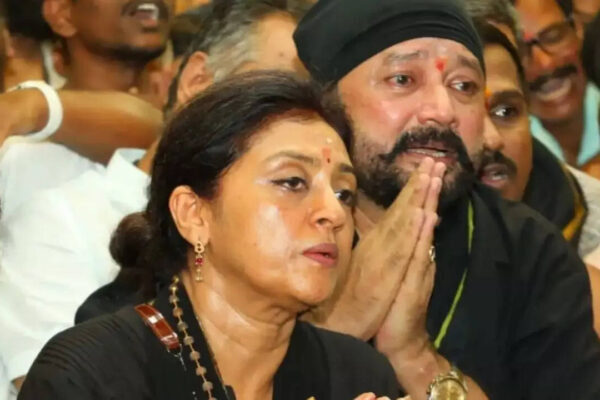
Actor Jayaram has been summoned by the Enforcement Directorate in connection with the Sabarimala gold theft case. The probe intensified after allegations surfaced that stolen gold ornaments were taken to Jayaram’s Chennai residence for prayers. The ED is investigating under the Prevention of Money Laundering Act, expanding the multi-agency investigation. The Sabarimala gold theft case…

Read More
Why Tusshar Kapoor’s Real-Estate choices reflect a growing investor mindset in India

Why Tusshar Kapoor’s Real-Estate choices reflect a growing investor mindset in India

Image Credit: Instagram/ Tusshar Kapoor In recent years, conversations around celebrity investments have shifted beyond films and endorsements toward long-term asset creation, especially real estate. Actor Tusshar Kapoor’s candid rapid-fire interaction with Edstate Learning and The Green Cottage founder Mayank Agarwal at the launch of Mayank’s new brand, The House of Jets, offered an interesting…

Read More