7 foods and drinks that can harm your dog’s liver, heart and nervous system |

7 foods and drinks that can harm your dog’s liver, heart and nervous system |

Dogs are naturally curious about the foods humans eat, often approaching plates, counters, or bins in search of treats. However, their digestive systems and metabolism differ significantly from ours, making certain human foods dangerous or even lethal. Dogs lack specific enzymes needed to metabolise compounds like theobromine, xylitol, or ethanol efficiently, which leads to accumulation…
Read More
The ‘Lawrence Bishnoi’ jacket trend: Gangster photo sparks fashion craze in Rajasthan, police nab sellers

The ‘Lawrence Bishnoi’ jacket trend: Gangster photo sparks fashion craze in Rajasthan, police nab sellers

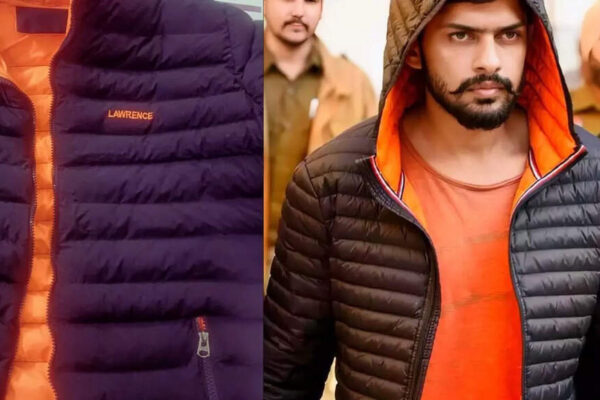
JAIPUR: Inspired by a viral photograph of jailed gangster Lawrence Bishnoi wearing a striking black-and-orange jacket while being escorted to court, a new trend dubbed “Lawrence Jacket” has taken social media by storm across Rajasthan, drawing police’s attention.Kotputli-Behror police Tuesday arrested three men for selling replicas of the jacket in the local market. SP Devendra…

Read More
Updated: Nov 26, 2025, 09:03 IST

Updated: Nov 26, 2025, 09:03 IST

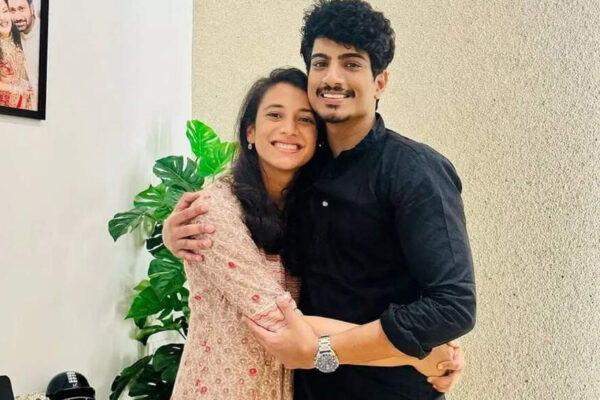
Smriti Mandhana has taken down all wedding-related posts from her social media platforms. (Image credit: Instagram) NEW DELHI: Social media speculation claiming that Indian cricketer Smriti Mandhana had unfollowed her fiancé, Palash Muchhal, on Instagram has turned out to be incorrect. Their wedding, originally scheduled for September 23, was postponed due to medical emergencies involving…

Read More
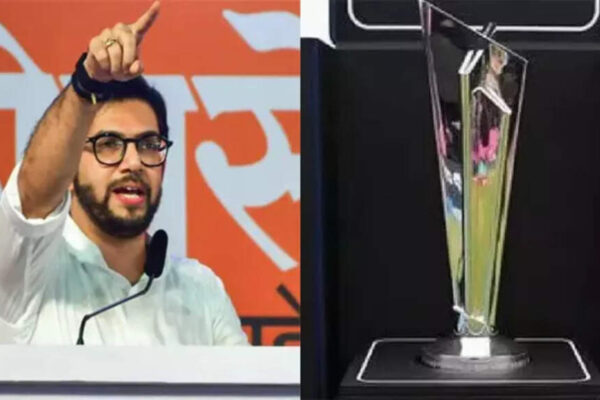
ICC T20 World Cup 2026 Schedule: Aaditya Thackeray slams ‘favouritism’ – ‘What’s this fascination of pulling every single final in Ahmedabad?’

ICC T20 World Cup 2026 Schedule: Aaditya Thackeray slams ‘favouritism’ – ‘What’s this fascination of pulling every single final in Ahmedabad?’

NEW DELHI: Shiv Sena (UBT) MLA Aaditya Thackeray has launched a sharp attack on the International Cricket Council (ICC) for awarding the 2026 T20 World Cup final to Ahmedabad’s Narendra Modi Stadium, accusing the global cricket body of indulging in “sudden politics of favouritism.” Go Beyond The Boundary with our YouTube channel. SUBSCRIBE NOW!The ICC…

Read More
Kerala actress assault case awaits final judgment: Court to pronounce verdict on December in trial involving actor Dileep

Kerala actress assault case awaits final judgment: Court to pronounce verdict on December in trial involving actor Dileep

The long-awaited verdict in the 2017 Kerala actress abduction and assault case is set for December 8. Actor Dileep, accused of conspiracy, faces the court after a trial spanning nearly three years. Despite ongoing legal battles, Dileep remains active in cinema, with his film ‘Bha Bha Ba’ slated for a December 18 release. TRIGGER WARNING:…

Read More
Amazon sends message to engineers on in-house coding tool Kiro; says: We do not plan to…

Amazon sends message to engineers on in-house coding tool Kiro; says: We do not plan to…

Amazon has ordered its software engineers to stop adopting third-party AI coding tools and pivot exclusively to Kiro, its proprietary development system, in a strategic push to close the gap with rivals OpenAI and Google, according to an internal memo reviewed by Reuters. The directive affects popular competing products including OpenAI’s Codex, Anthropic’s Claude Code,…

Read More
FMCG giants race to bring in global brands

FMCG giants race to bring in global brands

MUMBAI: Call it the impact of new age D2C brands bringing about a shift in consumption patterns as they build products to cater to different consumer nuances, or more households going premium helped by rising incomes, global FMCG giants are bringing foreign brands to India. Be it PepsiCo getting its Australian gourmet snacking brand Red…

Read More
When ‘Dhurandhar’ actor Ranveer Singh said his wedding ring is ‘very dear’ to him: ‘Presented to me by my wife’

When ‘Dhurandhar’ actor Ranveer Singh said his wedding ring is ‘very dear’ to him: ‘Presented to me by my wife’

Ranveer Singh, who will soon be seen on the big screen in and as ‘Dhurandhar,’ has never shied away from showing his pokie side to the world. Especially, whenever it comes to expressing love for his wife, Ranveer Singh pours his heart out. Everything about his lovely wife Deepika Padukone is close to his heart,…

Read More
Shriya Saran shines in the most dreamy saree of the season |

Shriya Saran shines in the most dreamy saree of the season |

Shriya Saran captivated in a recent photoshoot, showcasing understated glamour with a shimmering light-toned saree and a statement golden blouse. Her elegant ensemble, featuring delicate sparkle and intricate hand-embroidery, highlighted a perfect blend of traditional Indian craft and modern refinement. The look, complemented by soft waves and minimal makeup, proved her enduring status as a…

Read More
Horoscope Tomorrow, November 27, 2025: Career transitions bring luck, these zodiac signs will advance quickly

Horoscope Tomorrow, November 27, 2025: Career transitions bring luck, these zodiac signs will advance quickly

Embrace everything that life has to offer! Tomorrow’s horoscope unfolds the agenda set forth by the universe for each sign of the zodiac. Whether its relationship matters, job changes, or simply the reflection and realization moments, let celestial guidance take the lead. Be mindful; trust your instinct, and walk through the day confidently. Aries (Mar…

Read More
How analysts got Google wrong in AI and the widely exaggerated claims of ‘Google’s death’

How analysts got Google wrong in AI and the widely exaggerated claims of ‘Google’s death’

Since the launch of ChatGPT three years ago, a chorus of analysts, technologists, and even former Google executives have warned that the search giant had fallen behind in the high-stakes race for artificial intelligence dominance. But — Not anymore. Google parent Alphabet has mounted a ferocious comeback, reassured investors with new software breakthroughs, and secured…

Read More
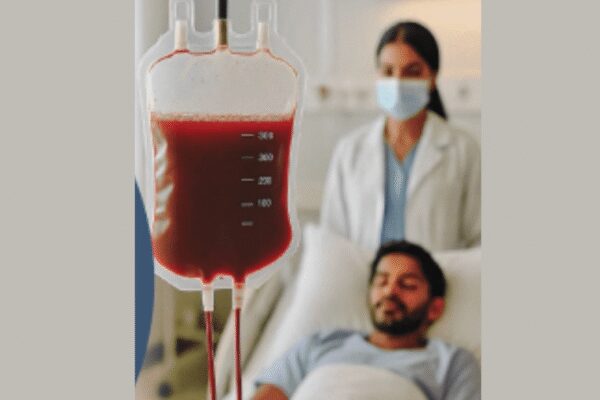
Six kids with thalassaemia in the state recently contracted HIV during blood transfusion, exposing systemic lapses in screening. Experts demand better testing, stronger regulation and blood safety laws to protect vulnerable patients AI image On returning from college recently, Kolkata-based Anusha (name changed) — a thalassaemia patient who contracted HIV through a blood transfusion a few years ago — read a headline that gave her pause.Two years after 14 children in Uttar Pradesh reportedly contracted HIV and hepatitis after blood transfusions, five children with thalassaemia tested HIV-positive after receiving blood at Jharkhand’s Chaibasa Sadar Hospital last month, with a sixth case emerging at another facility in the state.“At least I can afford treatment,” says Anusha. “Many who visit rural centres and govt hospitals can’t.”Opposition leaders have claimed that six more children in Ranchi and one child in Koderma have been affected.For thalassaemia patients — dependent on lifelong transfusions — the Jharkhand case has reopened an old wound.“We are sick and tired,” says lawyer Anubha Taneja Mukherjee. A thalassaemia patient herself, she is member-secretary of Thalassemia Patients Advocacy Group (TPAG), which has long been seeking a uniform national blood law and mandatory upgrade of screening technologies. “This isn’t just a system failure. It’s a violation of the right to safe, life-saving care.”A system under scrutinyInitial investigation indicates that the Chaibasa blood bank used fourth-generation ELISA tests, but not nucleic-acid amplification testing (NAAT), which can detect infections during the “window period” when ELISA may fail.Five cases have been traced to this facility, whose licence — according to local media reports — lapsed in 2023. While hospitals often operate under “deemed-continuation” rules during renewal, the case has raised questions about accountability, oversight and quality control.Jharkhand health authorities have suspended senior officers and ordered statewide inspections of blood banks, while the high court has taken suo motu cognizance, asking for data on monitoring, donor-camp protocols, and blood-availability practices.Following statewide inspections, the Jharkhand high court — on Nov 19 — noted that licences of 17 blood banks have been cancelled, and directed the state to set a clear timeline for adopting NAAT for blood screening. The court also found that although the inquiry into the Chaibasa incident is complete, the report has not yet been placed on record.“It’s not an isolated incident,” says Dr Ishwar Gilada, secretarygeneral, People’s Health Organisation (PHO), an NGO known for its work in HIV/AIDS awareness, prevention, and treatment advocacy. “They reflect policy paralysis and administrative collapse.”Lessons from other statesThe tragedy comes even as some states have attempted to build stronger shields around vulnerable patients.In Rajasthan, a health official says the state follows a two-layer protocol for those needing frequent transfusions.“For patients requiring frequent transfusions, we first test by ELISA and then use NAAT to prevent transfusion-transmitted infections,” the official says. “We have been using NAAT for four years.” Rajasthan has begun extending NAAT to general patients in Jaipur and Udaipur, with phased expansion planned across districts still reliant only on ELISA. “NAAT must become universal for high-risk groups,” the official adds.In UP, transfusion oversight is managed by the State Blood Transfusion Council, led by Dr Geeta Agarwal. “No case of contaminated blood transfusion has come to the council’s notice in the past 10 years,” she says, adding that UP follows guidelines and SOPs issued by National Blood Transfusion Council (NBTC, the central body that coordinates state blood transfusion councils) and cross-checks compliance. “We reinforce rational use of blood every three weeks across all blood banks, mandate testing for HIV, hepatitis B and C, malaria and syphilis, review data monthly, and conduct quarterly quality assessments.”UP has also created a digital monitoring tool with nearly 200 parameters, she says, adding that the Food and Drug Administration conducts at least one physical inspection a year.This is in stark contrast to the gaps exposed in Jharkhand.A decades-long battleIndia’s fight for safe blood began in the late 1980s, when PHO’s public-interest petition spurred early HIV screening in Maharashtra and Goa. A landmark Supreme Court ruling in 1998 mandated national screening and empowered NACO (National Aids Control Organization, under the ministry of health and family welfare) to overhaul blood banks. The reforms worked: transfusion-linked HIV transmission in formal systems dropped from nearly 10% of infections to under 1%. According to NACO’s 2024 report, there are now 2.5 million Indians living with HIV.“While progress has been made, a blood market exists,” says Dr Sanghamitra Ghosh of the Indian Public Health Association. Informal networks, untrained staff and patchy supervision create unsafe pockets, especially in states with limited resources.Thalassaemics are the most vulnerable as they require regular transfusions. India has one of the world’s largest burdens of thalassaemia: of the 12,000 such patients born each year, nearly half don’t reach adulthood.A 2011-2018 study of 1,087 patients across five Indian centres found mortality up to seven times higher in children under five, with transfusion-transmitted infections significantly increasing risk.Tech debate: ELISA Vs NAATGlobally, NAAT is a gold-standard test because it detects viruses during the earliest phase of infection. It is, however, expensive and requires trained personnel. ELISA is mandated in India; NAAT is optional: “Why is NAAT testing only mandated in certain hospitals in certain states when it should be available to all?” Anusha asks.This safety gap is particularly dangerous in Jharkhand, where tribals constitute over 26% of the population. Experts, as cited in a media report, note that the prevalence of beta-thalassaemia traits is alarmingly high (11%) in these communities because of genetic clustering, historical malaria prevalence, and intra-community marriages, making the need for advanced screening critical.“What we call technology gaps are also governance and capacity gaps,” says Dr Yazdi Italia, Padma Shri awardee and blood-safety advocate. “Machines are only as good as the people running them.”A warning ignoredIn June, TPAG convened transfusion experts, policymakers and patient groups in Delhi for a strategic dialogue on strengthening blood safety. The group released a white paper shared exclusively with TOI, noting that India’s blood-safety system remains “complex and fragmented”, with varied practices across states and institutions.“Despite its proven effectiveness, NAAT is not yet mandatory or uniformly implemented across India, especially in govt-run or rural facilities,” the paper states.Mukherjee calls the tragedy a wake-up call. “This is not merely a medical systems issue. It is about dignity, equity and the right to safe care.” Transfusion-medicine specialist Dr Sangeeta Pathak told the forum that safety isn’t only about screening: “Any lapse in the chain — from improper cold storage to outdated transport protocols — can waste units and endanger lives.”She called for real-time coldchain trackers, digitised inventories, and geo-tagged traceability from donor to recipient.Still alive, a black marketDespite progress, a shadow market persists. In some pockets, up to 30% of blood still comes from paid donors, who often use false identities to bypass screening.“The blood market still exists,” says Dr Ghosh. “Donors must be traced in this case — otherwise, the chain of infection will continue.”Most banks test only for HIV, hepatitis B and C, syphilis, and malaria. Donors aren’t always notified of positive results, enabling repeat donation elsewhere.Atul Gera, called the ‘Blood Man of Jharkhand’, told a media outlet that the only guaranteed way to prevent such incidents is to stop the acceptance of “replacement blood” (where a patient’s family must provide a donor) and mandate reliance solely on voluntary blood donation.A hub-and-spoke fixExperts argue that universal NAAT is unrealistic for every small centre. Instead, they recommend a hub-andspoke model: centralised high-tech hubs that perform advanced screening, with peripheral centres handling storage and distribution. Countries like Canada and the UK already follow this model. “It removes dependence on local equipment or staffing,” says Dr Italia.Why it mattersIndia has the science, infrastructure and experience to build a safe transfusion system. What it needs, experts say, is political will and urgency. “We owe the kids in Jharkhand — and every citizen — a system where every drop of blood is safe,” Dr Gilada says.Inputs from Shailvee Sharda & Intishab AliEnd of ArticleFollow Us On Social MediaVideosKejriwal, Mann Pay Homage to Ninth Sikh Guru on 350th Martyrdom DayYogi Adityanath Uncovers The Dark Truth Of Mughal’S Tyranny On Shaheedi DiwasIndia Entering ‘Golden Era’ Of Defence Innovation And Self-Reliance: Rajnath Singh‘Until Brahmin Donates His Daughter’: IAS Officer’S Remark Sparks Row, Issues Clarification’A Nation That Never Bows to Terror, Operation Sindoor Shows New India’s Resolve, Says PM ModiChina Rejects Charge of Harassing Indian Woman in Shanghai, But Insists Claim Over Arunachal PradeshMamata Banerjee Warns BJP With Nation-Shaking Threat As SIR Battle Erupts In Bengal Ahead Of PollsAssam CM Calls Zubeen Garg’S Death ‘Plain Murder’, Drops Explosive RevelationDrone Show Pays Homage To Guru Tegh Bahadur In 350th Martyrdom Anniversary Event At Anandpur SahibRed Fort Attack May Derail Benjamin Netanyahu’s India Visit As Israeli Media Flags Safety Concerns123PhotostoriesAlia Bhatt, Richa Chadha to Kangana Ranaut: Bollywood’s leading ladies who follow a cruelty-free dietDementia and normal aging: Here’s what you know (and what you don’t)5 Pashmina shawl styles every woman should ownLord Ganesha-inspired baby boy names that symbolise the perfect sonBollywood actresses whose film style moments still inspire iconic fashion trends today5 electric blue animals that seem to be painted with ocean water6 factors that are essential to balance blood sugar naturallyThe most viral MET Gala moments you almost forgot10 phrases your child should avoid saying and what to teach them insteadExclusive – Bigg Boss 19: From opening up about her relationship with Kumar Sanu to calling Malti Chahar a ‘lesbian’; Kunickaa Sadanand breaks silence on her journey123Hot PicksDelhi AQI TodayNew Labour CodeCyclone SenyarGold rate todaySilver rate todayPublic Holidays NovemberBank Holidays NovemberTop TrendingLeanna LeneeAyesha CurryVirat Kohli BrotherDereck Lively ii injuryStefon DiggsMLB Trade RumorsKayla NicoleJordon HudsonShophie CunninghamJaiquawn Jay

Six kids with thalassaemia in the state recently contracted HIV during blood transfusion, exposing systemic lapses in screening. Experts demand better testing, stronger regulation and blood safety laws to protect vulnerable patients AI image On returning from college recently, Kolkata-based Anusha (name changed) — a thalassaemia patient who contracted HIV through a blood transfusion a few years ago — read a headline that gave her pause.Two years after 14 children in Uttar Pradesh reportedly contracted HIV and hepatitis after blood transfusions, five children with thalassaemia tested HIV-positive after receiving blood at Jharkhand’s Chaibasa Sadar Hospital last month, with a sixth case emerging at another facility in the state.“At least I can afford treatment,” says Anusha. “Many who visit rural centres and govt hospitals can’t.”Opposition leaders have claimed that six more children in Ranchi and one child in Koderma have been affected.For thalassaemia patients — dependent on lifelong transfusions — the Jharkhand case has reopened an old wound.“We are sick and tired,” says lawyer Anubha Taneja Mukherjee. A thalassaemia patient herself, she is member-secretary of Thalassemia Patients Advocacy Group (TPAG), which has long been seeking a uniform national blood law and mandatory upgrade of screening technologies. “This isn’t just a system failure. It’s a violation of the right to safe, life-saving care.”A system under scrutinyInitial investigation indicates that the Chaibasa blood bank used fourth-generation ELISA tests, but not nucleic-acid amplification testing (NAAT), which can detect infections during the “window period” when ELISA may fail.Five cases have been traced to this facility, whose licence — according to local media reports — lapsed in 2023. While hospitals often operate under “deemed-continuation” rules during renewal, the case has raised questions about accountability, oversight and quality control.Jharkhand health authorities have suspended senior officers and ordered statewide inspections of blood banks, while the high court has taken suo motu cognizance, asking for data on monitoring, donor-camp protocols, and blood-availability practices.Following statewide inspections, the Jharkhand high court — on Nov 19 — noted that licences of 17 blood banks have been cancelled, and directed the state to set a clear timeline for adopting NAAT for blood screening. The court also found that although the inquiry into the Chaibasa incident is complete, the report has not yet been placed on record.“It’s not an isolated incident,” says Dr Ishwar Gilada, secretarygeneral, People’s Health Organisation (PHO), an NGO known for its work in HIV/AIDS awareness, prevention, and treatment advocacy. “They reflect policy paralysis and administrative collapse.”Lessons from other statesThe tragedy comes even as some states have attempted to build stronger shields around vulnerable patients.In Rajasthan, a health official says the state follows a two-layer protocol for those needing frequent transfusions.“For patients requiring frequent transfusions, we first test by ELISA and then use NAAT to prevent transfusion-transmitted infections,” the official says. “We have been using NAAT for four years.” Rajasthan has begun extending NAAT to general patients in Jaipur and Udaipur, with phased expansion planned across districts still reliant only on ELISA. “NAAT must become universal for high-risk groups,” the official adds.In UP, transfusion oversight is managed by the State Blood Transfusion Council, led by Dr Geeta Agarwal. “No case of contaminated blood transfusion has come to the council’s notice in the past 10 years,” she says, adding that UP follows guidelines and SOPs issued by National Blood Transfusion Council (NBTC, the central body that coordinates state blood transfusion councils) and cross-checks compliance. “We reinforce rational use of blood every three weeks across all blood banks, mandate testing for HIV, hepatitis B and C, malaria and syphilis, review data monthly, and conduct quarterly quality assessments.”UP has also created a digital monitoring tool with nearly 200 parameters, she says, adding that the Food and Drug Administration conducts at least one physical inspection a year.This is in stark contrast to the gaps exposed in Jharkhand.A decades-long battleIndia’s fight for safe blood began in the late 1980s, when PHO’s public-interest petition spurred early HIV screening in Maharashtra and Goa. A landmark Supreme Court ruling in 1998 mandated national screening and empowered NACO (National Aids Control Organization, under the ministry of health and family welfare) to overhaul blood banks. The reforms worked: transfusion-linked HIV transmission in formal systems dropped from nearly 10% of infections to under 1%. According to NACO’s 2024 report, there are now 2.5 million Indians living with HIV.“While progress has been made, a blood market exists,” says Dr Sanghamitra Ghosh of the Indian Public Health Association. Informal networks, untrained staff and patchy supervision create unsafe pockets, especially in states with limited resources.Thalassaemics are the most vulnerable as they require regular transfusions. India has one of the world’s largest burdens of thalassaemia: of the 12,000 such patients born each year, nearly half don’t reach adulthood.A 2011-2018 study of 1,087 patients across five Indian centres found mortality up to seven times higher in children under five, with transfusion-transmitted infections significantly increasing risk.Tech debate: ELISA Vs NAATGlobally, NAAT is a gold-standard test because it detects viruses during the earliest phase of infection. It is, however, expensive and requires trained personnel. ELISA is mandated in India; NAAT is optional: “Why is NAAT testing only mandated in certain hospitals in certain states when it should be available to all?” Anusha asks.This safety gap is particularly dangerous in Jharkhand, where tribals constitute over 26% of the population. Experts, as cited in a media report, note that the prevalence of beta-thalassaemia traits is alarmingly high (11%) in these communities because of genetic clustering, historical malaria prevalence, and intra-community marriages, making the need for advanced screening critical.“What we call technology gaps are also governance and capacity gaps,” says Dr Yazdi Italia, Padma Shri awardee and blood-safety advocate. “Machines are only as good as the people running them.”A warning ignoredIn June, TPAG convened transfusion experts, policymakers and patient groups in Delhi for a strategic dialogue on strengthening blood safety. The group released a white paper shared exclusively with TOI, noting that India’s blood-safety system remains “complex and fragmented”, with varied practices across states and institutions.“Despite its proven effectiveness, NAAT is not yet mandatory or uniformly implemented across India, especially in govt-run or rural facilities,” the paper states.Mukherjee calls the tragedy a wake-up call. “This is not merely a medical systems issue. It is about dignity, equity and the right to safe care.” Transfusion-medicine specialist Dr Sangeeta Pathak told the forum that safety isn’t only about screening: “Any lapse in the chain — from improper cold storage to outdated transport protocols — can waste units and endanger lives.”She called for real-time coldchain trackers, digitised inventories, and geo-tagged traceability from donor to recipient.Still alive, a black marketDespite progress, a shadow market persists. In some pockets, up to 30% of blood still comes from paid donors, who often use false identities to bypass screening.“The blood market still exists,” says Dr Ghosh. “Donors must be traced in this case — otherwise, the chain of infection will continue.”Most banks test only for HIV, hepatitis B and C, syphilis, and malaria. Donors aren’t always notified of positive results, enabling repeat donation elsewhere.Atul Gera, called the ‘Blood Man of Jharkhand’, told a media outlet that the only guaranteed way to prevent such incidents is to stop the acceptance of “replacement blood” (where a patient’s family must provide a donor) and mandate reliance solely on voluntary blood donation.A hub-and-spoke fixExperts argue that universal NAAT is unrealistic for every small centre. Instead, they recommend a hub-andspoke model: centralised high-tech hubs that perform advanced screening, with peripheral centres handling storage and distribution. Countries like Canada and the UK already follow this model. “It removes dependence on local equipment or staffing,” says Dr Italia.Why it mattersIndia has the science, infrastructure and experience to build a safe transfusion system. What it needs, experts say, is political will and urgency. “We owe the kids in Jharkhand — and every citizen — a system where every drop of blood is safe,” Dr Gilada says.Inputs from Shailvee Sharda & Intishab AliEnd of ArticleFollow Us On Social MediaVideosKejriwal, Mann Pay Homage to Ninth Sikh Guru on 350th Martyrdom DayYogi Adityanath Uncovers The Dark Truth Of Mughal’S Tyranny On Shaheedi DiwasIndia Entering ‘Golden Era’ Of Defence Innovation And Self-Reliance: Rajnath Singh‘Until Brahmin Donates His Daughter’: IAS Officer’S Remark Sparks Row, Issues Clarification’A Nation That Never Bows to Terror, Operation Sindoor Shows New India’s Resolve, Says PM ModiChina Rejects Charge of Harassing Indian Woman in Shanghai, But Insists Claim Over Arunachal PradeshMamata Banerjee Warns BJP With Nation-Shaking Threat As SIR Battle Erupts In Bengal Ahead Of PollsAssam CM Calls Zubeen Garg’S Death ‘Plain Murder’, Drops Explosive RevelationDrone Show Pays Homage To Guru Tegh Bahadur In 350th Martyrdom Anniversary Event At Anandpur SahibRed Fort Attack May Derail Benjamin Netanyahu’s India Visit As Israeli Media Flags Safety Concerns123PhotostoriesAlia Bhatt, Richa Chadha to Kangana Ranaut: Bollywood’s leading ladies who follow a cruelty-free dietDementia and normal aging: Here’s what you know (and what you don’t)5 Pashmina shawl styles every woman should ownLord Ganesha-inspired baby boy names that symbolise the perfect sonBollywood actresses whose film style moments still inspire iconic fashion trends today5 electric blue animals that seem to be painted with ocean water6 factors that are essential to balance blood sugar naturallyThe most viral MET Gala moments you almost forgot10 phrases your child should avoid saying and what to teach them insteadExclusive – Bigg Boss 19: From opening up about her relationship with Kumar Sanu to calling Malti Chahar a ‘lesbian’; Kunickaa Sadanand breaks silence on her journey123Hot PicksDelhi AQI TodayNew Labour CodeCyclone SenyarGold rate todaySilver rate todayPublic Holidays NovemberBank Holidays NovemberTop TrendingLeanna LeneeAyesha CurryVirat Kohli BrotherDereck Lively ii injuryStefon DiggsMLB Trade RumorsKayla NicoleJordon HudsonShophie CunninghamJaiquawn Jay

On returning from college recently, Kolkata-based Anusha (name changed) — a thalassaemia patient who contracted HIV through a blood transfusion a few years ago — read a headline that gave her pause.Two years after 14 children in Uttar Pradesh reportedly contracted HIV and hepatitis after blood transfusions, five children with thalassaemia tested HIV-positive after receiving…

Read More
Travel high: Foreign spends at 13-month peak

Travel high: Foreign spends at 13-month peak

MUMBAI: Money sent overseas under RBI’s liberalised remittance scheme rose to a 13-month high of nearly $2.8 billion in Sept, driven by travel spending. The outflow was nearly 1% more than the $2.76 billion recorded a year earlier and 5% above the $2.6 billion in August. Under the scheme, resident individuals can freely remit up…

Read More
Simple food swaps to prevent heartburn this Thanksgiving 2025 |

Simple food swaps to prevent heartburn this Thanksgiving 2025 |

Navigating the Thanksgiving feast with heartburn is possible, according to a gastroenterologist. Simple food swaps like opting for lean turkey, using olive oil in mashed potatoes, and choosing herb-based gravies can significantly reduce discomfort. Dessert and drink choices also matter, with vanilla or cinnamon-based treats and ginger seltzer being gentler options. The holiday season is…

Read More
Pisces Daily Horoscope Today, November 26, 2025: A new energetic cycle begins today, align your actions

Pisces Daily Horoscope Today, November 26, 2025: A new energetic cycle begins today, align your actions

Today encourages you to act from your values rather than outside pressure. You may face situations that test your patience or emotional strength, but stay aligned with what you believe in. Your clarity increases when your actions match your principles. This day supports sincerity, calm choices and quiet strength. When you follow your values, you…

Read More
Nov 26, 2025, 08:18 IST

Nov 26, 2025, 08:18 IST

Anil Kumble surprised by KL Rahul’s dismissal on Day 4 in Guwahati Test Former India captain Anil Kumble grabbed headlines from the commentary box on Tuesday, but not merely for his analysis. The cricketing legend drew attention for a spontaneous mimicry of KL Rahul’s costly shot during the closing stages of Day 4 in the…

Read More