
Supreme Court NEW DELHI: The Supreme Court on Tuesday held that a person who professes a religion other than Hinduism, Sikhism or Buddhism cannot be recognised as a member of a Scheduled Caste. The top court observed that conversion to any other religion results in the loss of such status.A bench of Justices PK Mishra and NV Anjaria upheld an Andhra Pradesh high court order, which had ruled that individuals who convert to Christianity and actively practise the faith cannot retain their Scheduled Caste (SC) status. The top court said the position is clearly laid down in the Constitution (Scheduled Castes) Order, 1950 and the bar on recognition is absolute.The court observed that any person who does not profess one of the religions specified under Clause 3 of the 1950 Order ceases to be a member of a Scheduled Caste, regardless of birth. Israel Iran WarUS-Israel-Iran War News Live Updates: Amazon Web Services ‘disrupted’ following drone attack in Bahrain; Saudi, UAE mull joining Iran warPossible US-Iran Talks In Islamabad: White House calls situation ‘sensitive’ and ‘fluid’; oil prices tumbleTrump Shifts Iran War Push: says Hegseth urged early strikes; extends deadline for attacksIt added that such individuals cannot claim any statutory benefit, protection, reservation or entitlement available to Scheduled Castes under the Constitution or any law enacted by Parliament or state legislatures, according to Live Law. Emphasising the scope of the law, the bench said a person cannot simultaneously practise a religion not listed in the 1950 Order and claim Scheduled Caste status. “No statutory benefit, protection or reservation or entitlement under the Constitution or enactment of Parliament or state legislature can be claimed by or extended to any person who, by operation of clause 3, is not deemed to be a member of the Scheduled Caste. This bar is absolute and admits no exception. A person can’t simultaneously profess and practice a religion other than the one specified in clause 3 and claim membership of the Scheduled caste,” the Court held.The ruling came in a case involving a man who had converted to Christianity and was working as a pastor, but had filed a complaint under the Scheduled Castes and Scheduled Tribes (Prevention of Atrocities) Act, alleging assault and caste-based abuse. The accused challenged the case, arguing that the complainant was no longer entitled to protection under the Act after conversion.The apex body observed that evidence showed the complainant had continued to practise Christianity for over a decade and was conducting regular prayer meetings at the time of the alleged incident.It said there was no claim or proof of reconversion to his original religion or re-acceptance into his caste community.Agreeing with the high court, the top court held that the caste system is alien to Christianity and, therefore, a person professing the religion cannot invoke provisions of the SC/ST Act. It also clarified that the mere possession or non-cancellation of a caste certificate does not entitle a person to claim Scheduled Caste benefits after conversion, adding that such issues must be dealt with by the competent authority under relevant law.About the AuthorTOI News DeskThe TOI News Desk comprises a dedicated and tireless team of journalists who operate around the clock to deliver the most current and comprehensive news and updates to the readers of The Times of India worldwide. With an unwavering commitment to excellence in journalism, our team is at the forefront of gathering, verifying, and presenting breaking news, in-depth analysis, and insightful reports on a wide range of topics. The TOI News Desk is your trusted source for staying informed and connected to the ever-evolving global landscape, ensuring that our readers are equipped with the latest developments that matter most.”Read MoreEnd of ArticleFollow Us On Social MediaVideos“Pak Is Just Dysfunctional”: Fareed Zakaria Explains India-Pakistan Growth GapCentre’s Nod To 114 Rafales, 60 Transport Aircraft, And AEWC Systems In Major Air Force Upgrade PushIndia Issues RFI for Engine Test Complex, Facility To End India’s Foreign Engine Testing DependencyIndia, US Hold Talks As West Asia Crisis Raises Energy ConcernsTwo More Indian LPG Ships Pine Gas And Jag Vasant Transit Strait Of Hormuz Amid Iran-Israel War’India Moving Ahead With Resolve’: PM Modi’s Big Message On West Asia Conflict’Never Faced Such Humiliation’: Jaya Bachchan Slams VIP Culture In RS, Flags Traffic DisruptionsUS Finally Ready For De-Escalation? Iran Says Trump’s Threat To Blow Up Its Power Grid Was ‘Bluff’’100% Under Control Of Trump’: Rahul Gandhi Slams PM Modi Over West Asia Remarks In Lok Sabha’India Should Put House In Order First: Gita Gopinath’s Big Warning To Modi Govt Amid Iran War123PhotostoriesHow wars changed food habits across countriesComics that were made into movies: ‘Garfield’, ‘Archies’ and more6 iconic destinations on the banks of the world’s longest riverStep inside Adar and Natasha Poonawalla’s Rs.750 crore elegant Pune farmhouseHarbhajan Singh and Geeta Basra’s ₹7 crore bungalow in Jalandhar, Punjab is a personalised sanctuary rooted in cricket, memories and family values5 things you probably didn’t know about the world’s highest national parkBaby girl names inspired by color red6 high-protein breakfast dishes made with paneer10 house names inspired by the sky, stars, and cosmos, with their meanings8 plants you only need to grow once for endless harvests123Hot PicksTrump Iran DealMohammad Bagher GhalibafSan Francisco AirportGold rate todayIncome Tax CalculatorPublic holidays March 2026Bank Holidays MarchTop TrendingGolden state warriors vs dallas mavericks injury reportPatrick MahomesJoe MazzullaColombian Military Plane CrashBrittany MahomesWWE Raw News RoundupSilver Rate TodayRajasthan 8th Class ResultTrump Iran DealBihar Board Science Topper

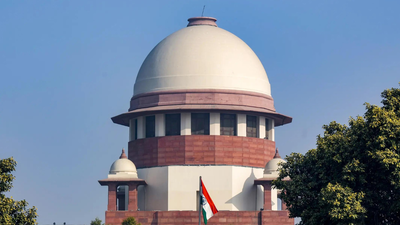
NEW DELHI: The Supreme Court on Tuesday held that a person who professes a religion other than Hinduism, Sikhism or Buddhism cannot be recognised as a member of a Scheduled Caste. The top court observed that conversion to any other religion results in the loss of such status.A bench of Justices PK Mishra and NV Anjaria upheld an Andhra Pradesh high court order, which had ruled that individuals who convert to Christianity and actively practise the faith cannot retain their Scheduled Caste (SC) status. The top court said the position is clearly laid down in the Constitution (Scheduled Castes) Order, 1950 and the bar on recognition is absolute.The court observed that any person who does not profess one of the religions specified under Clause 3 of the 1950 Order ceases to be a member of a Scheduled Caste, regardless of birth. It added that such individuals cannot claim any statutory benefit, protection, reservation or entitlement available to Scheduled Castes under the Constitution or any law enacted by Parliament or state legislatures, according to Live Law. Emphasising the scope of the law, the bench said a person cannot simultaneously practise a religion not listed in the 1950 Order and claim Scheduled Caste status. “No statutory benefit, protection or reservation or entitlement under the Constitution or enactment of Parliament or state legislature can be claimed by or extended to any person who, by operation of clause 3, is not deemed to be a member of the Scheduled Caste. This bar is absolute and admits no exception. A person can’t simultaneously profess and practice a religion other than the one specified in clause 3 and claim membership of the Scheduled caste,” the Court held.The ruling came in a case involving a man who had converted to Christianity and was working as a pastor, but had filed a complaint under the Scheduled Castes and Scheduled Tribes (Prevention of Atrocities) Act, alleging assault and caste-based abuse. The accused challenged the case, arguing that the complainant was no longer entitled to protection under the Act after conversion.The apex body observed that evidence showed the complainant had continued to practise Christianity for over a decade and was conducting regular prayer meetings at the time of the alleged incident.It said there was no claim or proof of reconversion to his original religion or re-acceptance into his caste community.Agreeing with the high court, the top court held that the caste system is alien to Christianity and, therefore, a person professing the religion cannot invoke provisions of the SC/ST Act. It also clarified that the mere possession or non-cancellation of a caste certificate does not entitle a person to claim Scheduled Caste benefits after conversion, adding that such issues must be dealt with by the competent authority under relevant law.


