
PUNE: Bronze Age traders crossing Gujarat stopped at well-organised roadside facilities that offered shelter, food, security and stables for their pack animals.A new multidisciplinary study by Pune-based Deccan College Post-Graduate and Research Institute, Symbiosis School for Liberal Arts, and Archaeological Survey of India (ASI), New Delhi, published in L’Anthropologie (Elsevier, 2025), has identified a 4,000-year-old Harappan settlement at Kotada Bhadli in Kutch as the earliest known caravanserai — a fortified rural stopover that supported long-distance trade between 2300 and 1900 BCE. The findings now push back the origins of organised trade infrastructure in the subcontinent by over 2,000 years.Lead researcher Prabodh Shirvalkar from Deccan College told TOI: “This is the first confirmed archaeological evidence of a caravanserai in the Harappan world — a type of infrastructure previously known only from later historical periods.”Excavated between 2010 and 2013 in collaboration with Gujarat State Archaeology Department, the site has now been reinterpreted using advanced techniques— including ground penetrating radar, magnetic and satellite surveys, isotopic and lipid analyses, and three forms of dating, Shirvalkar added.Researchers, including Esha Prasad and Yadubirsingh Rawat, said the finding bridges a key missing link in the trade mechanism of the Indus Valley Civilization, revealing how long-distance overland trade was supported by an organised system of rest stops and logistical hubs — a structure previously thought to have emerged only in the early historic or medieval periods.While the existence of Harappan trade with Mesopotamia and inland India is well-established, the mechanism of how merchants, animals and goods actually moved across land remained unclear. The new study proposes that Harappan commerce depended on a network of small fortified stopovers, strategically placed along trade routes between urban centres like Dholavira, Lothal and Shikarpur in Gujarat.Earlier excavations revealed a multi-roomed central building, fortified walls with bastions, and large open spaces that were likely used to hold animals and goods — all consistent with a caravanserai’s layout.Shirvalkar added that the site was small, strategically placed and fortified, but non-urban — designed for short halts rather than permanent residence. By identifying caravanserai-like traits — fortification, animal pens, open spaces, food waste and imported goods — the paper said that Harappans maintained an organised trade infrastructure two millennia before the Silk Route.“The Harappan economy was not just about city markets and ports like Dholavira or Lothal. It had a logistical backbone. Caravanserais that sustained traders on long inland routes,” Shirvalkar said.About the AuthorNeha MadaanNeha Madaan is a senior feature writer at The Times of India, Pune. She holds an M A degree in Mass Communication and Journalism from University of Pune. She covers tourism, heritage development and its conservation, apart from an array of subjects such as civic issues, environment, astronomy, civic school education as well as social issues concerning persons with disabilities. Her interests include metaphysical research and animal rights.Read MoreEnd of ArticleFollow Us On Social MediaVideosLokpal Floats Tender For 7 Luxury BMW Cars, Request Sparks Massive OutrageDiwali Festival Village Draws Massive Crowds in Singapore’s Little IndiaIndia Upgrades Technical Mission In Kabul To Full Embassy After Afghan FM Muttaqi’s Delhi VisitUS State Secy Marco Rubio Faces Backlash For Omitting Hindus In Diwali GreetingsIndian-Origin Navjot Singh’s Heartbreaking Struggle Against Deportation To A Country He Doesn’t KnowPolitics Heats Up Over Namaz At Pune’s Shaniwarwada Fort, 3 Women BookedPragya Thakur Says Parents Should Beat Daughters Who Marry Or Meet Non-Hindus‘Evidence Clear’: Afghanistan Condemns Pakistan Over Airstrike That Killed 3 Players in Paktika”Congress Only Party To Respect Him…” Pappu Yadav Alleges BJP Sidelining Nitish Kumar in NDAPakistan PM Shehbaz Sharif Wished Hindus On Diwali, Faces Social Media Backlash Over Hypocrisy123 Photostories Why everyone’s talking about Ananya Panday and her unstoppable riseTop Harvard doctor debunks 8 myths about seeds8 breathtaking sunset points around the world one must see once in lifetimeAQI worsens post Diwali: 7 herbs and spices that may helpHigh uric acid and kidney stones: 5 warning signs you shouldn’t ignoreWhy Sadhguru recommends consuming 40-50% of daily food rawFrom Tejasswi Prakash’s festive glow to Ankita Lokhande’s family celebration: A glimpse into TV stars’ Diwali 20257 foods that quietly help you fall asleep7 meaningful Indian names for baby boys starting with letter “P”5 high-fiber foods to combine with cauliflower and easy dishes123Hot PicksDhanteras Gold PriceVande Bharat SleeperBihar Election 2025Gold rate todaySilver rate todayPublic Holidays OctoberBank Holidays OctoberTop TrendingDaniel Naroditsky Cause of DeathLamar JacksonAdam SandlerKevin DurantKlay Thompson GirlfriendStephen CurryLeBron JamesLuka DoncicConor Mcgregor and Dee Devlin Net WorthAuston Matthews
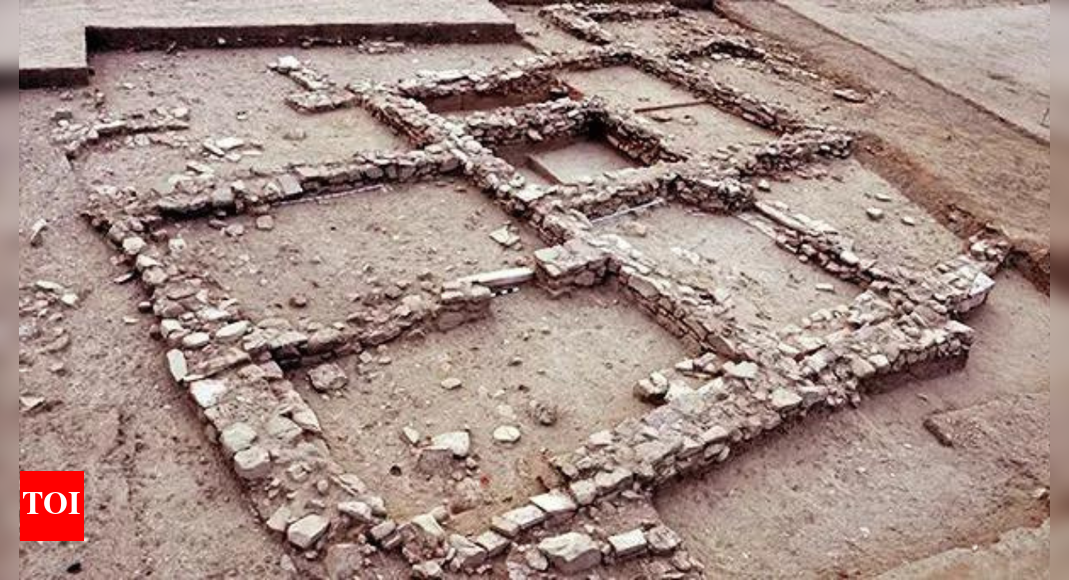
PUNE: Bronze Age traders crossing Gujarat stopped at well-organised roadside facilities that offered shelter, food, security and stables for their pack animals.A new multidisciplinary study by Pune-based Deccan College Post-Graduate and Research Institute, Symbiosis School for Liberal Arts, and Archaeological Survey of India (ASI), New Delhi, published in L’Anthropologie (Elsevier, 2025), has identified a 4,000-year-old Harappan settlement at Kotada Bhadli in Kutch as the earliest known caravanserai — a fortified rural stopover that supported long-distance trade between 2300 and 1900 BCE. The findings now push back the origins of organised trade infrastructure in the subcontinent by over 2,000 years.Lead researcher Prabodh Shirvalkar from Deccan College told TOI: “This is the first confirmed archaeological evidence of a caravanserai in the Harappan world — a type of infrastructure previously known only from later historical periods.”Excavated between 2010 and 2013 in collaboration with Gujarat State Archaeology Department, the site has now been reinterpreted using advanced techniques— including ground penetrating radar, magnetic and satellite surveys, isotopic and lipid analyses, and three forms of dating, Shirvalkar added.Researchers, including Esha Prasad and Yadubirsingh Rawat, said the finding bridges a key missing link in the trade mechanism of the Indus Valley Civilization, revealing how long-distance overland trade was supported by an organised system of rest stops and logistical hubs — a structure previously thought to have emerged only in the early historic or medieval periods.While the existence of Harappan trade with Mesopotamia and inland India is well-established, the mechanism of how merchants, animals and goods actually moved across land remained unclear. The new study proposes that Harappan commerce depended on a network of small fortified stopovers, strategically placed along trade routes between urban centres like Dholavira, Lothal and Shikarpur in Gujarat.Earlier excavations revealed a multi-roomed central building, fortified walls with bastions, and large open spaces that were likely used to hold animals and goods — all consistent with a caravanserai’s layout.Shirvalkar added that the site was small, strategically placed and fortified, but non-urban — designed for short halts rather than permanent residence. By identifying caravanserai-like traits — fortification, animal pens, open spaces, food waste and imported goods — the paper said that Harappans maintained an organised trade infrastructure two millennia before the Silk Route.“The Harappan economy was not just about city markets and ports like Dholavira or Lothal. It had a logistical backbone. Caravanserais that sustained traders on long inland routes,” Shirvalkar said.


