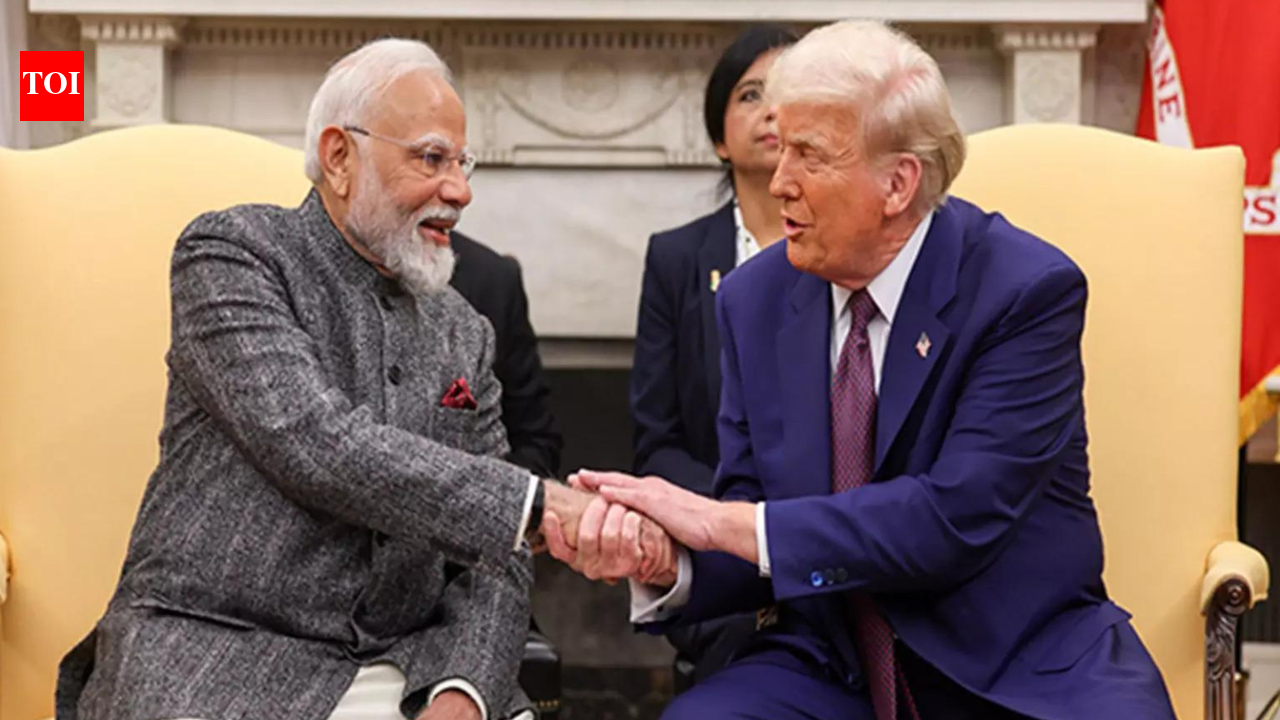
Prime Minister Narendra Modi with US President Donald Trump (File photo) The received wisdom in Washington circles has been that Pakistan has ‘played’ Donald Trump better than its Indian counterpart. This has included praising Donald Trump to high heavens at every turn, nominating him for the Nobel Peace Prize with every breath, offering him (snake?) oil, and in general agreeing to anything including joining the Board of Peace. Perhaps, Pakistan felt it had returned to its older role of indispensable intermediary as New Delhi remained the insouciant child who refused to bow to Trump’s diktats. Overnight, the illusion shattered as Trump announced the US had reached a trade agreement with India lowering tariffs on India’s exports to 18%. While most of the details about the deal are still being worked out, that didn’t stop a full-blown meltdown on Pakistani (or South Asian) Twitter.One viral tweet summed up the mood: “Mover, shaker, and beggars.”That line became a shorthand for something deeper than trade arithmetic. The reaction in Pakistan was not about supply chains or tariff schedules. It was about hierarchy.The online reckoningThe first wave of reactions was disbelief. Then came sarcasm. Then came something closer to anger, much of it directed inward. Pakistani social media users began listing, almost ritualistically, the many ways Islamabad had publicly courted Trump. The Nobel Peace Prize nomination resurfaced again and again, often framed as a punchline. So did Pakistan’s enthusiastic endorsement of Trump’s various peace initiatives and grand visions.A widely circulated post laid it out bluntly: Pakistan did everything to please Trump, including nominating him for the Nobel Peace Prize, joining his “Board of Peace”, and offering cooperation on minerals. Yet India, which spent months resisting Trump’s pressure, ended up with a lower tariff rate. To make matters worse, users pointed out, India had also just secured major trade concessions with the European Union.The tone shifted quickly from disbelief to gallows humour. One viral image showed Prime Minister Shehbaz Sharif and Army Chief Asim Munir holding up an AI-styled magazine cover featuring Modi and Trump, both leaders pointing at the image as if presenting evidence of a reality they could not alter. The accompanying Urdu caption roughly translated to: “Asim Munir is stuck between them… the world has moved on.”Across Facebook and Instagram, memes treated the 18% versus 19% tariff gap like a scoreboard. Comment threads were filled with variations of the same lament: how did bending over backwards still lead to being sidelined? Why did obedience not translate into leverage?Even YouTube reaction videos, often noisy and incoherent, showed an unusual convergence. Commenters questioned the entire premise of Pakistan’s Trump strategy. If this was the payoff for flattery, many asked, what exactly had been achieved?Why this cut so deepPM Modi and TrumpFor months, Pakistan’s elite discourse had convinced itself that India-US relations were deteriorating while Pakistan-US ties were stabilising. Trump’s public irritation with India was misread as strategic rupture. Pakistan’s warmth was read as influence. Proximity was mistaken for power.The trade deal punctured that narrative decisively. What Pakistan’s discourse missed was that India’s apparent indifference was not neglect. It was posture.New Delhi did not merely refuse to flatter Trump; it actively declined to participate in his theatre. Reporting through last year showed that as tariff tensions escalated, India chose distance over desperation. At the height of the standoff, international media reported that Prime Minister Narendra Modi declined to take multiple phone calls from Trump, an almost unheard-of move in the choreography of great-power diplomacy. Silence, in this case, was not accidental. It was communicative.That frostiness surfaced more clearly in what would become the last direct exchange between the two leaders. According to reporting by The New York Times, a June phone call turned sour when Trump claimed credit for de-escalating tensions between India and Pakistan and floated the familiar Nobel Peace Prize rhetoric. New Delhi pushed back firmly, insisting that India and Pakistan had managed matters bilaterally, without US mediation. After that call, the two leaders did not speak again for months.That, in hindsight, is what makes the trade deal so destabilising for Pakistan’s narrative. India did not win by courting Trump better. It won by not courting him at all.About the AuthorTOI News DeskThe TOI News Desk comprises a dedicated and tireless team of journalists who operate around the clock to deliver the most current and comprehensive news and updates to the readers of The Times of India worldwide. With an unwavering commitment to excellence in journalism, our team is at the forefront of gathering, verifying, and presenting breaking news, in-depth analysis, and insightful reports on a wide range of topics. The TOI News Desk is your trusted source for staying informed and connected to the ever-evolving global landscape, ensuring that our readers are equipped with the latest developments that matter most.”Read MoreEnd of ArticleFollow Us On Social MediaVideos’Insulted Sikh Community’: Hardeep Puri Slams Rahul Gandhi Over ‘Traitor’ Remark At Ravneet BittuRahul Gandhi Defends Naravane Memoir Quotes, Priyanka Questions Nishikant Dubey Quotes On Nehru’Justice Is Crying…’: Mamata Banerjee Takes EC Head On In Supreme Court Over SIR Row In Bengal‘Combatise Space Command…L1 Needs To Go.’: Expert Stresses Defence Reforms After Budget 2026India-US Trade Deal Vs India-EU FTA: Which Agreement Delivers Bigger Exports Jobs And GrowthKorean ‘Love Game’ Under Lens After Ghaziabad Sisters Suicide Raises Alarm On Digital AddictionPolitical Storm Erupts As Rahul Gandhi, Ravneet Bittu Clash, Cong Targets PM Modi On Epstein FilesPiyush Goyal Defends India-US Trade Deal in Lok Sabha, Says Farmers And Dairy Interests Fully Safe’Sorry Papa’: Suicide Note From Three Sisters In Ghaziabad Triggers Debate On Gaming AddictionMamata Banerjee Takes SIR Battle Against Election Commission To Supreme Court, Openly Challenges BJP123Photostories5 most expensive buildings from across the world and why they cost so muchMumbai–Pune Expressway turns parking lot as vehicles remain stuck for 12 hoursThis Royal in Asia owns 7000 luxury vehicles including 500 Rolls-Royce, 450 Ferraris and 380 BentleysRosa Parks once said, “I have learned over the years that when one’s mind is made up…”: 5 lessons it teaches students10 regional potato dishes that are a must-try once in a lifetime5 OTT hits of 2026 that created a massive buzz and had everyone talkingNot just potato: 9 types of popular fillings that make samosa a true food lover’s delightGaming addiction, school dropout, isolation: Key details in Ghaziabad-Loni sisters’ death caseBengaluru plans 800-metre flyover to decongest Iblur Junction; ORR travel time to dropIs your rice real? Simple home checks for “plastic rice” and 5 recipes to try123Hot PicksBudget 2026Gold Silver PricesParliament Budget SessionRelationship consentIncome Tax CalculatorPublic holidays February 2026Bank Holidays februaryTop TrendingArtemi PanarinMLB Trade RumorsAyesha CurryKayla NicoleNHL Injury UpdatePuka NacuaRussell WilsonDenver Nuggets vs Detroit PistonsNikola JokicGold Riyadh Players Ranking
The received wisdom in Washington circles has been that Pakistan has ‘played’ Donald Trump better than its Indian counterpart. This has included praising Donald Trump to high heavens at every turn, nominating him for the Nobel Peace Prize with every breath, offering him (snake?) oil, and in general agreeing to anything including joining the Board of Peace. Perhaps, Pakistan felt it had returned to its older role of indispensable intermediary as New Delhi remained the insouciant child who refused to bow to Trump’s diktats. Overnight, the illusion shattered as Trump announced the US had reached a trade agreement with India lowering tariffs on India’s exports to 18%. While most of the details about the deal are still being worked out, that didn’t stop a full-blown meltdown on Pakistani (or South Asian) Twitter.One viral tweet summed up the mood: “Mover, shaker, and beggars.”
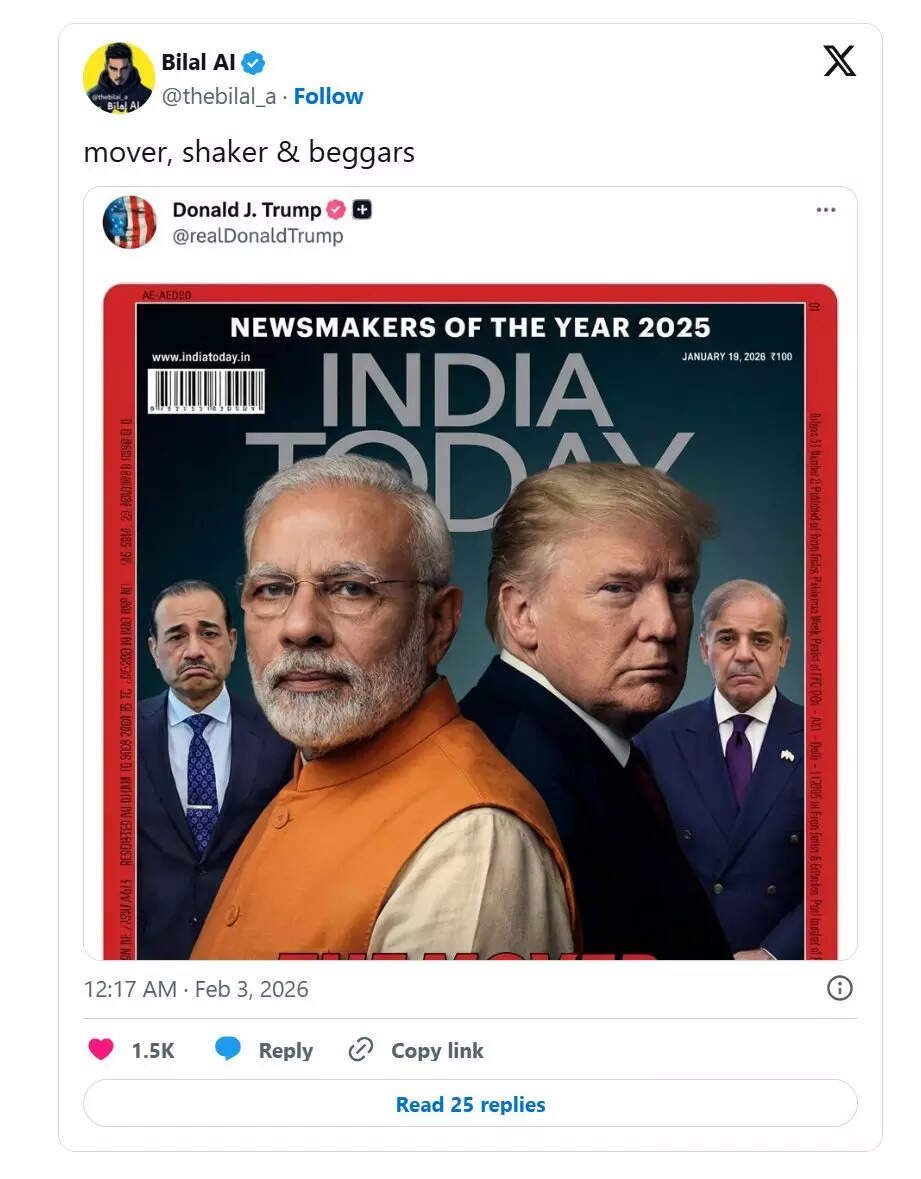
That line became a shorthand for something deeper than trade arithmetic. The reaction in Pakistan was not about supply chains or tariff schedules. It was about hierarchy.
The online reckoning
The first wave of reactions was disbelief. Then came sarcasm. Then came something closer to anger, much of it directed inward. Pakistani social media users began listing, almost ritualistically, the many ways Islamabad had publicly courted Trump. The Nobel Peace Prize nomination resurfaced again and again, often framed as a punchline. So did Pakistan’s enthusiastic endorsement of Trump’s various peace initiatives and grand visions.A widely circulated post laid it out bluntly: Pakistan did everything to please Trump, including nominating him for the Nobel Peace Prize, joining his “Board of Peace”, and offering cooperation on minerals. Yet India, which spent months resisting Trump’s pressure, ended up with a lower tariff rate. To make matters worse, users pointed out, India had also just secured major trade concessions with the European Union.The tone shifted quickly from disbelief to gallows humour. One viral image showed Prime Minister Shehbaz Sharif and Army Chief Asim Munir holding up an AI-styled magazine cover featuring Modi and Trump, both leaders pointing at the image as if presenting evidence of a reality they could not alter. The accompanying Urdu caption roughly translated to: “Asim Munir is stuck between them… the world has moved on.”Across Facebook and Instagram, memes treated the 18% versus 19% tariff gap like a scoreboard. Comment threads were filled with variations of the same lament: how did bending over backwards still lead to being sidelined? Why did obedience not translate into leverage?Even YouTube reaction videos, often noisy and incoherent, showed an unusual convergence. Commenters questioned the entire premise of Pakistan’s Trump strategy. If this was the payoff for flattery, many asked, what exactly had been achieved?
Why this cut so deep
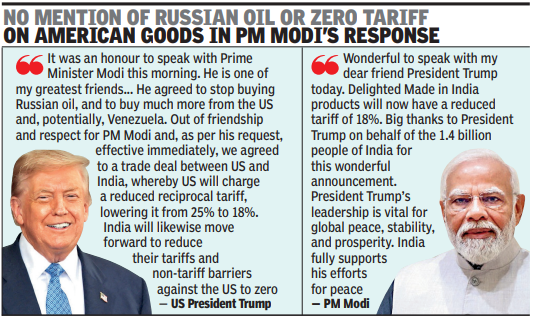
PM Modi and Trump
For months, Pakistan’s elite discourse had convinced itself that India-US relations were deteriorating while Pakistan-US ties were stabilising. Trump’s public irritation with India was misread as strategic rupture. Pakistan’s warmth was read as influence. Proximity was mistaken for power.The trade deal punctured that narrative decisively. What Pakistan’s discourse missed was that India’s apparent indifference was not neglect. It was posture.New Delhi did not merely refuse to flatter Trump; it actively declined to participate in his theatre. Reporting through last year showed that as tariff tensions escalated, India chose distance over desperation. At the height of the standoff, international media reported that Prime Minister Narendra Modi declined to take multiple phone calls from Trump, an almost unheard-of move in the choreography of great-power diplomacy. Silence, in this case, was not accidental. It was communicative.That frostiness surfaced more clearly in what would become the last direct exchange between the two leaders. According to reporting by The New York Times, a June phone call turned sour when Trump claimed credit for de-escalating tensions between India and Pakistan and floated the familiar Nobel Peace Prize rhetoric. New Delhi pushed back firmly, insisting that India and Pakistan had managed matters bilaterally, without US mediation. After that call, the two leaders did not speak again for months.That, in hindsight, is what makes the trade deal so destabilising for Pakistan’s narrative. India did not win by courting Trump better. It won by not courting him at all.