
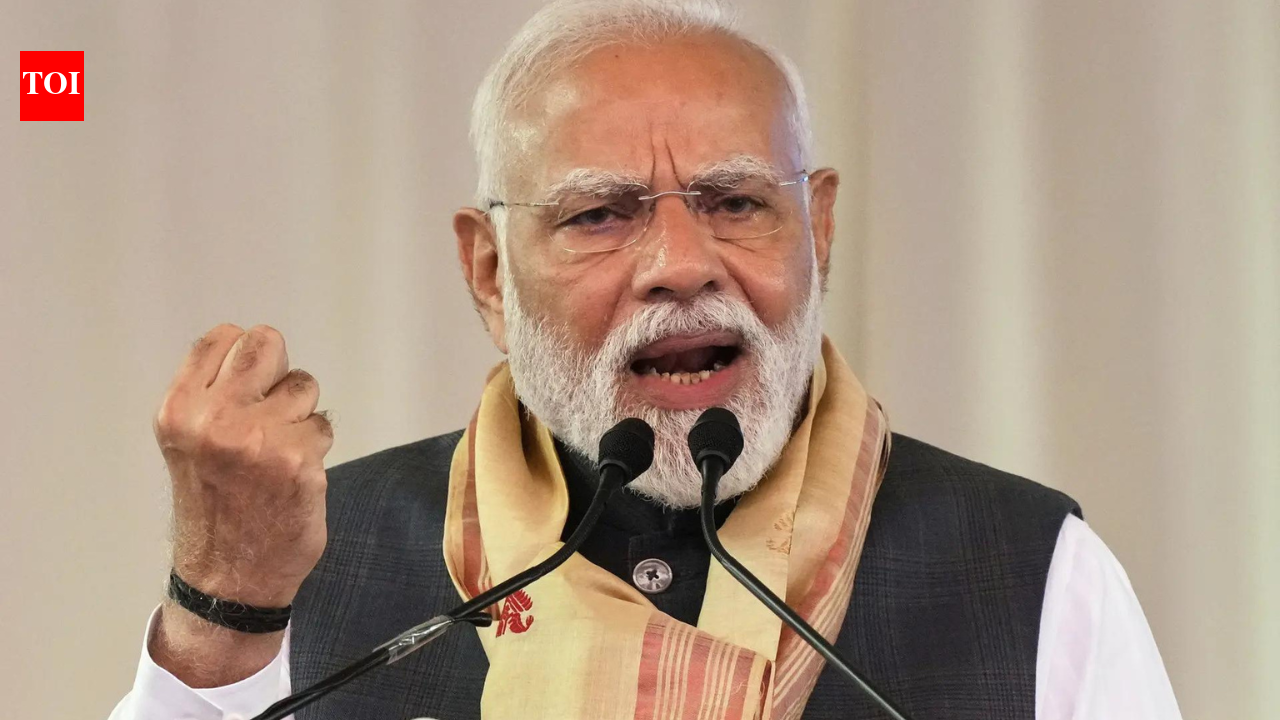
Prime Minister Narendra Modi (AP image) NEW DELHI: Prime Minister Narendra Modi on Sunday outlined India’s reform priorities for the next decade, asserting that his government’s “Reform Express” has delivered systemic transformation and benefitted common citizens in a significant way.In an interview to PTI, PM Modi said that his top three reform priorities for the coming decade will be continued structural reforms, deeper innovation and further simplification of governance, as India moves towards the goal of a “Viksit Bharat”. ‘New World Order Emerging, India Ready To Lead As Global Growth Engine’, Says PM Modi At ET Summit Asserting that his government’s reform push has moved beyond incremental changes, PM Modi said, “Reform is the commitment of this government, something we have shown in letter and spirit. I am proud to say that we have moved from incremental adjustments to systemic transformation.”When asked to prioritise three economic reforms for the next decade, he said, “Our direction is clear, rather than limiting it to a fixed number.“First, we will continue structural reforms that improve competitiveness and productivity. Second, we will deepen innovation in technology, manufacturing and services. Third, we will simplify governance further so that citizens and businesses can operate with greater ease and trust,” he said.He said that India’s growth story is being shaped by fundamental changes in governance and economic policy. Highlighting the country’s digital transformation, PM Modi said, “India is a digital leader in the world made possible by fundamental reforms in how people transact via the UPI platform.”The prime minister also emphasised the role of data infrastructure in the coming years. “Data centres will be a massive job creator for our youth; we invite whole world’s data to reside in India,” he said.On infrastructure, PM Modi said that India is witnessing an unprecedented expansion. “India witnessing most expansive infra push in its history, built with future readiness in mind,” he told PTI, underlining that infrastructure development is being planned with long-term needs in focus.PM Modi also described productive capital expenditure as a hallmark of his government and said the latest Union Budget avoided short-term populism. Instead, it prioritised record capital outlays to create jobs and strengthen long-term growth.Also Read | ‘Focus less on margins’: PM Modi says private sector ‘critical’ for Viksit Bharat, offers strong advise – top quotesHe said that India’s goods exports have repeatedly broken earlier records in recent years, reflecting improved competitiveness and global integration.“Our national character has revealed itself even in challenging times; we are bright growth spot in difficult global circumstances,” he said, pointing to India’s resilience amid global economic uncertainty.On trade policy, the prime minister said that India’s free trade agreements are aimed at expanding opportunities for small businesses. “Our FTAs designed to expand market access for MSMEs in textile, leather, chemicals, handicrafts, gems and other sectors,” he said.Looking ahead, PM Modi stressed that the next leap towards a developed India will depend heavily on private sector participation. “Next leap to Viksit Bharat will depend on bold investment by pvt sector in innovation, long-term capacity, global competitiveness,” he said.He also underlined the role of women in India’s development journey. “It is my conviction that women will play the most important role in creating Viksit Bharat,” he said.Framing the broader vision, PM Modi said that the current policy direction should be seen as laying the foundation for long-term national goals. The reforms and investments being undertaken now, he suggested, are meant to prepare India for sustained growth over the next quarter-century.About the AuthorTOI News DeskThe TOI News Desk comprises a dedicated and tireless team of journalists who operate around the clock to deliver the most current and comprehensive news and updates to the readers of The Times of India worldwide. With an unwavering commitment to excellence in journalism, our team is at the forefront of gathering, verifying, and presenting breaking news, in-depth analysis, and insightful reports on a wide range of topics. The TOI News Desk is your trusted source for staying informed and connected to the ever-evolving global landscape, ensuring that our readers are equipped with the latest developments that matter most.”Read MoreEnd of ArticleFollow Us On Social MediaVideos“Active But Shut Out” Nafisa Raihana Over Low Women Nominations“Unfortunate ”: Oppn Targets India-Pak Match After Pahalgam, Delhi BlastsKarnataka: Two Killed In Chemical Tank Explosion At Kirti Chemicals In Mandya‘I Challenge Rahul Gandhi’: Amit Shah Slams Cong For ‘Misleading Farmers’ On India-US Trade Deal’India Wedded To Strategic Autonomy’: EAM Jaishankar After Marco Rubio’s Russian Oil ClaimIndian Student Saketh Sreenivasaiah Found Dead In U.S. Days After Going Missing In California‘Feels Like A Gas Chamber’: Yogi Adityanath’s Swipe At Delhi Over Pollution, Hails Gorakhpur’s AQIPM Modi Gets Invite For Tarique Rahman’s Swearing-In Ceremony In Bangladesh On February 17‘Got Assurance From India…’ Marco Rubio On Russian Oil After Trade DealIn Munich, Jaishankar Backs Multipolar Order, EU FTA And UNSC Reform, Calls For Agile Foreign Policy123Photostories8 Indian dishes that were once considered “poor man’s food” but are now premiumApple TV’s five must-watch sitcoms: ‘Bad Sisters,’ ‘Shrinking’ and moreWhat is a convertible car? Features, types and 5 key facts every buyer should knowShahid Kapoor, Shah Rukh Khan, Varun Dhawan: Actors who turned grey on screen and left audiences stunnedFrom Ram Kapoor to Sakshi Tanwar, Ronit Roy and more – TV celebrities who own lavish propertiesMumbai’s Bandra east skywalk opens: 680m elevated link to BKC, western express highwayShahid Kapoor-Kareena Kapoor to Ranbir Kapoor-Deepika Padukone: Bollywood exes who reunited on screen after break upRajpal Yadav, Salman Khan, Ranveer Singh: A look at Bollywood’s ongoing legal storms5 important rivers that pass through Indian national parks7 protein-rich air fryer snacks under 200 calories123Hot PicksIT Stocks CrashGold Silver PricesBangladesh Election ResultsTelangana Municipal Elections ResultsIncome Tax CalculatorPublic holidays February 2026Bank Holidays februaryTop TrendingPatrick MahomesBad BunnyJosh MorrisseyJutta LeerdamAuston MatthewsKayla NicoleAnthony JoshuaChris PaulDarron LeeKyle Busch Net Worth
NEW DELHI: Prime Minister Narendra Modi on Sunday outlined India’s reform priorities for the next decade, asserting that his government’s “Reform Express” has delivered systemic transformation and benefitted common citizens in a significant way.In an interview to PTI, PM Modi said that his top three reform priorities for the coming decade will be continued structural reforms, deeper innovation and further simplification of governance, as India moves towards the goal of a “Viksit Bharat”.
Asserting that his government’s reform push has moved beyond incremental changes, PM Modi said, “Reform is the commitment of this government, something we have shown in letter and spirit. I am proud to say that we have moved from incremental adjustments to systemic transformation.”When asked to prioritise three economic reforms for the next decade, he said, “Our direction is clear, rather than limiting it to a fixed number.“First, we will continue structural reforms that improve competitiveness and productivity. Second, we will deepen innovation in technology, manufacturing and services. Third, we will simplify governance further so that citizens and businesses can operate with greater ease and trust,” he said.He said that India’s growth story is being shaped by fundamental changes in governance and economic policy. Highlighting the country’s digital transformation, PM Modi said, “India is a digital leader in the world made possible by fundamental reforms in how people transact via the UPI platform.”The prime minister also emphasised the role of data infrastructure in the coming years. “Data centres will be a massive job creator for our youth; we invite whole world’s data to reside in India,” he said.On infrastructure, PM Modi said that India is witnessing an unprecedented expansion. “India witnessing most expansive infra push in its history, built with future readiness in mind,” he told PTI, underlining that infrastructure development is being planned with long-term needs in focus.PM Modi also described productive capital expenditure as a hallmark of his government and said the latest Union Budget avoided short-term populism. Instead, it prioritised record capital outlays to create jobs and strengthen long-term growth.Also Read | ‘Focus less on margins’: PM Modi says private sector ‘critical’ for Viksit Bharat, offers strong advise – top quotesHe said that India’s goods exports have repeatedly broken earlier records in recent years, reflecting improved competitiveness and global integration.“Our national character has revealed itself even in challenging times; we are bright growth spot in difficult global circumstances,” he said, pointing to India’s resilience amid global economic uncertainty.On trade policy, the prime minister said that India’s free trade agreements are aimed at expanding opportunities for small businesses. “Our FTAs designed to expand market access for MSMEs in textile, leather, chemicals, handicrafts, gems and other sectors,” he said.Looking ahead, PM Modi stressed that the next leap towards a developed India will depend heavily on private sector participation. “Next leap to Viksit Bharat will depend on bold investment by pvt sector in innovation, long-term capacity, global competitiveness,” he said.He also underlined the role of women in India’s development journey. “It is my conviction that women will play the most important role in creating Viksit Bharat,” he said.Framing the broader vision, PM Modi said that the current policy direction should be seen as laying the foundation for long-term national goals. The reforms and investments being undertaken now, he suggested, are meant to prepare India for sustained growth over the next quarter-century.


