
NEW DELHI: West Bengal’s 2026 assembly election is, on the surface, unfolding along familiar lines. Mamata Banerjee is once again at the centre of a fiercely polarised contest, taking on the BJP, which is determined to convert its 2021 surge into power. The themes are well-rehearsed: welfare versus governance, regional identity versus national leadership, Banerjee versus Narendra Modi. Yet beneath this recognisable script, there is a quieter shift that may prove just as consequential. This time, Banerjee is fighting a major election without Prashant Kishor in her corner.In 2021, Kishor’s role went far beyond that of a consultant. Through I-PAC, he helped transform the Trinamool Congress campaign into a tightly calibrated machine, combining granular data with sharp political messaging. Programmes like “Didi Ke Bolo” did not just amplify Banerjee’s connect with voters; they structured it, turning feedback into policy and narrative into momentum. That architecture was central to the scale of her victory.Although I-PAC remains the TMC’s strategic consulting partner in 2026, the scaffolding from the last time is no longer as visible.The question, then, is not whether Banerjee can still win without Kishor. It is whether the absence of that strategic layer changes how close this election becomes. A high-pitched campaignWith elections set for April 23 and 29, 2026, and results due on May 4, West Bengal’s main contest is shaping up as a straight TMC vs BJP fight, complicated by Congress and other regional players. Mamata Banerjee challenged her party to achieve a two-thirds majority, declaring, “We will win more than 226 seats in the 2026 assembly polls.” The TMC plans to contest 291 of 294 seats, ceding only three Darjeeling Hill seats to allied BGPM. Mamata herself will contest from Bhabanipur once again against BJP rival Suvendu Adhikari; Suvendu is also contesting Nandigram. The candidate list, announced On March 17, includes many familiar leaders (Madhuja, Madan Mitra, Firhad Hakim, etc.) and emphasises broad representation (52 women, 95 SC/ST). Mamata remains confident: “We will win more than 226 seats,” and the campaign will accommodate those left off the ticket.The BJP has tempered its 2021 ambition but remains aggressive. Since Amit Shah’s “200 paar” slogan backfired in 2021, he set a 170-seat goal for Bengal in April 2026. Speaking at a Kolkata rally, he said, “We will win seats one after another and push the number to 170. The change will come after that.”The BJP is playing on anti-incumbency and promises of “freedom from fear” under Prime Minister Narendra Modi, highlighting issues like law and order and jobs. High-stakes showdowns (Mamata vs Suvendu) and battle for symbolic seats (Nandigram, Bhabanipur) are major themes.Key campaign strategies echo 2021. TMC continues door-to-door outreach and welfare messaging: its past “Didi Ke Bolo” grievance-mapping and launch of schemes like Lakshmir Bhandar remain part of its playbook. On the ground, TMC says it has reactivated booth-level agents (BLAs) to counter voter list revisions ahead of the special revision (SIR) of rolls. The BJP is focusing on high-voltage rallies and polarisation in urban and Hindu-majority areas. Both sides are expected to canvas heavily until polling, with ban on central forces likely minimal given the two-phase schedule. The I-PAC raidsA dramatic episode in January, before the campaign formally gathered pace, set the tone for what was to follow. The Enforcement Directorate raided the Kolkata offices of I-PAC and the home of its chief, Pratik Jain, citing a 2020 money laundering probe linked to a coal scam. The Trinamool Congress rejected that explanation outright. Mamata Banerjee accused the BJP of using central agencies to access campaign strategy, alleging that sensitive documents and candidate lists were the real target, and pointed the finger at Union Home Minister Amit Shah.The confrontation escalated swiftly. According to the ED, officials were carrying out a routine search until Banerjee arrived with state police and removed material they described as key evidence. Banerjee dismissed the action as a “vendetta crime” and turned the raids into an early political flashpoint. She led a protest in Kolkata the next day, accusing the Centre of misusing investigative agencies, while party leaders claimed ED officials had attempted to access internal party data.The BJP and the ED have maintained their legal position, accusing Banerjee of obstructing an investigation. The Supreme Court later cautioned the Bengal government, urging it to consider the rights of ED officers and warning against setting a precedent that could affect other states.What happened in 2021The 2021 assembly election marked the moment the BJP emerged as a serious challenger in West Bengal, expanding from the margins to win 77 seats and nearly 38% of the vote. Yet the election ultimately reaffirmed Mamata Banerjee’s dominance. The Trinamool Congress secured 213 seats, converting a high-pitched, polarised contest into a decisive victory. That outcome owed as much to campaign structure as to political instinct. Under Prashant Kishor and I-PAC, the TMC ran a tightly managed operation that combined voter outreach with real-time feedback. Initiatives like Didi Ke Bolo functioned less as messaging tools and more as data systems, feeding local grievances directly into campaign strategy and welfare promises. The BJP’s surge showed the scale of the challenge. The TMC’s response showed how effectively it could be managed..Will Mamata Banerjee miss Prashant Kishor?This time, there is a quiet, strategic absence in the background. No Prashant Kishor, who has since launched his Jan Suraaj Party in Bihar, won zero seats in the recent assembly polls. In 2021, Kishor was not just a consultant. He was the unseen architect of a campaign that turned the Trinamool Congress from a party under siege into one that swept back to power with authority.About the AuthorVivek DubeyA digital news desk journalist at The Times of India with over two years of experience. Closely tracks foreign affairs and international politics. Fondness for precise language and clever headlines. When not editing news, he is usually refining a turn of phrase.Read MoreEnd of ArticleFollow Us On Social MediaVideosJustice Yashwant Varma Resigns Amid Cash Row — Why He Stepped Down On Day Of Impeachment Defence’Win A War Without Firing?’ CDS Anil Chauhan Explains Shift From Battlefield To Perception WarfareExercise Brahmastra: Indian army’s first firing from the AH-64E Apache attack helicoptersMarco Rubio’s India Visit Next Month After Talks With Vikram Misri in WashingtonTelangana HC Grants Pawan Khera One Week Bail In FIR By Himanta Sarma’s WifePunjabi Influencer Kamal Kaur’s Murder: Punjab Police Arrest Main Accused Amritpal Singh MehronIndian Army Clears Brigadier Post For Col Shrikant Purohit After Acquittal In Malegaon Blast Case’Love Jihad Or Law Violation?’ Viral Kumbh Girl Monalisa Bhosle Case Raises Serious Legal QuestionsIndia–US Trade Deal Enters Final Phase; Delegation Set for Washington VisitAnother Embarrassment For Pak; Israel Blasts Asif Over ‘Annihilation’ Remark Ahead Of Iran-US Talks123PhotostoriesChild’s roti and sugar for school lunch goes viral: 13 school tiffin meals that all 90s kids can relate to10 stunning gates that reflect the beauty of Indian architectureThat constant throat clearing isn’t just a habit: What it could reveal about acid reflux and how to manage itBest TV mystery and thriller series: ‘Sherlock’, ‘Line of Duty’, ‘Dexter’ and moreKangana Ranaut, Amitabh Bachchan, Jaya Bachchan to Hema Malini: Bollywood celebrities who stepped into politicsFrom theatre roots to ‘Dhurandhar: The Revenge’, how Rakesh Bedi became the surprise scene-stealerFlyovers, U-turns, parallel roads: Why Delhi’s Aurobindo Marg needs urgent fixKey safety upgrades for Pune’s Rakshak Chowk flyover before inaugurationThese 90s TV characters are still everyone’s favorite: Rachel Green, Mr. Bean and more5 dog breeds known for unmatched loyalty: From Akita to Chihuahua123Hot PicksIran war ceasefirePAN Card application 2026Purple cap winnerOrange cap winnerIPL Points TablePublic holidays April 2026Bank Holidays AprilTop TrendingVijayKerala Missing StudentTiger WoodsTelangana Triple MurderUS stock marketPAN Card application 2026Bhojshala disputeLaker Injury UpdatesSchool Holidays in AprilChar Dham Yatra 2026

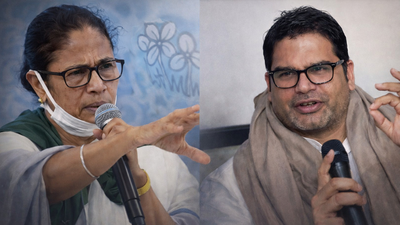
NEW DELHI: West Bengal’s 2026 assembly election is, on the surface, unfolding along familiar lines. Mamata Banerjee is once again at the centre of a fiercely polarised contest, taking on the BJP, which is determined to convert its 2021 surge into power. The themes are well-rehearsed: welfare versus governance, regional identity versus national leadership, Banerjee versus Narendra Modi. Yet beneath this recognisable script, there is a quieter shift that may prove just as consequential. This time, Banerjee is fighting a major election without Prashant Kishor in her corner.In 2021, Kishor’s role went far beyond that of a consultant. Through I-PAC, he helped transform the Trinamool Congress campaign into a tightly calibrated machine, combining granular data with sharp political messaging. Programmes like “Didi Ke Bolo” did not just amplify Banerjee’s connect with voters; they structured it, turning feedback into policy and narrative into momentum. That architecture was central to the scale of her victory.Although I-PAC remains the TMC’s strategic consulting partner in 2026, the scaffolding from the last time is no longer as visible.The question, then, is not whether Banerjee can still win without Kishor. It is whether the absence of that strategic layer changes how close this election becomes.
A high-pitched campaign
With elections set for April 23 and 29, 2026, and results due on May 4, West Bengal’s main contest is shaping up as a straight TMC vs BJP fight, complicated by Congress and other regional players. Mamata Banerjee challenged her party to achieve a two-thirds majority, declaring, “We will win more than 226 seats in the 2026 assembly polls.” The TMC plans to contest 291 of 294 seats, ceding only three Darjeeling Hill seats to allied BGPM. Mamata herself will contest from Bhabanipur once again against BJP rival Suvendu Adhikari; Suvendu is also contesting Nandigram.
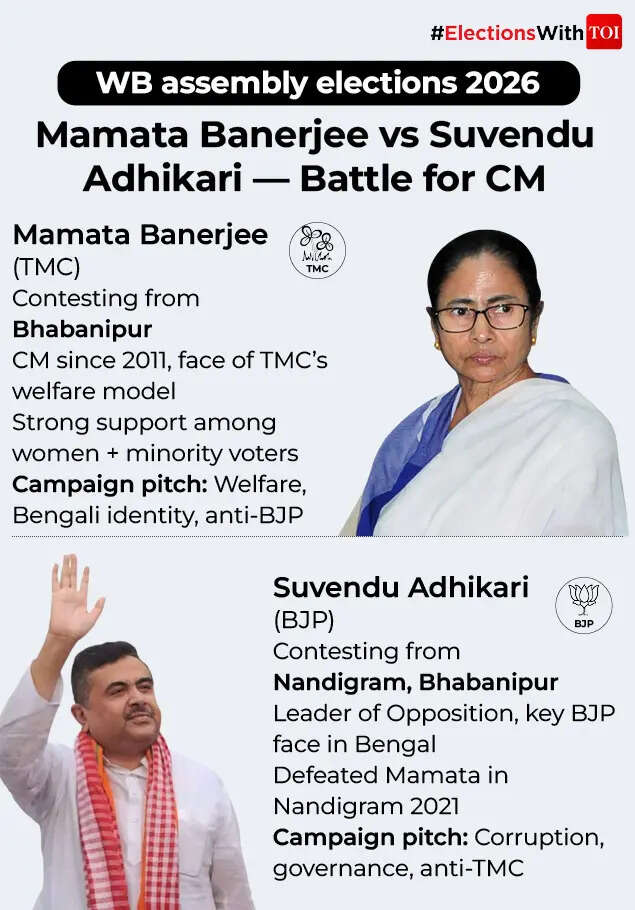
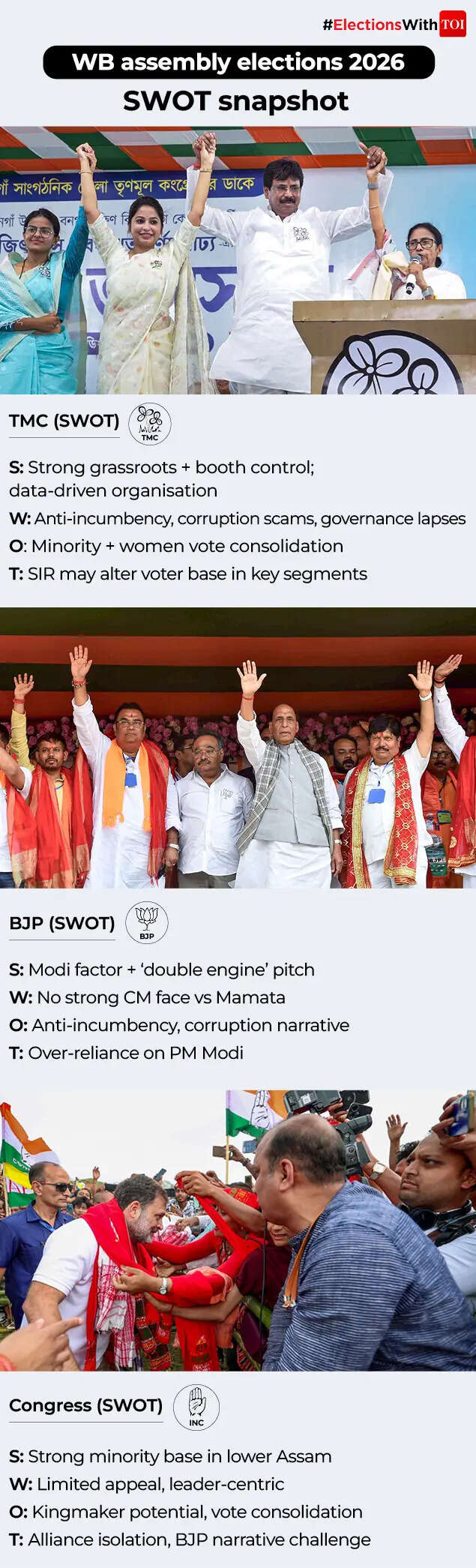
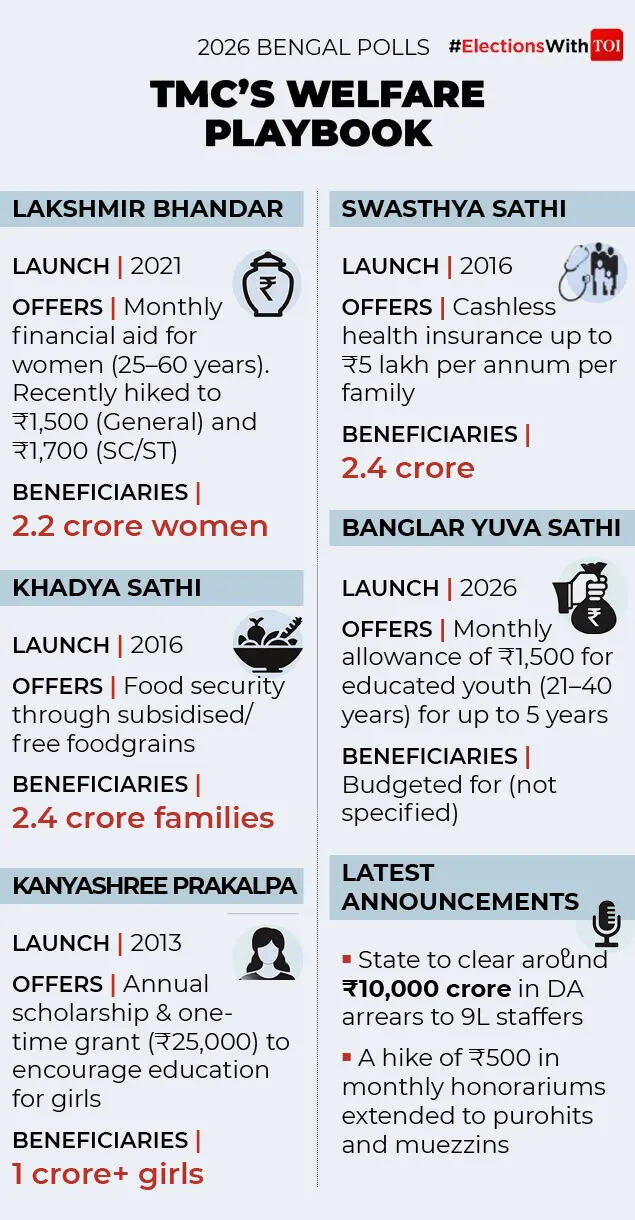
The candidate list, announced On March 17, includes many familiar leaders (Madhuja, Madan Mitra, Firhad Hakim, etc.) and emphasises broad representation (52 women, 95 SC/ST). Mamata remains confident: “We will win more than 226 seats,” and the campaign will accommodate those left off the ticket.The BJP has tempered its 2021 ambition but remains aggressive. Since Amit Shah’s “200 paar” slogan backfired in 2021, he set a 170-seat goal for Bengal in April 2026. Speaking at a Kolkata rally, he said, “We will win seats one after another and push the number to 170. The change will come after that.”The BJP is playing on anti-incumbency and promises of “freedom from fear” under Prime Minister Narendra Modi, highlighting issues like law and order and jobs. High-stakes showdowns (Mamata vs Suvendu) and battle for symbolic seats (Nandigram, Bhabanipur) are major themes.Key campaign strategies echo 2021. TMC continues door-to-door outreach and welfare messaging: its past “Didi Ke Bolo” grievance-mapping and launch of schemes like Lakshmir Bhandar remain part of its playbook. On the ground, TMC says it has reactivated booth-level agents (BLAs) to counter voter list revisions ahead of the special revision (SIR) of rolls. The BJP is focusing on high-voltage rallies and polarisation in urban and Hindu-majority areas. Both sides are expected to canvas heavily until polling, with ban on central forces likely minimal given the two-phase schedule.
The I-PAC raids
A dramatic episode in January, before the campaign formally gathered pace, set the tone for what was to follow. The Enforcement Directorate raided the Kolkata offices of I-PAC and the home of its chief, Pratik Jain, citing a 2020 money laundering probe linked to a coal scam. The Trinamool Congress rejected that explanation outright. Mamata Banerjee accused the BJP of using central agencies to access campaign strategy, alleging that sensitive documents and candidate lists were the real target, and pointed the finger at Union Home Minister Amit Shah.The confrontation escalated swiftly. According to the ED, officials were carrying out a routine search until Banerjee arrived with state police and removed material they described as key evidence. Banerjee dismissed the action as a “vendetta crime” and turned the raids into an early political flashpoint. She led a protest in Kolkata the next day, accusing the Centre of misusing investigative agencies, while party leaders claimed ED officials had attempted to access internal party data.The BJP and the ED have maintained their legal position, accusing Banerjee of obstructing an investigation. The Supreme Court later cautioned the Bengal government, urging it to consider the rights of ED officers and warning against setting a precedent that could affect other states.
What happened in 2021
The 2021 assembly election marked the moment the BJP emerged as a serious challenger in West Bengal, expanding from the margins to win 77 seats and nearly 38% of the vote. Yet the election ultimately reaffirmed Mamata Banerjee’s dominance. The Trinamool Congress secured 213 seats, converting a high-pitched, polarised contest into a decisive victory. That outcome owed as much to campaign structure as to political instinct. Under Prashant Kishor and I-PAC, the TMC ran a tightly managed operation that combined voter outreach with real-time feedback. Initiatives like Didi Ke Bolo functioned less as messaging tools and more as data systems, feeding local grievances directly into campaign strategy and welfare promises.
The BJP’s surge showed the scale of the challenge. The TMC’s response showed how effectively it could be managed..
Will Mamata Banerjee miss Prashant Kishor?
This time, there is a quiet, strategic absence in the background. No Prashant Kishor, who has since launched his Jan Suraaj Party in Bihar, won zero seats in the recent assembly polls. In 2021, Kishor was not just a consultant. He was the unseen architect of a campaign that turned the Trinamool Congress from a party under siege into one that swept back to power with authority.


![NEW DELHI: Congress president Mallikarjun Kharge on Friday claimed that the Narendra Modi-led government’s proposed move to amend the women’s reservation law and expand the number of parliamentary seats could violate the Model Code of Conduct and have “grave consequences”. He also asserted that the opposition will move unitedly on this.Addressing a meeting of the Congress Working Committee (CWC), Kharge said the issue required deeper consultation and that the opposition would respond collectively. “Therefore, following this meeting, we will formulate a collective strategy by holding discussions on these issues with our colleagues in the opposition as well. We will move forward unitedly,” Kharge was quoted as saying by news agency PTI.The Congress chief also questioned the timing of the special Parliament session scheduled from April 16 to 18, alleging it was aimed at political gain. “The Modi government is convening Parliament’s sittings with the sole intention of securing political advantage and is keen to pass the Constitutional Amendment Bill in utmost haste,” Kharge said.He noted that the proposed amendments could significantly impact India’s electoral system and therefore warranted “very deep deliberation”. “Based on the information we have received so far, the government wants to implement women’s reservation starting from the 2029 elections … it wants to increase the number of seats in the Lok Sabha from 543 to 816,” Kharge said.Raising concerns over the delimitation exercise, he added, “This delimitation proposal will have serious consequences. Therefore, there is a need for very deep deliberation on delimitation.”Kharge further alleged that the government had ignored the opposition’s request to hold an all-party meeting after the conclusion of polling in West Bengal. “This constitutes a violation of the Model Code of Conduct … we harbour no expectation that [the Election Commission] will even take cognisance of these violations,” he said.The meeting, attended by senior leaders including Rahul Gandhi and Priyanka Gandhi Vadra, discussed the government’s proposal on women’s reservation, delimitation, and the broader political context ahead of upcoming elections.In a Facebook post, Rahul Gandhi said, “The Congress remains steadfastly committed to ensuring women’s empowerment and social justice.”The government is expected to introduce bills during the special session to implement the Women’s Reservation Act before the 2029 general elections and increase Lok Sabha seats, with a significant share reserved for women.About the AuthorTOI News DeskThe TOI News Desk comprises a dedicated and tireless team of journalists who operate around the clock to deliver the most current and comprehensive news and updates to the readers of The Times of India worldwide. With an unwavering commitment to excellence in journalism, our team is at the forefront of gathering, verifying, and presenting breaking news, in-depth analysis, and insightful reports on a wide range of topics. The TOI News Desk is your trusted source for staying informed and connected to the ever-evolving global landscape, ensuring that our readers are equipped with the latest developments that matter most.”Read MoreEnd of ArticleFollow Us On Social MediaVideosJustice Yashwant Varma Resigns Amid Cash Row — Why He Stepped Down On Day Of Impeachment Defence’Win A War Without Firing?’ CDS Anil Chauhan Explains Shift From Battlefield To Perception WarfareExercise Brahmastra: Indian army’s first firing from the AH-64E Apache attack helicoptersMarco Rubio’s India Visit Next Month After Talks With Vikram Misri in WashingtonTelangana HC Grants Pawan Khera One Week Bail In FIR By Himanta Sarma’s WifePunjabi Influencer Kamal Kaur’s Murder: Punjab Police Arrest Main Accused Amritpal Singh MehronIndian Army Clears Brigadier Post For Col Shrikant Purohit After Acquittal In Malegaon Blast Case’Love Jihad Or Law Violation?’ Viral Kumbh Girl Monalisa Bhosle Case Raises Serious Legal QuestionsIndia–US Trade Deal Enters Final Phase; Delegation Set for Washington VisitAnother Embarrassment For Pak; Israel Blasts Asif Over ‘Annihilation’ Remark Ahead Of Iran-US Talks123PhotostoriesWant love that lasts? 5 phrases that can save your relationshipChild’s roti and sugar for school lunch goes viral: 13 school tiffin meals that all 90s kids can relate to10 stunning gates that reflect the beauty of Indian architectureThat constant throat clearing isn’t just a habit: What it could reveal about acid reflux and how to manage it5 times Meghan Markle, Duchess of Sussex, was mocked for being uniqueBest TV mystery and thriller series: ‘Sherlock’, ‘Line of Duty’, ‘Dexter’ and moreKangana Ranaut, Amitabh Bachchan, Jaya Bachchan to Hema Malini: Bollywood celebrities who stepped into politicsFrom theatre roots to ‘Dhurandhar: The Revenge’, how Rakesh Bedi became the surprise scene-stealerFlyovers, U-turns, parallel roads: Why Delhi’s Aurobindo Marg needs urgent fixKey safety upgrades for Pune’s Rakshak Chowk flyover before inauguration123Hot PicksIran war ceasefirePAN Card application 2026Purple cap winnerOrange cap winnerIPL Points TablePublic holidays April 2026Bank Holidays AprilTop TrendingVijayKerala Missing StudentTiger WoodsTelangana Triple MurderUS stock marketPAN Card application 2026Bhojshala disputeLaker Injury UpdatesSchool Holidays in AprilChar Dham Yatra 2026](https://vknewstoday.in/wp-content/uploads/1775826120_photo.jpg "NEW DELHI: Congress president Mallikarjun Kharge on Friday claimed that the Narendra Modi-led government’s proposed move to amend the women’s reservation law and expand the number of parliamentary seats could violate the Model Code of Conduct and have “grave consequences”. He also asserted that the opposition will move unitedly on this.Addressing a meeting of the Congress Working Committee (CWC), Kharge said the issue required deeper consultation and that the opposition would respond collectively. “Therefore, following this meeting, we will formulate a collective strategy by holding discussions on these issues with our colleagues in the opposition as well. We will move forward unitedly,” Kharge was quoted as saying by news agency PTI.The Congress chief also questioned the timing of the special Parliament session scheduled from April 16 to 18, alleging it was aimed at political gain. “The Modi government is convening Parliament’s sittings with the sole intention of securing political advantage and is keen to pass the Constitutional Amendment Bill in utmost haste,” Kharge said.He noted that the proposed amendments could significantly impact India’s electoral system and therefore warranted “very deep deliberation”. “Based on the information we have received so far, the government wants to implement women’s reservation starting from the 2029 elections … it wants to increase the number of seats in the Lok Sabha from 543 to 816,” Kharge said.Raising concerns over the delimitation exercise, he added, “This delimitation proposal will have serious consequences. Therefore, there is a need for very deep deliberation on delimitation.”Kharge further alleged that the government had ignored the opposition’s request to hold an all-party meeting after the conclusion of polling in West Bengal. “This constitutes a violation of the Model Code of Conduct … we harbour no expectation that [the Election Commission] will even take cognisance of these violations,” he said.The meeting, attended by senior leaders including Rahul Gandhi and Priyanka Gandhi Vadra, discussed the government’s proposal on women’s reservation, delimitation, and the broader political context ahead of upcoming elections.In a Facebook post, Rahul Gandhi said, “The Congress remains steadfastly committed to ensuring women’s empowerment and social justice.”The government is expected to introduce bills during the special session to implement the Women’s Reservation Act before the 2029 general elections and increase Lok Sabha seats, with a significant share reserved for women.About the AuthorTOI News DeskThe TOI News Desk comprises a dedicated and tireless team of journalists who operate around the clock to deliver the most current and comprehensive news and updates to the readers of The Times of India worldwide. With an unwavering commitment to excellence in journalism, our team is at the forefront of gathering, verifying, and presenting breaking news, in-depth analysis, and insightful reports on a wide range of topics. The TOI News Desk is your trusted source for staying informed and connected to the ever-evolving global landscape, ensuring that our readers are equipped with the latest developments that matter most.”Read MoreEnd of ArticleFollow Us On Social MediaVideosJustice Yashwant Varma Resigns Amid Cash Row — Why He Stepped Down On Day Of Impeachment Defence’Win A War Without Firing?’ CDS Anil Chauhan Explains Shift From Battlefield To Perception WarfareExercise Brahmastra: Indian army’s first firing from the AH-64E Apache attack helicoptersMarco Rubio’s India Visit Next Month After Talks With Vikram Misri in WashingtonTelangana HC Grants Pawan Khera One Week Bail In FIR By Himanta Sarma’s WifePunjabi Influencer Kamal Kaur’s Murder: Punjab Police Arrest Main Accused Amritpal Singh MehronIndian Army Clears Brigadier Post For Col Shrikant Purohit After Acquittal In Malegaon Blast Case’Love Jihad Or Law Violation?’ Viral Kumbh Girl Monalisa Bhosle Case Raises Serious Legal QuestionsIndia–US Trade Deal Enters Final Phase; Delegation Set for Washington VisitAnother Embarrassment For Pak; Israel Blasts Asif Over ‘Annihilation’ Remark Ahead Of Iran-US Talks123PhotostoriesWant love that lasts? 5 phrases that can save your relationshipChild’s roti and sugar for school lunch goes viral: 13 school tiffin meals that all 90s kids can relate to10 stunning gates that reflect the beauty of Indian architectureThat constant throat clearing isn’t just a habit: What it could reveal about acid reflux and how to manage it5 times Meghan Markle, Duchess of Sussex, was mocked for being uniqueBest TV mystery and thriller series: ‘Sherlock’, ‘Line of Duty’, ‘Dexter’ and moreKangana Ranaut, Amitabh Bachchan, Jaya Bachchan to Hema Malini: Bollywood celebrities who stepped into politicsFrom theatre roots to ‘Dhurandhar: The Revenge’, how Rakesh Bedi became the surprise scene-stealerFlyovers, U-turns, parallel roads: Why Delhi’s Aurobindo Marg needs urgent fixKey safety upgrades for Pune’s Rakshak Chowk flyover before inauguration123Hot PicksIran war ceasefirePAN Card application 2026Purple cap winnerOrange cap winnerIPL Points TablePublic holidays April 2026Bank Holidays AprilTop TrendingVijayKerala Missing StudentTiger WoodsTelangana Triple MurderUS stock marketPAN Card application 2026Bhojshala disputeLaker Injury UpdatesSchool Holidays in AprilChar Dham Yatra 2026")