
NEW DELHI: Student activist Umar Khalid has moved the Supreme Court seeking a review of a verdict that denied him bail while observing that there were reasonable grounds to believe the allegations levelled against him in connection with the conspiracy behind the 2020 Delhi riots.A bench of Justices Aravind Kumar and NV Anjaria was requested by senior advocate Kapil Sibal, who appeared in the court for Khalid, to list the review petition in open court.Sibal said the matter is coming up for consideration before the judges in chambers on April 16 and they have filed an application for an open-court hearing.Justice Kumar said, “We will look into the papers. If required, we will call it.” According to the Supreme Court’s rules, review petitions are considered by judges who delivered a judgment or passed an order in chambers to remedy an apparent error or a resultant grave injustice that has been the consequence of a decision of the apex court. Parties seeking a review can request judges for an open-court hearing to rectify the grave injustice caused due to the decision under review.On January 5, Besides Khalid, the top court had refused bail to Sharjeel Imam but granted it to five others, saying all the accused do not stand on the same footing.Khalid and Imam, who have been incarcerated since 2020, can file fresh bail pleas after the examination of protected witnesses or after a year from the day the order was passed, the court had said, as it rejected their contention of a delay in the trial.There was a prima-facie case against Khalid and Imam under the Unlawful Activities (Prevention) Act (UAPA), the top court had said, noting that prosecution material suggests that they were involved in the “planning, mobilisation and strategic direction” of the riots.While the two will remain in jail, activists Gulfisha Fatima, Meeran Haider, Shifa Ur Rehman, Mohammad Saleem Khan and Shadab Ahmad were given bail by the court, which had imposed 11 conditions and said any misuse of liberty would lead to cancellation of bail.The court had noted that the guarantee of liberty enshrined under Article 21 of the Constitution is of foundational importance, but at the same time, the security of a community, the integrity of a trial process and the preservation of public order are equally legitimate constitutional concerns.Khalid and Imam stand on qualitatively-different footing as compared to the other accused, the court had said.The prosecution had prima facie disclosed “a central and formative role” and “involvement in the level of planning, mobilisation and strategic direction extending beyond episodic and localised acts”, the bench had said.The February 2020 riots in northeast Delhi broke out during protests against the Citizenship (Amendment) Act (CAA) and the National Register of Citizens (NRC), leaving 53 people dead and more than 700 injured.The Delhi Police had arrested a total of 18 people in the conspiracy case. Of them, 11 have got bail so far.The apex court’s January order had said a delay in the trial does not operate as a “trump card” that automatically displaces statutory safeguards.”All the appellants do not stand on equal footing as regards culpability. The hierarchy of participation emerging from the prosecution’s case requires the court to examine each application individually,” it had said, adding that the roles attributed to them were different.”This court is satisfied that the prosecution material disclosed a prima-facie allegation against the appellants, Umar Khalid and Sharjeel Imam…. This stage of proceedings does not justify their enlargement on bail,” the apex court had said.It had cited section 43D(5) of the UAPA, which requires the court to deny bail if, on a perusal of a case diary or a chargesheet, it finds that there are reasonable grounds for believing that the accusation against such a person is prima-facie true.Imam was arrested on January 28, 2020, for speeches made during anti-CAA protests. He was later arrested in the larger conspiracy case in August 2020.Khalid was arrested on September 13, 2020, on charges of delivering provocative speeches on February 24 and 25 when Donald Trump, in his first term as the president of the United States, had visited India.Strongly opposing the bail pleas, the Delhi Police had then contended that the riots were not spontaneous but an orchestrated, pre-planned and well-designed attack on India’s sovereignty.All seven accused were booked under the stringent anti-terror UAPA and provisions of the Indian Penal Code for allegedly being the “masterminds” of the riots.End of ArticleFollow Us On Social MediaVideosTrust Deficit Grows In Ladakh As Activist Sonam Wangchuk Flags Delay In Talks With CentrePatna Posters Push Nishant Kumar As Next Chief Minister Of BiharDelhi To Dehradun In 2.5 Hours? PM To Flag Off India’s New Expressway That Opens New Era Of SpeedWomen’s Quota Bill Back In Focus As PM Modi Urges Parties To Unite For Historic Parliament Move’India Guides World Through Crises’: RSS Chief Mohan Bhagwat’s Big Message Amid US-Iran DeadlockNoida Worker Protest Over Pay Turns Violent As Dispute Escalates Into Chaos, Police Use Tear GasDelimitation Row Heats Up As Sonia Gandhi Slams Modi Govt Over Timing, Process Of Women’s Quota BillIran Lauds India’s Stand After US Talks, Says Strait Of Hormuz Belongs To All NationsUS-Iran Deal HITS DEAD END, Trump SHIFTS TO Pakistan Praise, Replays India-Pak War ClaimMEA Slams China’s ‘Mischievous Attempts’, Rejects Fictitious Names to Arunachal Pradesh Locations123Photostories5 types of soul contracts and how to recognize yoursLearn these powerful life lessons from Guru Gobind Singh based on your numberFrom net worth of approximately Rs 215 crore to a luxurious house in Mumbai: Samay Raina’s lavish lifestyleChilling space facts that will stay in your mind long after readingAbhishek Sharma’s crores worth Chandigarh house is a sanctuary of family comfort, his rising cricket career and a beautiful puja roomHow parents can manage kids’ junk food cravings9 food destinations that should be on every foodie’s bucket list6 stunning buildings designed by women architects that are marvels of creativityWhy did Lata Mangeshkar and Asha Bhosle always swear by white sarees – Faith, fashion, or strategy?Bengaluru–Mumbai Vande Bharat sleeper service coming soon; what we know123Hot PicksIran war ceasefirePAN Card application 2026Purple cap winnerOrange cap winnerIPL Points TablePublic holidays April 2026Bank Holidays AprilTop TrendingTS Dost ScheduleIPL Schedule this weekUK Doctors NewsMorgan StanleyTim DavidJasprit BumrahIPL Points TableRohit SharmaSara TendulkarHardik Pandya

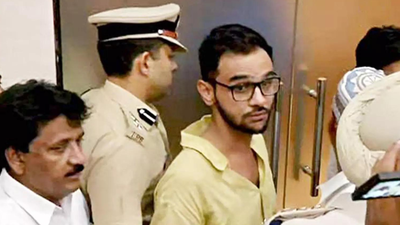
NEW DELHI: Student activist Umar Khalid has moved the Supreme Court seeking a review of a verdict that denied him bail while observing that there were reasonable grounds to believe the allegations levelled against him in connection with the conspiracy behind the 2020 Delhi riots.A bench of Justices Aravind Kumar and NV Anjaria was requested by senior advocate Kapil Sibal, who appeared in the court for Khalid, to list the review petition in open court.Sibal said the matter is coming up for consideration before the judges in chambers on April 16 and they have filed an application for an open-court hearing.Justice Kumar said, “We will look into the papers. If required, we will call it.” According to the Supreme Court’s rules, review petitions are considered by judges who delivered a judgment or passed an order in chambers to remedy an apparent error or a resultant grave injustice that has been the consequence of a decision of the apex court. Parties seeking a review can request judges for an open-court hearing to rectify the grave injustice caused due to the decision under review.On January 5, Besides Khalid, the top court had refused bail to Sharjeel Imam but granted it to five others, saying all the accused do not stand on the same footing.Khalid and Imam, who have been incarcerated since 2020, can file fresh bail pleas after the examination of protected witnesses or after a year from the day the order was passed, the court had said, as it rejected their contention of a delay in the trial.There was a prima-facie case against Khalid and Imam under the Unlawful Activities (Prevention) Act (UAPA), the top court had said, noting that prosecution material suggests that they were involved in the “planning, mobilisation and strategic direction” of the riots.While the two will remain in jail, activists Gulfisha Fatima, Meeran Haider, Shifa Ur Rehman, Mohammad Saleem Khan and Shadab Ahmad were given bail by the court, which had imposed 11 conditions and said any misuse of liberty would lead to cancellation of bail.The court had noted that the guarantee of liberty enshrined under Article 21 of the Constitution is of foundational importance, but at the same time, the security of a community, the integrity of a trial process and the preservation of public order are equally legitimate constitutional concerns.Khalid and Imam stand on qualitatively-different footing as compared to the other accused, the court had said.The prosecution had prima facie disclosed “a central and formative role” and “involvement in the level of planning, mobilisation and strategic direction extending beyond episodic and localised acts”, the bench had said.The February 2020 riots in northeast Delhi broke out during protests against the Citizenship (Amendment) Act (CAA) and the National Register of Citizens (NRC), leaving 53 people dead and more than 700 injured.The Delhi Police had arrested a total of 18 people in the conspiracy case. Of them, 11 have got bail so far.The apex court’s January order had said a delay in the trial does not operate as a “trump card” that automatically displaces statutory safeguards.“All the appellants do not stand on equal footing as regards culpability. The hierarchy of participation emerging from the prosecution’s case requires the court to examine each application individually,” it had said, adding that the roles attributed to them were different.“This court is satisfied that the prosecution material disclosed a prima-facie allegation against the appellants, Umar Khalid and Sharjeel Imam…. This stage of proceedings does not justify their enlargement on bail,” the apex court had said.It had cited section 43D(5) of the UAPA, which requires the court to deny bail if, on a perusal of a case diary or a chargesheet, it finds that there are reasonable grounds for believing that the accusation against such a person is prima-facie true.Imam was arrested on January 28, 2020, for speeches made during anti-CAA protests. He was later arrested in the larger conspiracy case in August 2020.Khalid was arrested on September 13, 2020, on charges of delivering provocative speeches on February 24 and 25 when Donald Trump, in his first term as the president of the United States, had visited India.Strongly opposing the bail pleas, the Delhi Police had then contended that the riots were not spontaneous but an orchestrated, pre-planned and well-designed attack on India’s sovereignty.All seven accused were booked under the stringent anti-terror UAPA and provisions of the Indian Penal Code for allegedly being the “masterminds” of the riots.


