
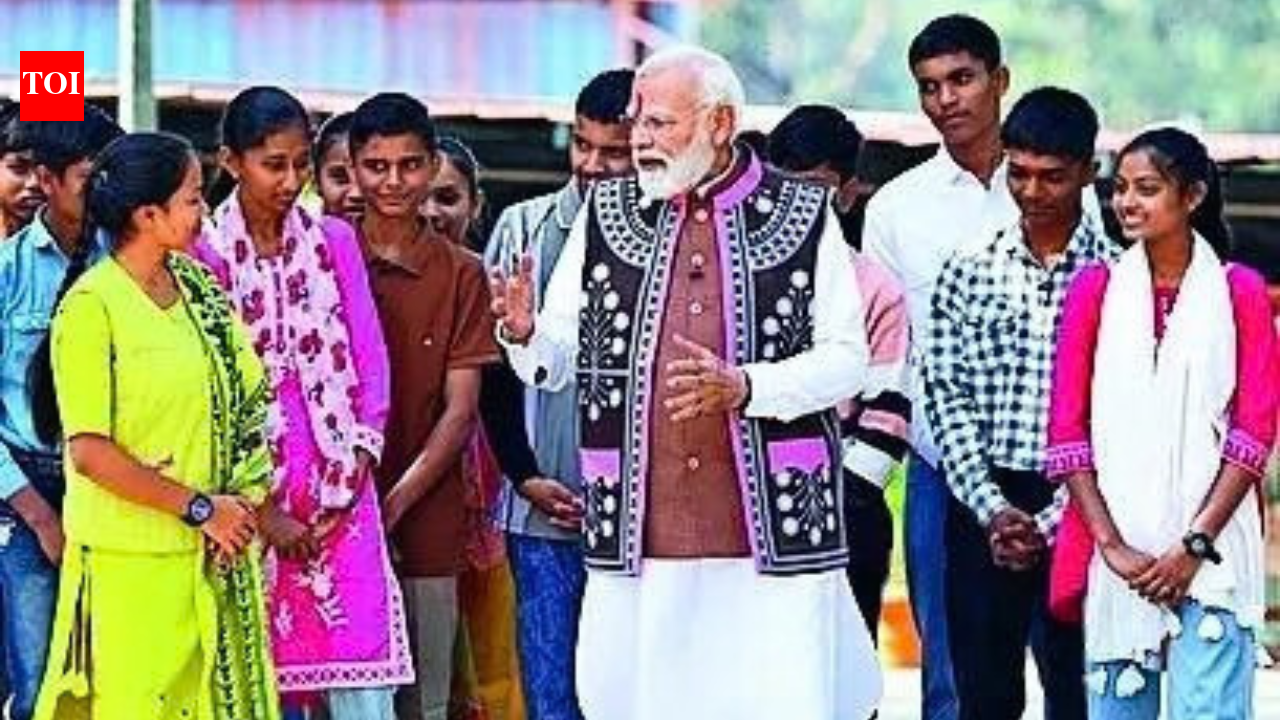
NEW DELHI: Long before smartphones, search engines and AI entered classrooms, PM Modi said one habit shaped his thinking as a student – reading the newspaper and discussing ideas. Recalling his school days, Modi told students that a teacher once gave him a daily task rooted in curiosity and discipline. “My teacher used to tell us daily, ‘Go to the library. In The Times of India, there is a sentence on the edit page – write that in your notebook and come,’ and the next day we used to discuss it,” he said, underlining the role of reading and reflection in learning. The PM was speaking during the second episode of the ninth edition of Pariksha Pe Charcha 2026, where he interacted with students from Coimbatore, Raipur, Guwahati and Devmogra in Gujarat. Using personal anecdotes and simple examples, Modi urged students to build habits that strengthen thinking, rather than becoming dependent on shortcuts. Warning against overuse of technology, he said mobile phones have become “masters” for some children. “Some kids cannot even eat food unless they are watching a smartphone or television,” he observed. He said every era has faced fears over new technologies, but technology must not become the master of human life. On AI, Modi advised balance over blind dependence, saying AI should be used for guidance and value addition, not as a substitute for learning. He noted that nature of jobs will keep changing, just as transport once moved from carts to airplanes. The PM also shared practical tips for exams, stressing preparation and rest. He said a good night’s sleep keeps students cheerful and encouraged practising previous years’ papers and focusing on writing. He cautioned parents against encouraging comparisons at home, saying constant comparison creates pressure rather than motivation. On leadership, Modi said it begins with courage and initiative. Expressing happiness that students carry the dream of Viksit Bharat 2047, Modi said small habits build a developed nation. Launched in 2018, Pariksha Pe Charcha has grown into a major student engagement programme. The ninth edition, held this year, recorded participation from across the country, reflecting sustained student enthusiasm nationwide overall.About the AuthorManash Pratim GohainManash Pratim Gohain is a seasoned journalist with over two decades at The Times of India, where he has built a rich body of work spanning education policy, politics, and governance. Renowned for his incisive coverage of the National Education Policy (NEP) 2020, accreditation reforms, and skilling initiatives, he has also reported on student politics, urban policy, and social movements. His political reportage—both reflective and news-driven—adds depth to his writing, bridging policy with public impact. Through his 2,500 articles and related outlets, he has emerged as a trusted voice in national discourse, particularly in linking education reform to broader societal change.Read MoreEnd of ArticleFollow Us On Social MediaVideos“Trade Deal Wouldn’t Happen Without Him”: Goyal Praises US Envoy GorOpposition Parties’ No-Confidence Move Against Om Birla?; ICC Rejects Pak Demand Over India BoycottRajnath Singh, Greek Counterpart Chart Five-Year Defence Cooperation Roadmap’India Must Find Its Own Elon Musk’: Ex-DGMO Emphasises Superiority In Space Tech To Win Future WarsPunjab Law College Horror: Student Shoots Classmate, Turns Gun On SelfBJP Accuses Mamata of Misleading Nation After SC SIR Ruling, TMC Counters ClaimsWatergate Files Reveal Ex-US President Nixon Was Ready To Back China If It Attacked India In 1971How Sanae Takaichi’s Japan Elections Win Could Alter Indo-Pacific Power Balance, India’s StrategyPariksha Pe Charcha 2026: PM Modi Advises Students on Discipline and More for Viksit Bharat 2047’White Collar Terrorism…’: Ex-DGMO AK Bhatt On Biggest Challenge For The Army In Jammu & Kashmir123PhotostoriesValentine’s Week special: Luxury stays for solo reflection and self connection8 easy and delicious ways to add fruit jam to your breakfastExclusive – Laughter Chefs 3’s Arjun Bijlani on pairing up with Tejasswi Prakash: I keep teasing her asking when she’s getting married, planning to have kids. even call her ‘bhabhi’Replace your cookware immediately if you notice these 5 signs (number 3 is a warning)Julia Roberts and Daniel Moder net worth: Inside the couple’s USD 260 million empireChef Sanjeev Kapoor shares 10 smart tips and tricks for deep frying for better taste and nutrition8 techniques to break negative thinking patterns in relationships6 unique homes in India; redefining contemporary residential architecture7 ancient fish species older than dinosaursHow luxurious is Suryakumar Yadav’s garage? 5 cars from his collection123Hot PicksUAE Public School RegistrationGold Silver PricesParliament Budget SessionGCC Unified Visa 2026Income Tax CalculatorPublic holidays February 2026Bank Holidays februaryTop TrendingTravis KelceBad BunnyBrittany MahomesRobert Kraf WifeCoco JonesCandace OwensSuper Bowl 60 Halftime PerformanceNBA Trade RumorsJutta LeerdamKim Kardashian and Lewis Hamilton Net Worth
NEW DELHI: Long before smartphones, search engines and AI entered classrooms, PM Modi said one habit shaped his thinking as a student – reading the newspaper and discussing ideas. Recalling his school days, Modi told students that a teacher once gave him a daily task rooted in curiosity and discipline. “My teacher used to tell us daily, ‘Go to the library. In The Times of India, there is a sentence on the edit page – write that in your notebook and come,’ and the next day we used to discuss it,” he said, underlining the role of reading and reflection in learning. The PM was speaking during the second episode of the ninth edition of Pariksha Pe Charcha 2026, where he interacted with students from Coimbatore, Raipur, Guwahati and Devmogra in Gujarat. Using personal anecdotes and simple examples, Modi urged students to build habits that strengthen thinking, rather than becoming dependent on shortcuts. Warning against overuse of technology, he said mobile phones have become “masters” for some children. “Some kids cannot even eat food unless they are watching a smartphone or television,” he observed. He said every era has faced fears over new technologies, but technology must not become the master of human life. On AI, Modi advised balance over blind dependence, saying AI should be used for guidance and value addition, not as a substitute for learning. He noted that nature of jobs will keep changing, just as transport once moved from carts to airplanes. The PM also shared practical tips for exams, stressing preparation and rest. He said a good night’s sleep keeps students cheerful and encouraged practising previous years’ papers and focusing on writing. He cautioned parents against encouraging comparisons at home, saying constant comparison creates pressure rather than motivation. On leadership, Modi said it begins with courage and initiative. Expressing happiness that students carry the dream of Viksit Bharat 2047, Modi said small habits build a developed nation. Launched in 2018, Pariksha Pe Charcha has grown into a major student engagement programme. The ninth edition, held this year, recorded participation from across the country, reflecting sustained student enthusiasm nationwide overall.


