
. NEW DELHI: It’s official. The capital’s air quality reached emergency levels on Tuesday and was the worst in nearly 11 months. With the noxious morning smog thickening amid dipping temperatures, Delhi recorded its first ‘severe’ air day of the year, prompting the Commission for Air Quality Management (CAQM) to enforce Stage III restrictions under the Graded Response Action Plan (Grap) across NCR. The city’s average AQI on Tuesday stood at 428 on a scale of 0 to 500, the worst since Dec 19 last year, when the index touched 451. The last ‘severe’ AQI in Delhi was logged on Dec 23, 2024, at 406. The sharp rise in AQI, from 362 on Monday, followed a night of calm winds and plummeting temperatures that allowed pollutants to accumulate near the surface, creating a dense smog blanket over the region. Visibility dropped to 600 metres at Safdarjung and 700 metres at Palam around 6.30 am.Winds may help improve air quality slightly today Winds started to drop on Monday and were almost calm through the night. We also have dipping temperatures, which led to significant accumulation of pollutants,” said Mahesh Palawat, vice-president at Skymet, adding that winds picked up only post noon on Tuesday, touching around 12 km/hr. “As per forecasts, we can expect winds to stay consistent on Wednesday, so there are chances of marginal improvement,” he said. The stage III of Grap implemented on Tuesday would be effective across Delhi, Gurgaon, Faridabad, Ghaziabad, and Gautam Buddh Nagar. It includes a ban on construction and demolition (C&D) activities and restrictions on BS-III petrol and BS-IV diesel four-wheelers, except those used for essential services. Non-essential diesel-operated medium goods vehicles and BS-IV light commercial vehicles (LCVs) registered outside Delhi are also prohibited from entering the capital till the curbs remain in force. Delhi’s directorate of education directed all schools to conduct classes up to Class V in hybrid mode. The Commission also advised Delhi and NCR govts to stagger office timings for public and municipal employees to cut down vehicular congestion in peak hours. Similar directions were issued to the Centre for offices located in Delhi-NCR. Most construction activities are banned, which is likely to hit thousands of daily-wage labourers across NCR. “All implementing agencies shall keep strict vigil and intensify measures of the extant schedule of Grap,” said CAQM, directing that all actions under Stage I, II, and III will continue simultaneously. Although conditions turned sunny in the late morning and visibility improved to around 2,000m, haze persisted through the day. Delhi’s minimum temperature fell to 10.2°C at Safdarjung, the lowest this season and about four degrees below normal. It was 10.4°C on Monday. The maximum stood at 27.7°C, two notches below normal. As per IMD’s forecast, shallow fog in the early hours and winds up to 20 km/hour may blow on Wednesday, which may aid in slight dispersion of pollutants. CPCB data at 9am, when stage III was invoked, showed 33 of Delhi’s 39 monitoring stations in the ‘severe’ category. Bawana (463) recorded the worst air, followed by Wazirpur (460). Among the most polluted areas were Alipur, Bawana, Burari, Chandni Chowk, ITO, and Jahangirpuri, where early-morning PM2.5 levels touched 600 g/m³. Experts attributed the spike to meteorological inversion, a phenomenon where a layer of warm air traps cooler air – and pollutants – close to the ground. Forecasts by the Centre’s Air Quality Early Warning System (EWS) suggest the capital’s AQI is likely to improve marginally to ‘very poor’ on Wednesday and remain at that level till at least Friday.About the AuthorPriyangi AgarwalPriyangi Agarwal writes on environmental and climate change issues, connecting these topics to the everyday lives of people. She tracks developments across the capital’s transport hubs—Delhi Metro, Namo Bharat Trains, and Delhi Airport—while also reporting on pressing social issues. Her stories blend data analysis with voices from the ground to tell human-centred narratives. Previously stationed in western Uttar Pradesh, she focused her coverage on minority issues, health, and human rights.Read MoreEnd of ArticleFollow Us On Social MediaVideosMaha Gajraj Exercise: IAF Conducts Highway Landing Operations Near Barmer-Jalore Border12 Killed In Car Bomb Blast In Islamabad; PM Sharif Blames ‘India-Sponsored Terrorist Proxies”Hunt Down Every…’: Amit Shah Says Delhi Car Blast Culprits To Face ‘Full Wrath Of Agencies’Bihar Exit Polls 2025: Poll of Polls Show NDA Poised For Majority, MGB Trails, No Impact of JSP’Op Sindoor Taught Us…’: Army Chief Dwivedi On Role Of Modern Tech In Warfare At Cavalry Seminar‘We Love India’: Bhutan King Reaffirms Ties As PM Modi Unveils Connectivity, Energy BoostBangladesh Elections: Awami League, BNP Allege Lawlessness Under Yunus, Fear Violence In PollsIndia Tells UNSC To Enforce Zero-Tolerance On Terror Strictly Hours After Delhi Blast Kills Twelve’No Silver Medals In War’: CDS Chauhan Highlights India’s Technological Leap Amid Rising ThreatsLucknow Doctor Tasked By JeM To Form Women’s Terror Wing In India, Police Link To Delhi Blast Probe123PhotostoriesDiabetes reports normal? 5 hidden, unusual signs blood sugar is not in control and what to do about itDirectors’ daughters shine as they carry forward a legacy of talent3 popular breakfasts you should stop giving your kids and whyExclusive – Bigg Boss 19: From addressing his romantic link-up with Ashnoor Kaur, Pranit More evicting him to ex-wife’s cheating allegations on him: Abhishek Bajaj breaks silenceMantra You Should Chant According To Your Birth DateFunny parenting quotes every tired mom and dad will relate toFathers who feel deeply: Rare and underrated quotes about modern dadsThe gut repairs overnight: 6 bedtime drinks that helpHow to choose a perfectly ripe avocado every time from the clues present on its skin8 Bollywood actresses who swear by ghee every morning and why123Hot PicksBihar Election CandidatesBihar Election ConstituenciesBihar Election 2025Gold rate todaySilver rate todayPublic Holidays NovemberBank Holidays NovemberTop TrendingWho is Brittany MillerSan Jose SharksStephen Curry WifeMichael Ray Richardson Net WorthMichael Willis Cause of DeathNHL Injury UpdateStephen CurryCandace OwensMichael Duarte Cause of DeathNico Harrison
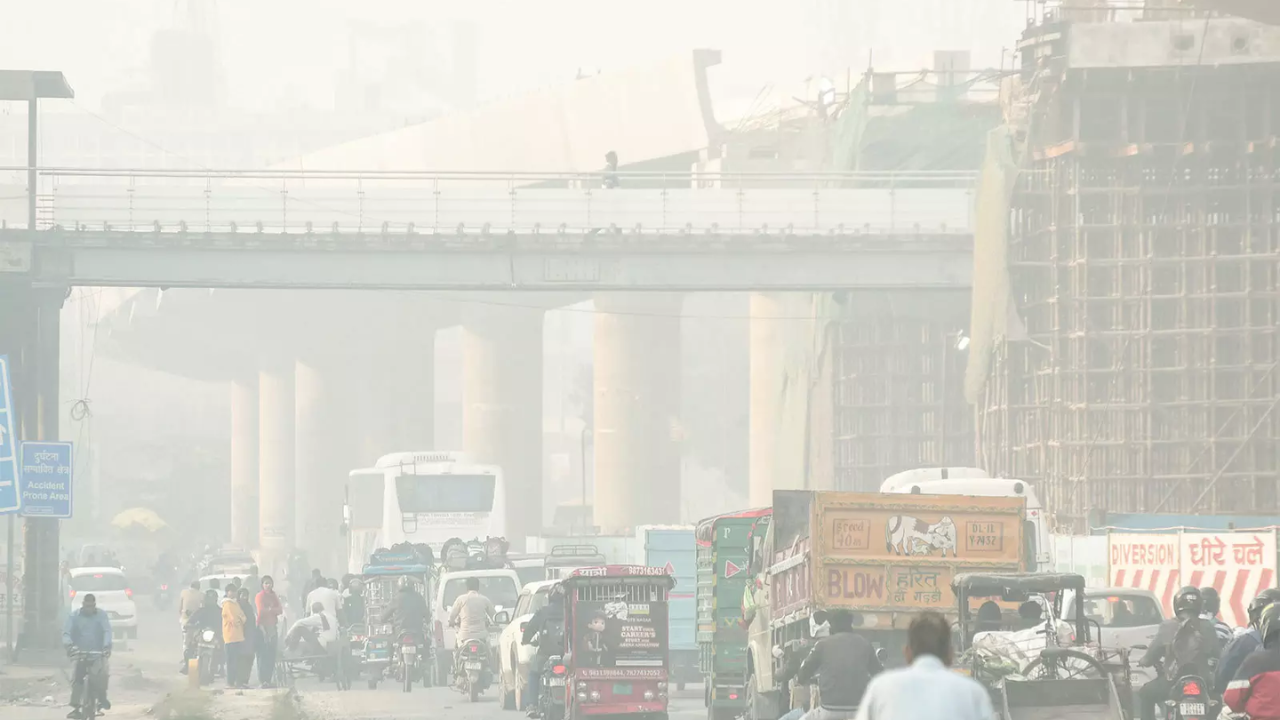
NEW DELHI: It’s official. The capital’s air quality reached emergency levels on Tuesday and was the worst in nearly 11 months. With the noxious morning smog thickening amid dipping temperatures, Delhi recorded its first ‘severe’ air day of the year, prompting the Commission for Air Quality Management (CAQM) to enforce Stage III restrictions under the Graded Response Action Plan (Grap) across NCR. The city’s average AQI on Tuesday stood at 428 on a scale of 0 to 500, the worst since Dec 19 last year, when the index touched 451. The last ‘severe’ AQI in Delhi was logged on Dec 23, 2024, at 406. The sharp rise in AQI, from 362 on Monday, followed a night of calm winds and plummeting temperatures that allowed pollutants to accumulate near the surface, creating a dense smog blanket over the region. Visibility dropped to 600 metres at Safdarjung and 700 metres at Palam around 6.30 am.

Winds may help improve air quality slightly today Winds started to drop on Monday and were almost calm through the night. We also have dipping temperatures, which led to significant accumulation of pollutants,” said Mahesh Palawat, vice-president at Skymet, adding that winds picked up only post noon on Tuesday, touching around 12 km/hr. “As per forecasts, we can expect winds to stay consistent on Wednesday, so there are chances of marginal improvement,” he said. The stage III of Grap implemented on Tuesday would be effective across Delhi, Gurgaon, Faridabad, Ghaziabad, and Gautam Buddh Nagar. It includes a ban on construction and demolition (C&D) activities and restrictions on BS-III petrol and BS-IV diesel four-wheelers, except those used for essential services. Non-essential diesel-operated medium goods vehicles and BS-IV light commercial vehicles (LCVs) registered outside Delhi are also prohibited from entering the capital till the curbs remain in force. Delhi’s directorate of education directed all schools to conduct classes up to Class V in hybrid mode. The Commission also advised Delhi and NCR govts to stagger office timings for public and municipal employees to cut down vehicular congestion in peak hours. Similar directions were issued to the Centre for offices located in Delhi-NCR. Most construction activities are banned, which is likely to hit thousands of daily-wage labourers across NCR. “All implementing agencies shall keep strict vigil and intensify measures of the extant schedule of Grap,” said CAQM, directing that all actions under Stage I, II, and III will continue simultaneously. Although conditions turned sunny in the late morning and visibility improved to around 2,000m, haze persisted through the day. Delhi’s minimum temperature fell to 10.2°C at Safdarjung, the lowest this season and about four degrees below normal. It was 10.4°C on Monday. The maximum stood at 27.7°C, two notches below normal. As per IMD’s forecast, shallow fog in the early hours and winds up to 20 km/hour may blow on Wednesday, which may aid in slight dispersion of pollutants. CPCB data at 9am, when stage III was invoked, showed 33 of Delhi’s 39 monitoring stations in the ‘severe’ category. Bawana (463) recorded the worst air, followed by Wazirpur (460). Among the most polluted areas were Alipur, Bawana, Burari, Chandni Chowk, ITO, and Jahangirpuri, where early-morning PM2.5 levels touched 600 g/m³. Experts attributed the spike to meteorological inversion, a phenomenon where a layer of warm air traps cooler air – and pollutants – close to the ground. Forecasts by the Centre’s Air Quality Early Warning System (EWS) suggest the capital’s AQI is likely to improve marginally to ‘very poor’ on Wednesday and remain at that level till at least Friday.


